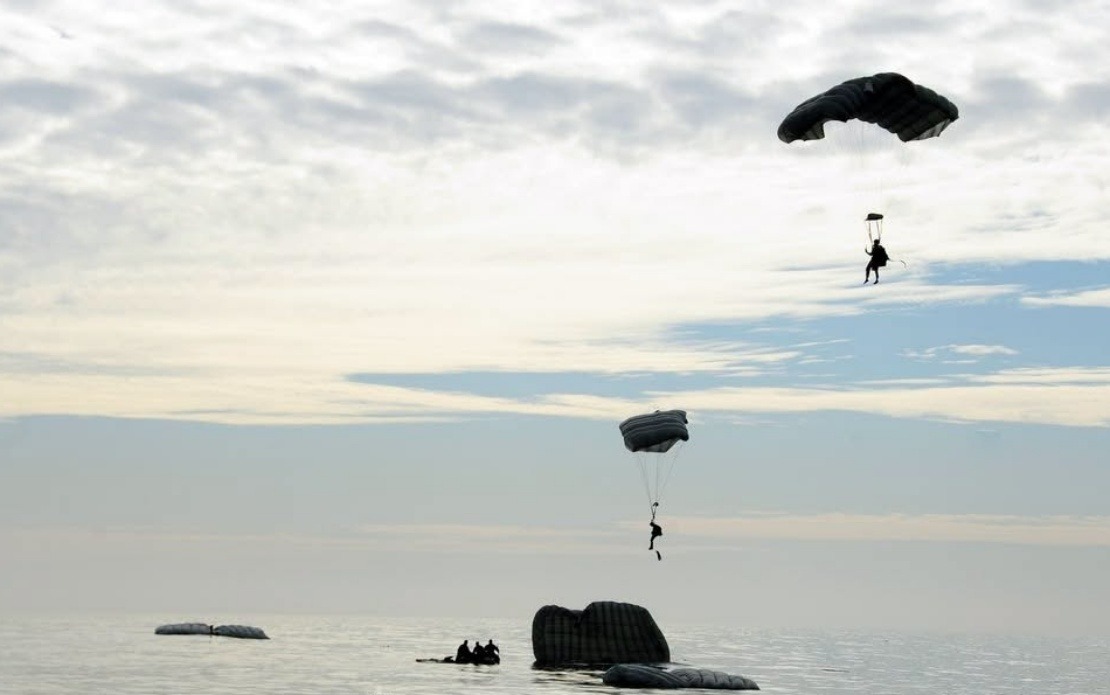
The Royal Malaysian Navy successfully recovered all six members of its elite PASKAL unit after they drifted in the South China Sea during a free-fall parachuting exercise, marking another test of the force's renowned training protocols and emergency response systems. The incident occurred when unexpected meteorological conditions severely compromised visibility, causing the personnel to diverge from their intended landing area. An RMN vessel located and retrieved all six servicemen while they remained in the water, demonstrating the effectiveness of the Navy's operational coordination and safety infrastructure during advanced training scenarios.
PASKAL, formally known as the Naval Special Warfare Forces, represents Malaysia's most specialized maritime combat unit. The force maintains one of Southeast Asia's most demanding training regimens, regularly conducting exercises in challenging environments across Malaysian waters and beyond. These operations are designed to prepare personnel not merely for conventional military engagement, but for the unpredictable and hostile conditions they may encounter during real-world deployments. The South China Sea, where yesterday's exercise took place, presents particular operational complexity given its geopolitical significance and volatile weather patterns that can shift rapidly without warning.
The incident underscores the inherent risks associated with elite military training, particularly airborne operations conducted over open water. Free-fall parachuting exercises represent among the most dangerous training activities undertaken by special forces units globally. Personnel must contend with multiple variables simultaneously: altitude calculations, equipment functionality, wind conditions, and water conditions upon impact. When weather deteriorates suddenly, even highly trained operators can find themselves in situations requiring immediate rescue and survival protocols. The fact that all six personnel were recovered without injury speaks to both their individual competence and the supporting systems maintained by the RMN.
In its official statement regarding the incident, the Navy framed the episode not as a failure but as validation of PASKAL's continuous and intensive preparation methodology. According to the RMN, the unexpected circumstances encountered during the exercise actually demonstrated the effectiveness of the unit's realistic and demanding training approach. This perspective reflects a professional understanding within elite military circles that genuine readiness encompasses not just technical proficiency but the psychological resilience and decision-making capacity required when operations deviate from planned parameters. Weather-induced complications, equipment malfunctions, and unexpected tactical scenarios are precisely the conditions that advanced military training attempts to simulate.
The recovery also highlights the broader ecosystem of support mechanisms the Navy maintains to safeguard its personnel during high-risk activities. Successful rescue operations during exercises depend on multiple coordinated elements: effective communication systems, maritime vessels positioned to respond quickly, trained personnel capable of conducting water rescue procedures, and established protocols for locating missing personnel. The RMN's ability to locate and recover all six servicemen within what appears to have been a brief timeframe indicates that these support systems functioned as designed. Such capabilities become crucial during actual operational emergencies when the margin for error narrows considerably.
For Malaysian readers and the broader Southeast Asian security community, incidents involving elite military units carry implications beyond the immediate operational context. PASKAL operates within a strategic environment where maritime security and naval capabilities remain increasingly important, particularly given tensions and great power competition in regional waters. The credibility and operational readiness of specialized units like PASKAL directly influence Malaysia's ability to project power and respond to security challenges across its extensive maritime domain. Training exercises, even those that encounter complications, contribute to building and maintaining the institutional competence required for such responsibilities.
The Navy's emphasis on balancing combat readiness with personnel safety reflects evolving professional standards within modern militaries. Previous generations of military institutions sometimes accepted higher casualty rates during training as an inevitable cost of preparing for warfare. Contemporary military organizations increasingly recognize that excessive training casualties represent not toughness but poor management and inadequate safety protocols. The RMN's stated commitment to maintaining this balance suggests a leadership philosophy that views personnel preservation as compatible with, rather than contrary to, operational excellence. Highly trained servicemen represent significant institutional investments; their loss in preventable training accidents wastes those investments.
The incident also carries broader implications for understanding how advanced military units respond to adverse circumstances. The way PASKAL and the RMN characterized this event—as evidence of effective training rather than as a failure—reflects confidence in their personnel's capabilities and systems. This response demonstrates psychological resilience at an organizational level, the ability to learn from complications without defensiveness while maintaining focus on continuous improvement. Units that blame external factors entirely or defensively minimize incidents often struggle with genuine institutional learning, whereas those that acknowledge challenges while highlighting positive responses tend to develop stronger long-term capabilities.
Weather-related complications during military training remain inevitable across the Southeast Asian region, where tropical conditions can shift dramatically and unpredictably. Personnel conducting operations across Malaysia's waters must develop the capacity to adapt and survive when environmental conditions degrade suddenly. The South China Sea environment poses particular challenges given its monsoon seasons, occasional severe weather events, and the operational complexities arising from the region's contested waters. Units conducting realistic training in such conditions, even when complications emerge, are ultimately preparing more effectively for genuine operational scenarios they may encounter during deployments.
The recovery operation showcases the coordination between different naval assets and the importance of maintaining robust maritime search and rescue capabilities. As commercial shipping increases across Southeast Asian waters and naval activities expand throughout the region, the ability to conduct rapid rescue operations becomes increasingly valuable for civilian as well as military purposes. Naval forces that maintain high standards for training and personnel recovery contribute to broader regional maritime safety standards and demonstrate commitment to professional military conduct that benefits the entire security ecosystem.
Looking forward, the incident will likely contribute to ongoing refinements in PASKAL's exercise protocols, particularly regarding weather monitoring, timing adjustments, and contingency planning for rapid visibility deterioration. Military organizations typically conduct thorough after-action reviews following any significant incident, identifying lessons that can enhance future training effectiveness and safety. The Navy's demonstrated ability to recover all personnel suggests that existing systems performed adequately, but there may be opportunities to enhance the margins of safety further or to accelerate response procedures. Such continuous improvement reflects the institutional maturity expected of professional military organizations operating in challenging environments.

