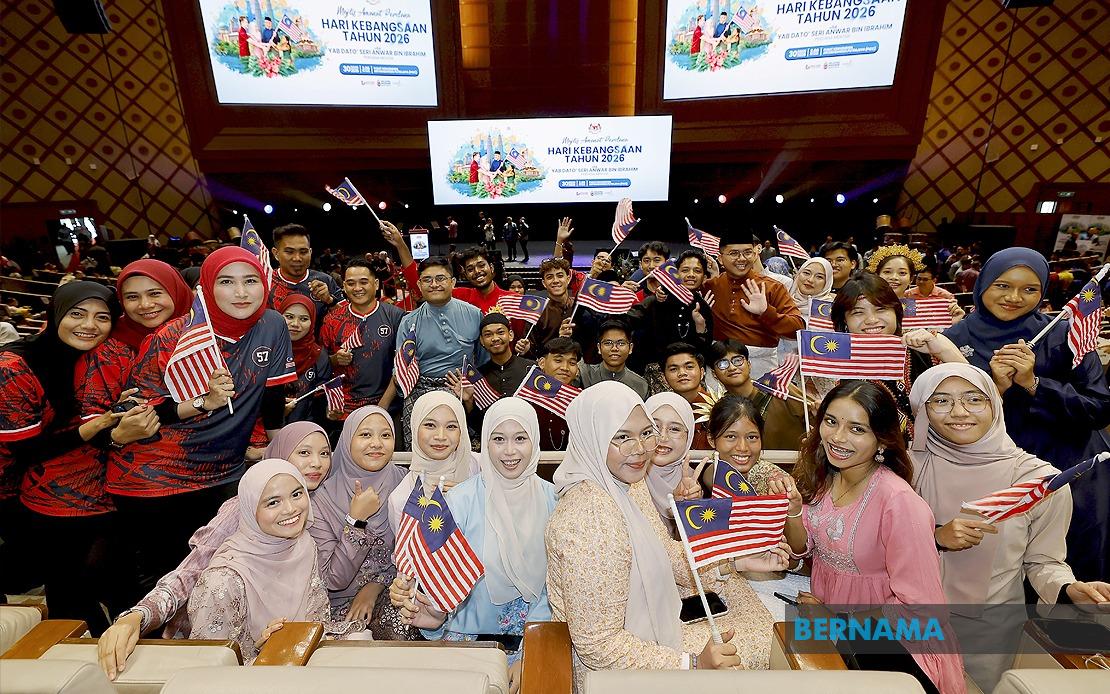
During his National Day address in Putrajaya, Prime Minister Datuk Seri Anwar Ibrahim laid out six policy initiatives designed to provide tangible relief across multiple segments of the Malaysian population. The announcements, delivered at the Putrajaya International Convention Centre, reflect the government's attempt to address cost-of-living pressures affecting workers, young people entering the workforce, and entrepreneurs operating outside the formal corporate sector.
One of the most immediately visible measures involves restoring the monthly fuel subsidy threshold under the Budi MADANI RON95 programme. The ceiling for subsidised fuel purchases will revert from 200 litres to 300 litres per month, benefiting regular motorists and those whose work requires frequent travel. For many Malaysian commuters and small-vehicle operators who rely on daily fuel expenses, this adjustment represents a material reduction in monthly expenditure, particularly given fuel costs remain a substantial portion of household budgets across the country.
The initiative extends beyond fuel subsidies. The government announced it will distribute free three-month subscriptions to three artificial intelligence applications to 100,000 young people aged 18 to 30 who complete modules under the "AI for the People" programme. This reflects recognition that technological literacy increasingly determines employment prospects in a rapidly evolving job market. For Malaysian youth navigating a competitive economy where digital skills are becoming prerequisites rather than advantages, exposure to AI tools at no cost addresses a genuine barrier to capability development and career readiness.
Educational infrastructure will also receive substantial investment. School maintenance budgets across all institution types will increase by 50 per cent to reach RM1.5 billion in 2027, signalling the government's commitment to improving learning environments. This augmentation comes at a time when many Malaysian schools, particularly in rural and less-developed areas, face infrastructure deficiencies that impact educational quality. Better-maintained facilities can directly influence student outcomes and teacher retention, addressing long-standing concerns about educational disparity across regions.
The government simultaneously launched the RM200 million Geran Sejahtera MADANI programme, targeting hawkers, night market traders, and mothers conducting home-based enterprises. This demographic comprises a substantial but often overlooked segment of Malaysia's economic ecosystem. Many operate without formal business registration and remain excluded from conventional financing channels. Targeted grants provide these entrepreneurs with capital for expansion, inventory, or equipment without incurring debt obligations, thereby strengthening community-level economic activity and preserving livelihoods that support extended family networks.
Microfinancing capacity will expand significantly through a RM1 billion injection, bringing total 2026 funding to RM6 billion. This measure addresses the persistent gap between demand for small-scale financing and available supply. Many Malaysians, particularly in the M40 income bracket and below, struggle to access conventional bank credit due to stringent collateral requirements or limited transaction histories. Enhanced microfinance availability can catalyse entrepreneurship among underserved populations and support existing small operators seeking growth capital without prohibitive interest rates or documentation barriers.
Small and medium-sized enterprises will benefit from administrative relief through an elevated e-Invoice exemption threshold. The limit rises from RM1 million to RM3 million in annual revenue, reducing compliance burdens for businesses still establishing market presence. Smaller operators often lack dedicated accounting departments and struggle with digital tax administration requirements. Raising the exemption threshold allows resources previously dedicated to compliance documentation to be redirected toward actual business development, inventory management, and workforce expansion.
The diesel fuel subsidy programme will also expand, with the Budi Diesel quota increasing from 300 litres to 400 litres monthly. This adjustment particularly benefits commercial vehicle operators, agricultural workers, and those using diesel equipment for livelihood purposes. Industries dependent on fuel-intensive operations—particularly those in rural Malaysia where alternative energy sources remain unavailable—receive direct cost relief that translates into improved profit margins or lower prices for consumers.
Observers note that these measures collectively target interconnected constituencies rather than pursuing isolated sectoral benefits. The fuel subsidy increases serve vehicle-dependent workers and small operators; the AI initiative prepares youth for future employment; educational funding strengthens long-term human capital; grants to home-based entrepreneurs preserve grassroots economic activity; microfinancing removes barriers to business expansion; and e-Invoice exemptions simplify compliance. Together, they represent an integrated approach to cost reduction and opportunity expansion across income levels and occupational categories.
Young workers entering the private sector view these announcements as acknowledging real constraints facing their generation. The combination of fuel relief, AI skills training, and financial support for aspiring entrepreneurs addresses both immediate household pressures and longer-term career development. For the M40 demographic—middle-income earners increasingly squeezed between rising living costs and stagnant wages—multiple pressure points receive simultaneous attention, potentially providing measurable relief across annual budgets.
The regional context matters as well. Southeast Asian economies face comparable pressures: rising digital skill requirements, infrastructure deficits in smaller cities and rural areas, underbanked populations, and cost-of-living strains on working-class households. Malaysia's policy mix, should it prove effective in implementation, offers a potential model for neighbouring governments addressing similar constituencies. The emphasis on targeted support for informal economy participants—hawkers, home-based workers, small traders—reflects recognition that formal-sector employment cannot absorb all economic participants, particularly in developing regions.
Successful implementation remains crucial. Government programmes often encounter execution challenges ranging from bureaucratic delays to uneven awareness among eligible beneficiaries. The true impact of these initiatives will depend on how efficiently the RM200 million MADANI grants reach intended recipients, whether microfinance institutions actually expand lending to higher-risk borrowers, and whether young people effectively access and complete AI training modules. Monitoring and accountability mechanisms will determine whether announcements translate into tangible household economic improvement or remain policy statements without proportionate real-world benefit.

