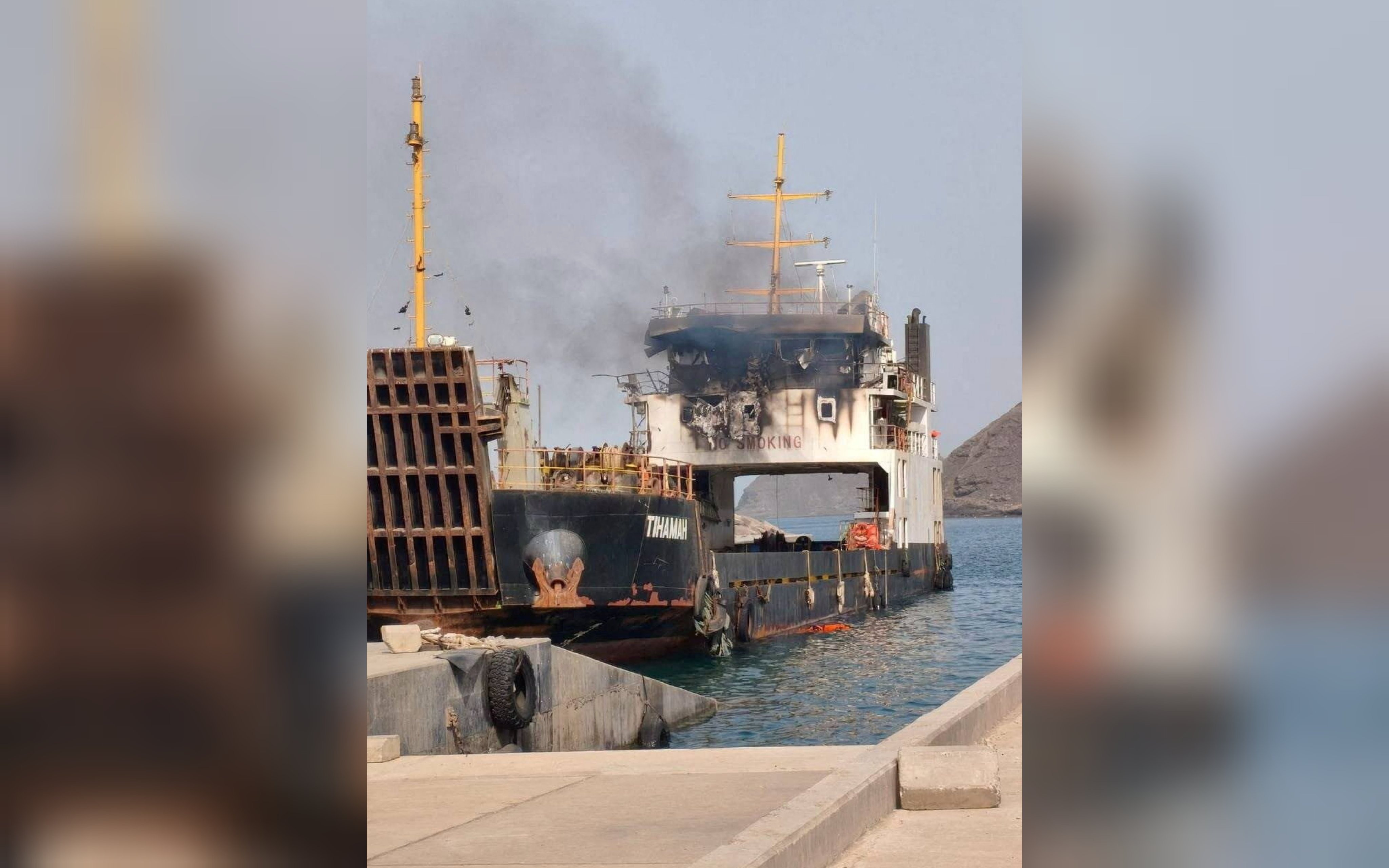
A commercial cargo ship carrying food supplies came under sustained attack in the Bab al-Mandeb Strait on Tuesday when Yemen's Houthi militia fired multiple ballistic missiles at the vessel, resulting in six deaths and ten injuries, according to Yemen's Coast Guard. The strike marked another escalation in a volatile campaign against maritime traffic through one of the world's most strategically significant waterways, drawing renewed international attention to the deteriorating security situation in the Red Sea.
The Yemeni-flagged vessel Tihamah sustained three direct hits from ballistic weapons while transiting the narrow passage between Yemen and Djibouti, with the impact igniting fires aboard the ship and causing extensive structural damage. Yemen's Transportation Ministry stated that Houthi forces subsequently launched an additional missile strike while rescue operations were underway, suggesting a deliberate attempt to thwart emergency response efforts and maximize casualties among both crew and rescue personnel attempting to reach those in distress.
Among those killed were four crew members—three Pakistani nationals and one Indonesian—alongside two members of Yemen's armed forces serving with the 2nd Naval Brigade. The wounded encompassed seven additional crew members, two coast guard personnel, and another soldier from the 2nd Naval Brigade. Beyond the fatalities and injuries, Yemeni authorities reported the successful rescue of eleven sailors from Pakistan and Indonesia, though the circumstances surrounding their extraction from the vessel remain unclear.
The targeting of a food supply vessel underscores the Houthi group's willingness to disrupt humanitarian logistics and agricultural trade flowing through the Red Sea region. Yemen's Transportation Ministry characterized the assault as a "terrorist crime" and part of a systematic campaign to destabilize government-controlled territories and their populations by restricting access to essential goods. This strategy carries severe implications for civilian populations across Yemen, where millions already depend on maritime imports for basic sustenance and consumer necessities.
The Houthi campaign represents a significant departure from conventional maritime security concerns. Rather than targeting military assets exclusively, the group has repeatedly struck civilian commercial vessels, effectively weaponizing food insecurity as a tactical instrument. The ministry warned that such actions constitute a direct assault on the supply chains sustaining both government-controlled and Houthi-held regions, creating a paradoxical situation where the militant group's own civilian base faces potential suffering from restricted food access.
Bab al-Mandeb's geographic significance renders these attacks particularly consequential for global maritime commerce. The strait functions as the narrow passage connecting the Red Sea to the Arabian Sea and Indian Ocean, creating a critical chokepoint for shipping between Europe, Asia and the Middle East. Approximately twelve percent of global maritime trade transits these waters annually, making disruptions in this corridor felt across international supply chains and regional economies dependent on unobstructed sea lanes.
The Houthis have not issued any statement regarding the attack, maintaining operational silence consistent with their pattern following previous maritime incidents. This reticence complicates efforts by international observers to determine whether specific targets are deliberately chosen or whether the group is conducting broader interdiction operations against all traffic through contested waters. The absence of claimed responsibility, however, does not diminish the military capability demonstrated by the deployment of ballistic weapons systems capable of striking moving maritime targets.
Yemen's government characterized the ongoing campaign as part of an escalating pattern targeting ports, civilian infrastructure, and commercial shipping in areas under state control. The ministry's explicit framing of these acts as terrorism reflects international legal interpretations regarding attacks on civilian vessels and non-combatant populations dependent on sea-based supply routes. This designation carries implications for potential international responses and raises questions about the legality of the Houthis' actions under maritime law and international humanitarian conventions.
For Southeast Asian nations, this incident carries particular relevance given the substantial Pakistani and Indonesian seafaring communities operating throughout the region. Maritime labor migration represents a significant economic factor for Indonesia and other regional states, with thousands of citizens employed aboard commercial vessels throughout Middle Eastern and African waters. The targeting of foreign crews, regardless of their nation of origin, demonstrates that security risks in contested waters extend beyond regional actors to affect the livelihoods and safety of workers from across Asia.
The strategic implications extend to regional trade flows and supply chain vulnerabilities affecting Southeast Asia. Many Malaysian and regional companies maintain commercial ties to Middle Eastern markets and rely on Bab al-Mandeb transit for efficient logistics. Prolonged instability in the strait forces shipping companies to adopt longer routes around Africa, substantially increasing fuel costs, shipping times, and overall expenses—burden ultimately reflected in consumer prices throughout the region.
International shipping insurers have already adjusted premiums for Red Sea transit, recognizing the elevated risk environment. This economic pressure creates incentives for alternative routing that bypass the region entirely, potentially reducing traffic volumes and revenue for port facilities in countries dependent on maritime commerce. Yemen's own economic recovery remains inextricably linked to restoration of secure maritime conditions, yet the Houthis' actions work against broader development objectives.
The incident demonstrates how regional conflicts persist in generating externalities affecting distant economies and populations. Southeast Asian governments, while geographically removed from Yemen's civil conflict, face indirect consequences through disrupted shipping patterns, elevated logistics costs, and risks to nationals employed in maritime sectors. The challenge of restoring maritime security in contested waters requires sustained international engagement and de-escalation efforts that extend beyond the immediate combatants.

