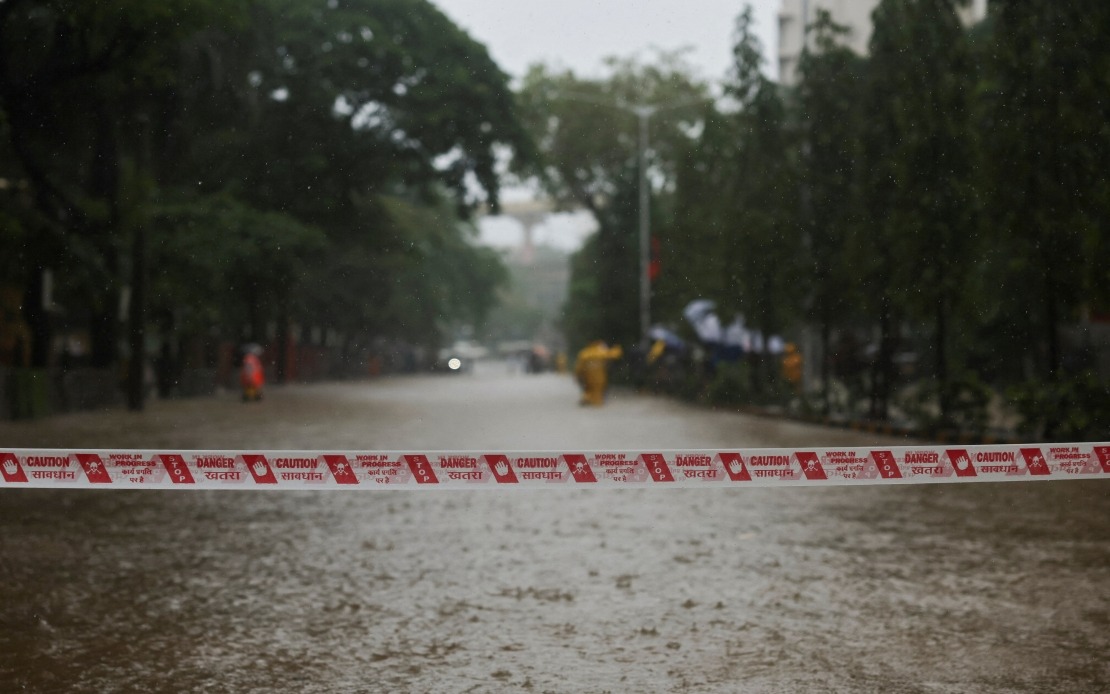
A structural failure in India's financial hub Mumbai claimed six lives and left one person hurt when torrential monsoon rains caused a multi-storey residential building to give way in the Mankhurd locality on Sunday. Maharashtra State Minister and senior Bharatiya Janata Party figure Girish Mahajan confirmed the tragedy to media representatives, indicating that authorities would examine the construction practices and standards that governed the building's original development. The incident underscores mounting concerns about urban infrastructure vulnerability across South Asia during the annual monsoon season, when waterlogged soil and saturated foundations create dangerous conditions for ageing or poorly constructed structures.
The collapse occurred amid a broader pattern of weather disruptions affecting the metropolis. Authorities at Mumbai's Chhatrapati Shivaji Maharaj International Airport reported temporary suspension of flight movements as wind gusts and rainfall intensified Sunday afternoon, though operations resumed after conditions moderated. The airport authority advised passengers to check flight status before travelling, and several carriers issued travel waivers allowing rebooking without penalty fees. Such disruptions have become increasingly common as extreme weather events test the capacity of major transport hubs to maintain services during the monsoon cycle.
State-level education authorities wasted no time in declaring a holiday for schools and colleges across the greater Mumbai region, prioritising student safety over regular classroom schedules. This precautionary measure reflects administrative anxiety about commute hazards during severe weather, particularly for younger children navigating waterlogged streets and areas prone to flooding. The decision affected millions of students in both public and private institutions across Maharashtra's urban centres, with parents broadly welcoming the decision to keep children indoors during peak rainfall hours.
The Mankhurd incident will likely trigger intensive scrutiny of building code enforcement mechanisms and the regulatory oversight that monitors construction quality in Mumbai's sprawling residential sectors. Mahajan's statement that an investigation would examine how the structure was engineered signals that inspectors will examine whether the building met statutory requirements for load-bearing capacity, drainage systems, and moisture prevention. Such inquiries often reveal patterns of shortcuts, inadequate materials, or lapsed maintenance that accumulate over decades to create catastrophic failure points.
For Malaysian and Southeast Asian observers, the Mumbai collapse carries instructive warnings about urban risk management during monsoon seasons. Cities across the region—including Kuala Lumpur, Bangkok, and Jakarta—house thousands of aging residential structures that predate modern building codes or lack adequate maintenance. The Indian tragedy illustrates how seasonal flooding, when combined with structural defects, can escalate rapidly from property damage to mass casualty incidents. Property owners and municipal authorities increasingly face pressure to conduct vulnerability assessments and implement reinforcement programmes before the monsoon arrives.
The annual progression of India's monsoon system, which typically commences in June and persists through September, creates a predictable window during which disaster preparedness becomes paramount. Weather forecasters had issued advance warnings of heavy precipitation in the Mumbai region during early July, yet structural failures continue to occur with frequency suggesting that warning systems, while scientifically sophisticated, do not always translate into preventative action at the grassroots level. Building owners frequently lack resources or incentive to upgrade infrastructure, whilst municipal governments struggle with capacity constraints that limit inspection frequency and enforcement rigour.
The broader context of monsoon-season disasters across South Asia reveals systemic challenges that extend beyond any single city or country. Rapid urbanisation has outpaced infrastructure planning, creating dense concentrations of residential buildings with varying structural integrity. Climate scientists have documented increasing rainfall intensity in recent decades, straining drainage systems designed for lower water volumes. These factors combine to create an environment where weather events that would have caused modest flooding a generation ago now trigger building collapses and fatalities.
Response protocols in Mumbai demonstrated both institutional strengths and weaknesses. Emergency services reached the collapse site relatively quickly, extracting survivors from rubble, yet the fatality toll—six dead—suggests that search-and-rescue operations encountered obstacles that limited recovery rates. Post-incident analysis typically examines response times, equipment availability, and coordination between police, fire services, and medical teams. Comparative studies of building collapses across Indian cities frequently identify communication breakdowns and resource constraints as factors that elevate casualties.
The investigation that Mahajan announced will carry significance beyond Mumbai. Findings regarding construction defects, maintenance lapses, or regulatory gaps will influence how other Indian states approach building oversight. Maharashtra's findings may also prompt peer jurisdictions across South Asia to audit similar structures in their own regions. Malaysia's construction industry, already subject to relatively rigorous building codes following past structural disasters, will monitor the Mumbai investigation for lessons that might inform ongoing safety campaigns and enforcement strategies.
Authorities have not yet released detailed information about the building's age, ownership status, or previous complaints regarding structural conditions. Such details typically emerge during the investigation phase and become critical to understanding whether the collapse resulted from acute weather stress, chronic deterioration, or some combination. Property records, municipal inspection histories, and engineering assessments will collectively paint a picture of how this particular structure arrived at a state of vulnerability. Residents in similar buildings across South Asia will undoubtedly scrutinise such findings and, in many cases, demand that their own landlords or municipal authorities conduct equivalent assessments.

