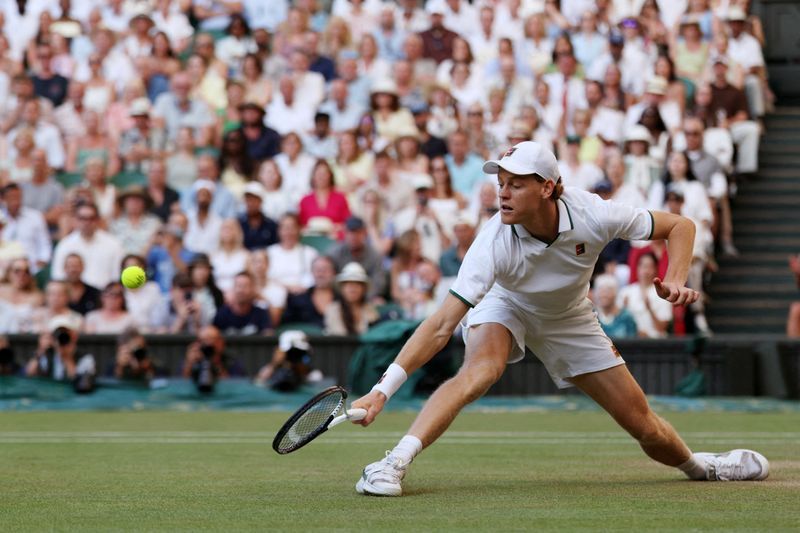
The tennis world has lost one of its brightest stars from this year's US Open. Jannik Sinner, the Italian prodigy currently ranked number one globally, announced his withdrawal from the tournament on Friday due to an unresolved right knee injury that has plagued him for weeks. The decision represents a major setback not only for the 24-year-old but also for organisers hoping to stage a compelling final Grand Slam of the season at Flushing Meadows.
Sinner's injury troubles began earlier this month, forcing him to sit out crucial warm-up tournaments on the hard-court circuit. He missed both the Cincinnati Open and Canadian Open, two prestigious events traditionally used by elite players to fine-tune their form and prepare physically for the demands of a Grand Slam tournament. For a player of Sinner's calibre and aspirations, skipping these preparatory fixtures suggested the injury was more serious than initial reports indicated.
The Italian's statement, released through social media, conveyed the difficult choice his medical team faced. Despite intensive rehabilitation work and close collaboration with his support staff in recent days, further assessment revealed that competing at the US Open remained too risky. Sinner noted that upon returning to the practice court in Monte Carlo, the severity of his condition became apparent, necessitating additional recovery time rather than immediate competition.
This withdrawal is particularly significant given Sinner's recent achievements on the grand stage. Just last month, he captured his fifth major title at Wimbledon, cementing his position among tennis's elite and demonstrating his capability to win tournaments at the sport's highest level. At only 24 years old, his trajectory suggested multiple more Grand Slam victories lay ahead, making this injury interruption all the more frustrating for a player clearly capable of dominating the sport.
The timing of Sinner's withdrawal inadvertently reshapes the competitive landscape at the US Open, which runs from August 23 to September 13. The announcement came just one day after Carlos Alcaraz, ranked number two, confirmed his participation in New York despite a four-month competitive absence. Alcaraz's return to competitive tennis following recent injury challenges means the Spanish star now represents the highest-ranked player in the field and effectively removes his greatest rival from the tournament.
Alcaraz arrives in New York with legitimate championship credentials. The previous year, he defeated Sinner in the US Open final, claiming the trophy in a closely contested match that showcased both players' exceptional talents. His return to action following months away suggests his recovery from injury was successful, positioning him among the tournament favourites despite not having competed recently at the highest levels. The removal of Sinner from the draw significantly improves his odds of capturing an eighth Grand Slam title.
For Malaysian and Southeast Asian tennis enthusiasts, Sinner's absence diminishes the star power at what should be the season's most compelling tournament. Regional followers have increasingly warmed to Sinner's exciting brand of aggressive tennis, and his withdrawal removes one of the few genuine challengers to Alcaraz's dominance. The narrative shifts from a potential showdown between two generational talents to a considerably more open field where depth of competition takes precedence over marquee matchups.
The broader implications extend to the professional tennis calendar and injury management protocols. Sinner's decision underscores the delicate balance players must navigate between immediate tournament participation and long-term career health. By prioritising recovery over playing through injury, he follows a prudent approach that many in the sport advocate, yet the absence of such marquee names inevitably diminishes event prestige and television appeal.
From a tournament perspective, the US Open loses a narrative thread it desperately needed. Without Sinner defending his number one ranking and chasing a sixth major title, the conversation shifts away from the compelling question of whether younger players can maintain consistency across multiple Grand Slams. Instead, organisers must rely on Alcaraz's comeback story and the deeper field of challengers to generate compelling storylines throughout the fortnight.
Looking ahead, Sinner's recovery timeline remains unclear, though his caution suggests the injury required more than superficial treatment. Should he return healthy before the year concludes, he still has opportunities to compete in late-season tournaments and position himself for next year's circuit. However, the loss of momentum from missing the US Open, historically a crucial tournament for year-end rankings adjustments, could have ramifications extending into 2025.
The injury also invites questions about Sinner's training intensity and match load earlier in the season. Whether the accumulation of victories at Wimbledon contributed to the knee problem, or whether the injury was simply unavoidable, remains a matter of speculation. What is certain is that professional tennis, despite its relatively compact playing schedule compared to other sports, still subjects elite athletes to significant physical demands.

