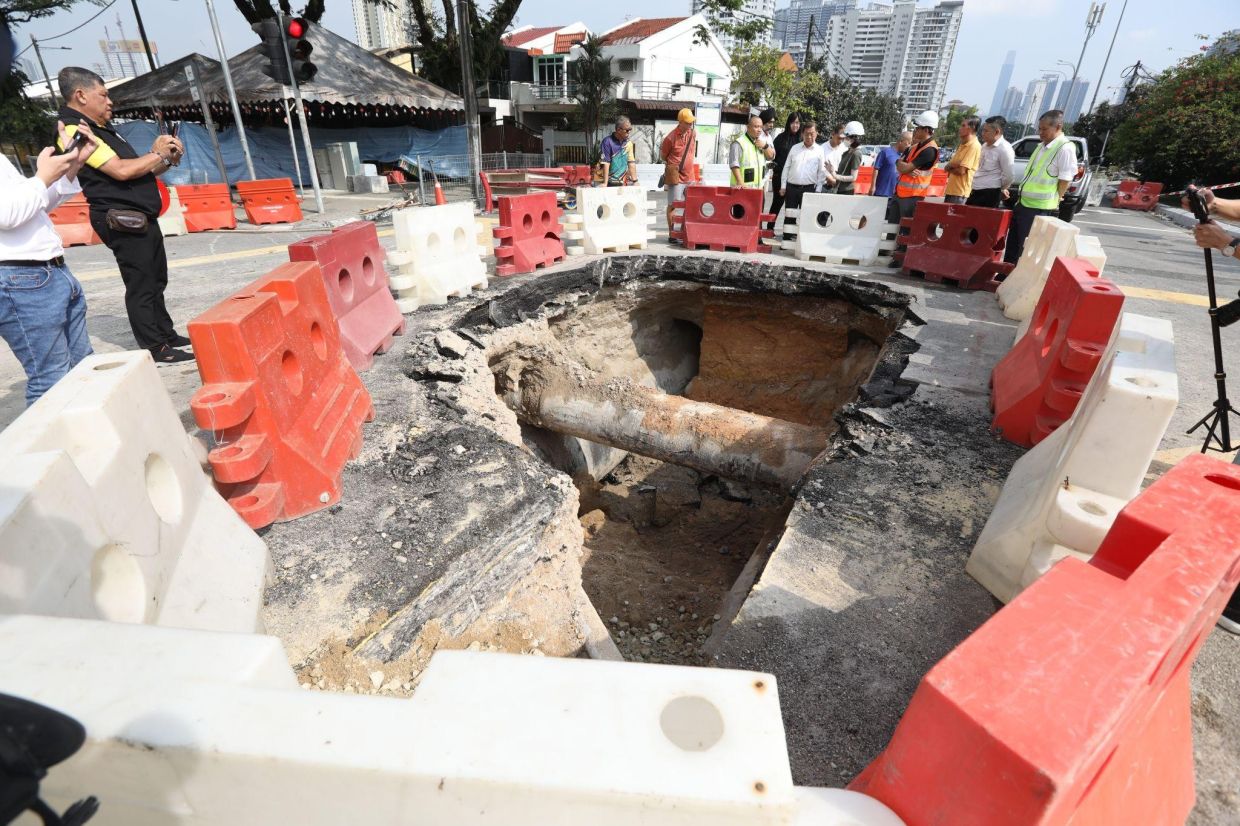
Malaysia's vulnerability to sinkhole incidents is intensifying as the country experiences more frequent and severe rainfall patterns. These underground collapses—though often sudden in appearance—result from a convergence of geological factors, subsurface water dynamics, construction activities and the structural condition of buried infrastructure. Because each incident presents distinct circumstances, establishing the precise cause demands comprehensive technical investigation. Yet beyond identifying individual failures, the broader challenge demands systematic prevention. This is where Indah Water Konsortium, the national sewerage operator managing approximately 22,500 kilometres of public sewer pipelines, is concentrating its efforts through risk-based asset management and forward-looking infrastructure planning.
The threat to Malaysia's sewerage network stems partly from the nature of critical trunk sewers—large reinforced concrete pipes 600mm in diameter and above that form the backbone of the system. These major arteries typically operate at or near maximum sewage flow capacity, exposing them to elevated flow velocities and the relentless accumulation of hydrogen sulphide gas. This corrosive gas accelerates concrete deterioration, steadily weakening pipe walls over decades and heightening the risk of structural failure. In tropical climates with intense rainfall, this deterioration pathway becomes increasingly hazardous, particularly as ageing infrastructure compounds the vulnerability.
To counteract these risks, IWK has implemented a structured inspection regime employing cutting-edge diagnostic technologies. Ground Penetrating Radar surveys the subsurface without excavation, while CCTV crawler systems navigate pipes to document internal conditions with precision. Push rod and pole cameras extend inspection capabilities to sites where crawler access proves impractical. The diversity of these tools reflects the operational complexity of surveying thousands of kilometres of buried assets under varied ground conditions. Once inspections reveal defects, IWK proceeds with targeted rehabilitation—either trenchless pipe lining, which reinforces existing conduits without excavation, or full pipeline replacement where damage is irreversible. These interventions restore structural integrity and mitigate the chain of events that culminate in surface collapse.
The mechanism linking extreme weather to sinkhole formation illuminates why climate adaptation has become central to infrastructure management. Heavy rainfall destabilises surrounding soil through saturation, reducing ground strength while simultaneously increasing water pressure within sewer lines. Pipes weakened by age or corrosion respond to this dual stress by cracking, shifting or rupturing—failures that breach the pipe boundary. Once compromised, sewer systems allow surrounding soil to migrate into voids, gradually eroding the underground cavity. As these voids expand undetected, the overlying ground loses support. When the void reaches critical dimensions, the surface suddenly subsides, creating the dramatic collapse that residents and motorists encounter. Beyond the immediate danger to public safety, sinkholes damage roads, disrupt traffic and compromise adjacent infrastructure, cascading effects that ripple through urban areas.
IWK Chief Executive Officer Narendran Maniam has articulated how this weather-infrastructure nexus demands urgent attention. As Malaysia confronts increasingly unpredictable climate patterns, understanding this relationship has shifted from technical interest to operational imperative. When extreme rainfall overwhelms sewer networks, large volumes of stormwater infiltrate through cracks, joints and manhole connections, imposing additional load on already-strained pipelines. Older sewer systems prove especially susceptible to this infiltration, lacking the integrity to repel external water pressure. The cumulative effect—saturation weakening soil, high pressure stressing compromised pipes, and progressive soil washout—creates the conditions for catastrophic failure.
Recognising that reactive crisis management alone cannot protect a 22,500-kilometre network serving millions of Malaysians, IWK has shifted toward systematic preparedness. The utility recently conducted a comprehensive Crisis Simulation Exercise at its Asian Sewerage Training, Research & Innovation Centre of Excellence, staged to test institutional readiness for major incidents. The simulation modelled a large sinkhole involving casualties and suspected large sewer pipeline damage, scenarios that demand swift, coordinated response across multiple agencies. The exercise mobilised operational teams while testing crisis management protocols, internal communication procedures and coordination with the Fire and Rescue Department, Royal Malaysia Police and other emergency services.
These drills serve multiple strategic purposes. They expose gaps in procedures before actual emergencies occur, allowing refinement in controlled conditions. They strengthen inter-agency coordination, clarifying roles and communication pathways critical during high-stress situations. They build institutional knowledge, ensuring that both seasoned and newly recruited staff understand their responsibilities and decision-making authorities when time pressure is acute. Narendran emphasised that the simulation validated IWK's response systems, revealing opportunities to enhance crisis management and accelerate decision-making during genuine emergencies. The exercise documentation also embedded improved standard operating procedures into organisational practice, ensuring consistency and preparedness across IWK's operations nationwide.
The shift toward climate-resilient infrastructure reflects a broader regional challenge facing Southeast Asian utilities. As rainfall intensity increases due to climate change, aging urban sewerage systems—many designed for historical precipitation patterns—face unprecedented stress. Malaysia's experience underscores that technical solutions alone, while essential, require complementary institutional capacity. Training, inter-agency coordination, documented procedures and regular drills transform technical capability into operational resilience. By investing in simulation exercises and crisis management frameworks, IWK models an approach that other regional utilities increasingly recognize as indispensable.
Looking forward, IWK's strategy balances immediate risk reduction with long-term system modernisation. Targeted rehabilitation of critical trunk sewers continues, alongside expansion of inspection programmes to identify vulnerabilities before they manifest as surface incidents. Simultaneously, the utility is strengthening its emergency response architecture, ensuring that when failures occur—as they inevitably will in aging infrastructure subjected to climate stress—the institutional response minimises harm to communities and infrastructure. Narendran affirmed that protecting public safety and maintaining continuous sewerage service remain institutional priorities as weather patterns grow more extreme. Through continuous planning, sustained training partnerships, and formalised collaboration with emergency agencies, IWK is working to ensure that Malaysia's underground sewerage infrastructure remains dependable and secure despite the intensifying climate challenges ahead.

