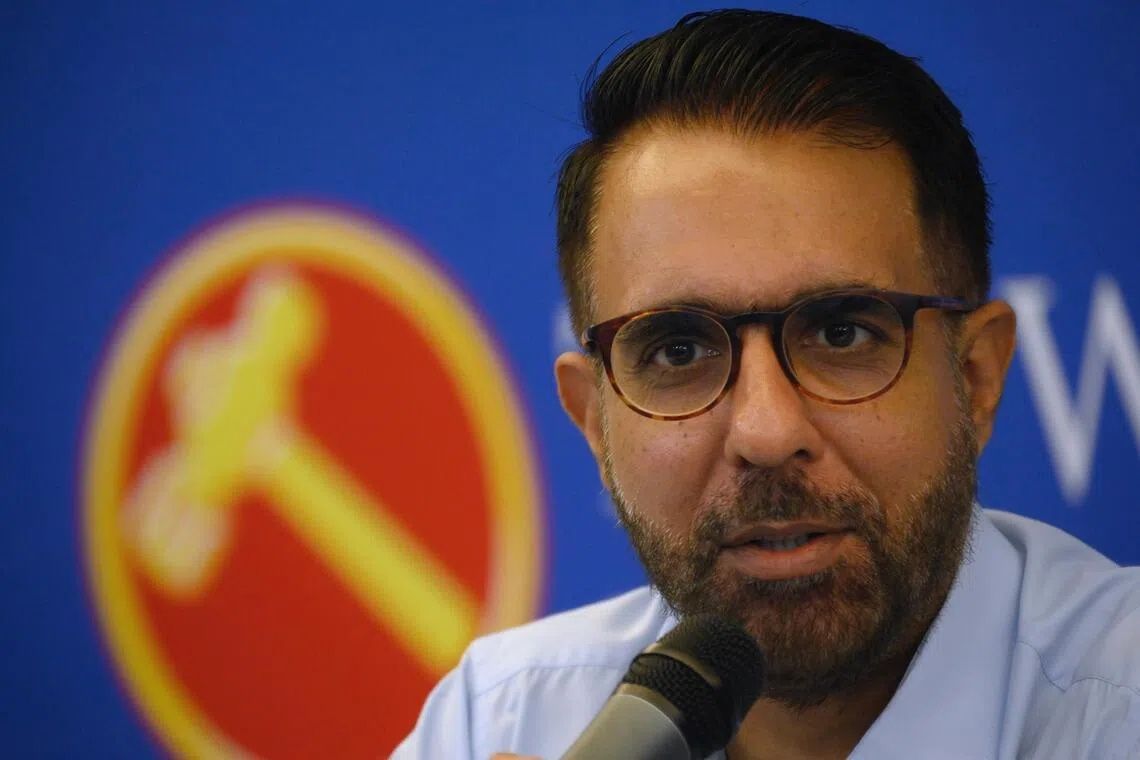
The Workers' Party of Singapore faces a critical internal reckoning when over 100 cadres gather on June 28 to determine the future of secretary-general Pritam Singh. Long simmering discontent within the opposition party's inner circle has reached a tipping point following a High Court decision in December 2025 that upheld his conviction for providing false information to a parliamentary committee, crystallising sentiment that has been building for months among senior members who believe his continued leadership threatens the party's credibility.
The gathering will unfold in two distinct phases. The first meeting will take the form of a special conference, which 25 cadres formally requested in December, designed to hold Pritam accountable for the circumstances leading to his conviction. These dissidents, who include former central executive committee members and past election candidates, have explicitly called upon him to resign voluntarily. Should he choose not to step aside, they have requested a secret ballot to determine his fate. The second meeting will constitute the party's biennial ordinary cadres' conference, at which the full slate of leadership positions, including Pritam's post, will be contested under normal election procedures.
Sources within the party indicate that the search for a viable challenger has intensified considerably in recent weeks, though no serious contender has yet publicly committed to standing against him. The dissidents have reportedly approached several senior Members of Parliament affiliated with the Workers' Party, including Aljunied GRC's Gerald Giam and Hougang's Dennis Tan. The names of Sengkang GRC MPs He Ting Ru and Jamus Lim have also circulated within party discussions, given their roles on the disciplinary panel that found Pritam had violated party constitution provisions. Despite these overtures, party insiders stress that the situation remains fluid and could shift substantially before voting day.
The grievances motivating this challenge extend beyond Pritam's legal troubles. The 25 cadres who triggered the special conference contend that he mishandled the situation involving former Sengkang MP Raeesah Khan, who fabricated an anecdote during parliamentary debate in August 2021. Rather than immediately insisting that Khan clarify the record, Pritam allegedly guided her in maintaining the deception for months until she eventually admitted the falsehood in November that year. This sequence of events led Parliament's privileges committee and subsequently the courts to find Pritam culpable, a judgment that dissenters argue fundamentally undermines the party's carefully cultivated reputation for integrity and trustworthiness.
The conviction carries particular weight for the Workers' Party because its political positioning rests substantially upon offering voters an alternative characterised by higher ethical standards than the ruling establishment. In the minds of critical cadres, Pritam's conviction for dishonesty directly contradicts this foundational claim. One anonymous cadre expressed this sentiment starkly, noting that the party's appeal to voters relies upon public confidence that Workers' Party members operate differently from political competitors. When the party's own leader stands convicted of lying, that cadre argued, the party forfeits its moral authority to criticise others and becomes vulnerable to devastating attacks on character grounds.
The timing of this internal conflict compounds the party's difficulties. In January 2026, Prime Minister Lawrence Wong removed Pritam from his position as Leader of the Opposition, a role that carries symbolic importance and parliamentary privileges. Wong subsequently invited the Workers' Party to nominate another elected MP to assume the post, but the party declined, instead choosing to maintain unified support behind Pritam. This decision to close ranks has itself become a source of internal dissatisfaction, with some cadres questioning privately whether the party's refusal cost them parliamentary prominence and broader opposition influence at a moment when they might have needed to project strength.
Performance at the 2025 general election has further fuelled discontent with Pritam's leadership. Several cadres have expressed disappointment that the Workers' Party, which had fielded what they regarded as an exceptionally strong slate of candidates, failed to capture any additional constituencies despite anticipations otherwise. Additionally, Pritam's decision to withdraw from Marine Parade-Braddell Heights GRC on Nomination Day has drawn criticism from party members who viewed the move as unnecessarily defensive strategy. Taken together, these electoral setbacks have reinforced arguments among dissidents that the party requires different leadership to fulfil its potential and advance the broader opposition cause.
The figure looming largest over this contest is Low Thia Khiang, the party's former chief from 2001 to 2018 and architect of the Workers' Party's historic 2011 breakthrough when it secured Aljunied GRC, its first group representation constituency. Though Low has stepped back from daily party management, he retains a position on the central executive committee and possesses considerable influence among the cadre membership. Rumours within party circles suggest that Low voted against Pritam during recent CEC discussions on the disciplinary panel's findings, a signal that has sparked speculation about whether the former chief might actively support an alternative candidate. Party insiders have stressed that Low himself is unlikely to stand for the position, but his endorsement of a challenger could prove decisive. A former cadre estimated that approximately 30 discontented members might combine forces with those voting alongside Low, potentially providing sufficient numerical strength to unseat Pritam should Low throw his considerable prestige behind a rival.
The parallels to previous party contests are instructive. In 2016, Low himself faced a leadership challenge mounted by former Aljunied MP Chen Show Mao, an unsuccessful bid that drew support from many of these same veteran cadres who now advocate for Pritam's removal. That earlier battle illustrates how deep factional currents run within the Workers' Party and how historical grievances can resurface in new configurations. The core membership challenging Pritam includes individuals who have nursed dissatisfactions for years, suggesting that generational and philosophical tensions within the party extend well beyond any single policy dispute or personnel matter.
Party rules governing the election process may influence its trajectory significantly. Any cadre in good standing can either run for secretary-general or nominate another member to stand, requiring only a simple majority to secure victory. Because Pritam has not faced opposition since assuming the role eight years ago, his position, while seemingly secure, depends entirely upon whether internal pressure successfully crystallises into a viable challenger. The party has formally stated that no current restrictions prevent him from seeking re-election despite the conviction and formal reprimand he received. However, one cadre noted that the outcome of the first special conference could substantially affect whether a challenger materialises at the second meeting, with logic suggesting that a narrow victory or outright defeat in the accountability session would significantly increase the probability of contested leadership elections.
For Malaysian observers and those tracking opposition politics throughout Southeast Asia more broadly, the Workers' Party's internal conflict carries broader implications. The region's authoritarian and competitive electoral environments create particular pressures on opposition movements, forcing difficult calculations about how to maintain both integrity and political viability. Singapore's opposition parties operate under specific constraints, with court systems potentially weaponised against political rivals and parliamentary representation itself fiercely contested. The Workers' Party's current travails demonstrate how legal challenges targeting opposition figures can reverberate through internal party politics, forcing members to weigh principle against pragmatism. Whether the party ultimately retains Pritam or selects new leadership will reveal much about how opposition movements in tightly controlled political systems navigate crises of leadership and confidence.

