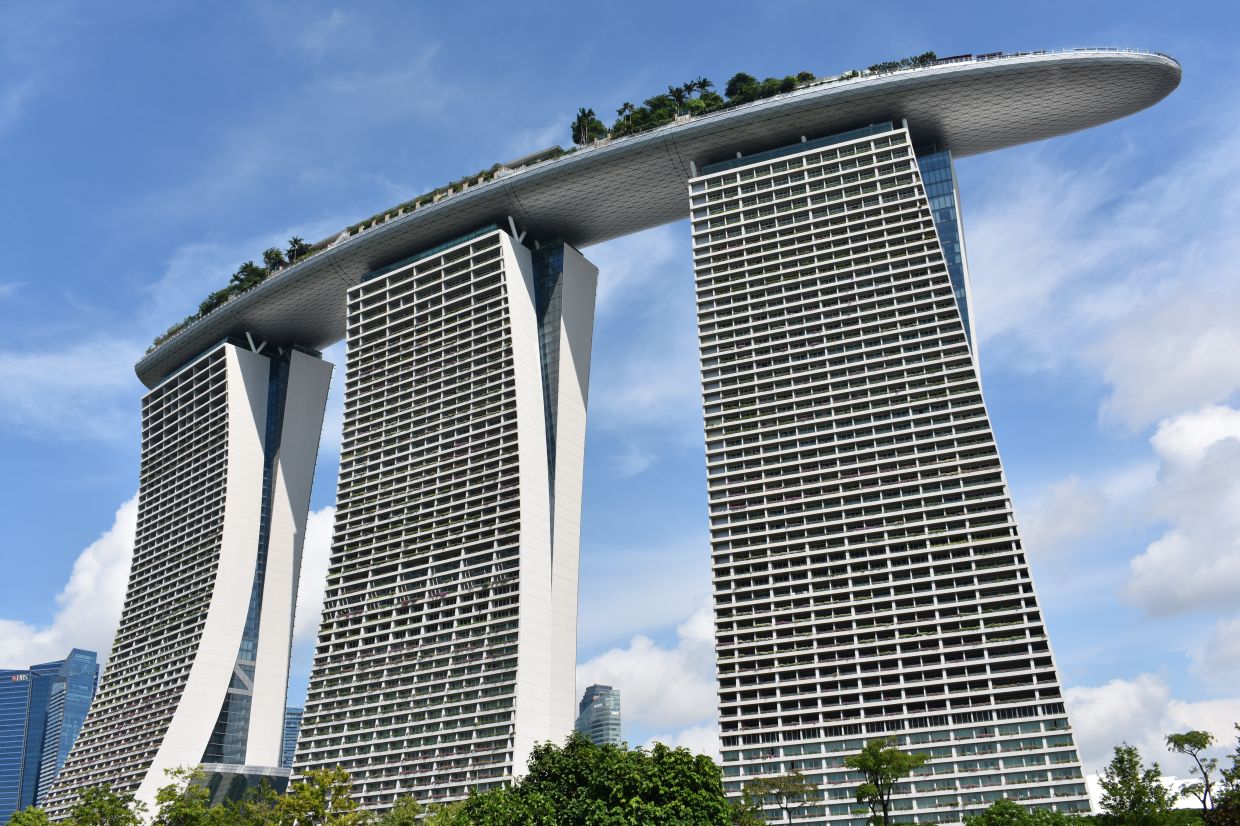
The gap between Singapore's two casino giants has widened dramatically, creating a competitive landscape that increasingly favours one operator over the other. While Marina Bay Sands generated over $2.1 billion in gaming revenue during the first half of 2026, Resorts World Sentosa managed less than a third of that figure, highlighting a stark divergence in market performance. This imbalance reflects broader shifts in how high-rolling gamblers—the most profitable segment—choose where to wager their money in Southeast Asia's premier gaming hub.
The disparity became especially visible during Lunar New Year celebrations, when the two resorts unveiled their competing incentives to attract elite players. Marina Bay Sands offered a Mercedes-Benz CLA 200 as its top prize, whilst Resorts World Sentosa's most generous reward was a bottle of Martell Cognac. This seemingly modest detail encapsulates a fundamental marketing problem: one casino appears to understand the expectations of ultra-wealthy international gamblers far better than the other. The message sent by these promotional choices resonated powerfully with the VIP community, signalling differences in ambition and hospitality philosophy.
Regulatory authorities have taken notice of Resorts World Sentosa's struggles. Singapore's Gambling Regulatory Authority, rather than granting the standard three-year casino license renewal, instead issued a two-year permit effective February 2025—a decision explicitly tied to concerns about the property's tourism performance. Officials described the resort's results as "unsatisfactory," a rare public rebuke that served as what industry observers characterise as a soft warning. The agency is currently assessing the property's renewal application ahead of the February 2027 expiration, with the outcome likely contingent on measurable improvements across the entire integrated resort operation.
Genting Singapore Ltd., which operates Resorts World Sentosa, has sought to project confidence despite mounting pressures. Company officials claim they maintain close engagement with regulators and possess adequate positioning for the next assessment cycle. A spokesperson emphasised that the resort has invested in new attractions and enhanced hospitality and gaming amenities over the preceding eighteen months, with management framing these developments as early indicators of progress. Yet industry analysts remain sceptical about whether these incremental improvements suffice to reverse the fundamental competitive disadvantage.
The competitive context extends beyond casino operations alone. Singapore's post-Covid recovery has benefited from strong tourist arrivals and an influx of wealthy gamblers from neighbouring countries and mainland China. Significantly, the city-state has captured gaming business that previously flowed to Macau, where Chinese government crackdowns on casino junkets and illegal money-exchange operations have dampened activity. This regional opportunity has accrued disproportionately to Marina Bay Sands, which has positioned itself as the destination of choice for affluent Chinese gamblers seeking privacy and discretion away from potential government scrutiny back home. The notion of Singapore as a more secure alternative has proven tremendously attractive.
The stakes of VIP competition cannot be overstated. Whilst high-rolling gamblers represent a smaller percentage of casino visitors compared to ordinary mass-market players, they generate outsized profits. In 2023, Resorts World Sentosa actually held a larger share of Singapore's VIP market, but that advantage collapsed dramatically, dropping to approximately 20 percent in the first quarter of 2026 before partially recovering to 36 percent more recently, according to DBS Group Holdings research. This volatility underscores the intensity of competition and the fickleness of high-value customer loyalty in the gaming sector.
Becoming a VIP typically requires an initial deposit or expenditure of at least S$100,000, followed by additional spending through betting and gameplay over a specified period. Members receive access to exclusive benefits: private gaming suites, complimentary accommodation, dining privileges, and invitations to premier events. At Marina Bay Sands, these perks extend to butler service within suites, theatre tickets for major musicals, and dining credits at premium restaurants. The broader resort ecosystem matters enormously—Marina Bay Sands' three 57-storey hotel towers, rooftop infinity pool, art museum, and shopping mall create an integrated luxury environment that appeals to discerning international clientele.
Complaints from Resorts World Sentosa's VIP members have escalated, targeting specific grievances about dated infrastructure, unresponsive management, and even operational inefficiencies in chip and cash exchange procedures. These frustrations, originating from customers accustomed to world-class service, have accelerated customer migration. Ben Lee, managing partner of IGamiX, a Macau-based gaming consultancy, predicts that Resorts World Sentosa faces mounting market share losses, unable to match the "luxurious experience" that Marina Bay Sands delivers. The property simply lacks the premium positioning and customer-centric responsiveness that ultra-high-net-worth individuals demand.
Both casinos are pursuing substantial expansion strategies, though on different timescales and with different ambitions. Resorts World Sentosa has committed to a S$6.8 billion revitalisation programme spanning completion by 2030, which includes an all-suite luxury hotel, an expanded oceanarium, and the addition of Super Nintendo World to Universal Studios Singapore. Marina Bay Sands, meanwhile, is executing its own $8 billion transformation involving a new 55-storey hotel tower and a live entertainment venue. Critically, Marina Bay Sands' enhancements are designed to further elevate its premium positioning, whilst Resorts World Sentosa's investments aim primarily to recover lost ground.
The regulatory environment in Singapore has deliberately maintained a controlled duopoly since the two casinos opened in 2010, licensing them as the exclusive gaming operators in a city-state with strict gambling restrictions for citizens. Local residents and permanent residents must pay S$150 daily to enter either casino, whilst tourists enjoy free access upon passport presentation. This structure has channelled the industry toward international and regional players rather than domestic consumers. However, only a handful of operators globally possess the financial capacity to acquire either property, meaning Marina Bay Sands' parent company, Las Vegas Sands Corp., effectively faces negligible acquisition risk despite recent performance concerns at its rival.
Chinese gamblers have become increasingly significant to Singapore's gaming market dynamics, particularly given the city-state's visa-free entry policies for mainland visitors. Beyond mere convenience, many high rollers view Singapore as a confidential alternative to Macau, where concerns about data sharing with Chinese authorities have deterred some players. Singapore offers both accessibility and perceived privacy—a combination that has driven substantial capital flows from the mainland into Marina Bay Sands, which has positioned itself as the destination for discerning Chinese players. This demographic trend, combined with superior amenities and attentive customer service, has accelerated the performance gap.
Vitaly Umansky, senior analyst of global gaming at Seaport Research Partners, observed that Marina Bay Sands has successfully elevated itself as a premium property with heightened appeal to high-value customers, whilst Resorts World Sentosa faces considerable work to reclaim lost market share. The competitive landscape now features one clearly ascendant operator and one struggling to maintain relevance. Unless Resorts World Sentosa executes its multi-billion-dollar renovation exceptionally well and transforms its customer service culture substantially, the duopoly appears destined to become increasingly unbalanced. The upcoming license renewal decision in February 2027 will ultimately determine whether regulators believe the property has credibly addressed their performance concerns—and whether Genting Singapore's Malaysian parent will sustain its commitment to a struggling asset.

