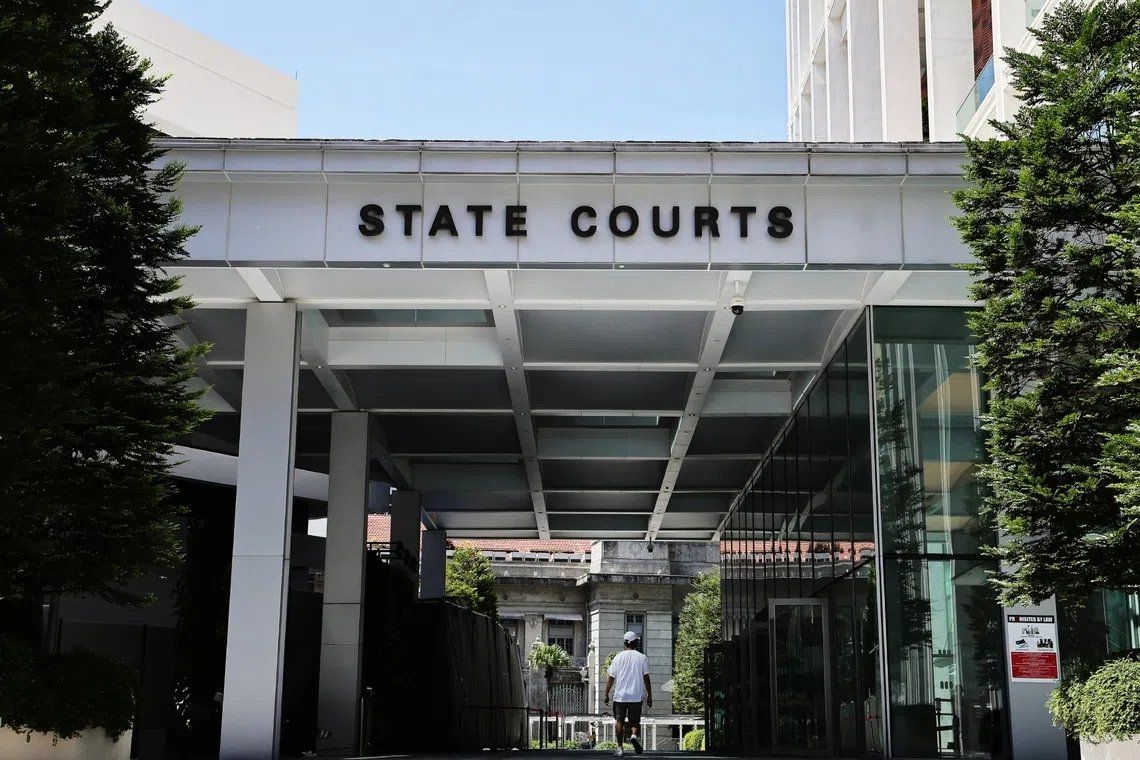
A 35-year-old Singaporean man faced justice on Thursday (August 27) for his role in a brutal 2021 nightclub assault, four years after he fled the country to escape prosecution. Marcus Yeo Zhen Wei's elaborate evasion ultimately proved futile when Malaysian authorities detained him on drug-related charges in 2022, leading to his extradition back to Singapore in November 2025 and subsequent sentencing on the original assault conviction.
The violence erupted at a Magazine Road establishment near Havelock Road late on the evening of March 21, 2021, when Yeo and three intoxicated companions confronted other patrons after accusing them of staring. The confrontation quickly escalated into a chaotic scene as Yeo's group hurled glasses and bottles across the venue, forcing club staff to eject all four men from the premises. What appeared to be the end of the incident took a sinister turn when one member of the group retrieved a baton from a vehicle and returned to the club entrance, while another armed himself with a knife.
The escalated assault targeted two Vietnamese nationals departing the club. According to Deputy Public Prosecutor Mark Chia, the attackers wielded their weapons with particular brutality, with one victim suffering repeated blows from the baton. The injuries sustained were severe enough to warrant hospitalisation at Singapore General Hospital, where doctors determined the 30-year-old had suffered a collapsed lung. Medical intervention and recovery required 21 days of leave, underscoring the viciousness of the attack.
Yeo was apprehended on March 26, 2021, just five days after the assault, and initially held in custody for six days while investigations proceeded. However, the criminal justice process took an unexpected turn when Yeo was released on bail pending his scheduled court appearance in November that year. Rather than face the proceedings, he made the calculated decision to abscond, setting in motion a chain of events that would keep him in legal limbo for nearly four years.
His escape strategy centred on geographic distance and jurisdictional boundaries. In October 2021, Yeo travelled to Pulau Ubin, a small island off Singapore's north coast, before arranging boat passage across the Strait into Malaysia. The Immigration and Checkpoints Authority's Deputy Superintendent Wong Wai Yuen revealed the flight path to the court, though specific details about his Malaysian sanctuary remained undisclosed. For over a year, Yeo appeared to have successfully evaded Singaporean law enforcement, presumptively residing in Malaysian territory without detection.
The temporary safety of his Malaysian refuge collapsed in 2022 when local authorities arrested him on drug-related offences. Malaysian authorities' involvement inadvertently triggered his return to Singapore, as the criminal charge activated extradition mechanisms and forced his repatriation. Following nearly three years in Malaysian custody or limbo, Yeo was formally returned to Singapore in November 2025, where he faced immediate rearrest for the original assault charges.
Upon his return and re-arrest, prosecutors pursued a comprehensive case reflecting the full scope of his criminality. Yeo pleaded guilty to multiple charges including assault, performing a rash act, and illegally departing Singapore, effectively conceding responsibility across all dimensions of his misconduct. His acceptance of guilt streamlined the sentencing process, eliminating the need for contested trial proceedings that would have further prolonged his legal entanglement.
The court ultimately imposed a sentence of two years and three weeks' imprisonment, reflecting both the severity of the assault and Yeo's aggravating conduct in fleeing jurisdiction. The sentence encompasses punishment for the original violence as well as consequences for his illegal departure and extended evasion. His three co-offenders involved in the nightclub brawl had previously faced separate court proceedings and sentencing.
The case illustrates the challenges regional law enforcement faces in managing transnational crime and fugitives exploiting cross-border mobility. Yeo's initial escape to nearby Malaysia exploited the relative ease of movement within Southeast Asia, particularly across the Johor Strait. However, his subsequent entanglement with Malaysian drug enforcement ultimately proved his undoing, as his criminal exposure in both jurisdictions created overlapping legal liability that Manila authorities could not indefinitely shield him from.
For Malaysian authorities and regional law enforcement cooperation frameworks, the case underscores how domestic criminal charges in one jurisdiction can facilitate broader regional accountability. The circumstances that led to Yeo's apprehension in Malaysia—his drug-related offence—occurred entirely within Malaysian jurisdiction, yet triggered mechanisms that restored Singapore's judicial authority over his original conviction. This interconnection reflects the increasing sophistication of regional extradition and enforcement protocols, even as they remain tested by organised crime and fugitive networks that deliberately exploit border areas.
Yeo's extended absence from Singapore justice, spanning from March 2021 through November 2025, represents a substantial disruption of legal proceedings and victim justice. The delay in final sentencing created extended uncertainty for the assault victims, whose recovery had long concluded by the time their attacker faced judicial consequences. The four-year gap also complicates rehabilitation prospects, as Yeo now serves his sentence far removed in time and circumstance from the original offense, potentially diminishing whatever deterrent or corrective purpose incarceration might otherwise serve.

