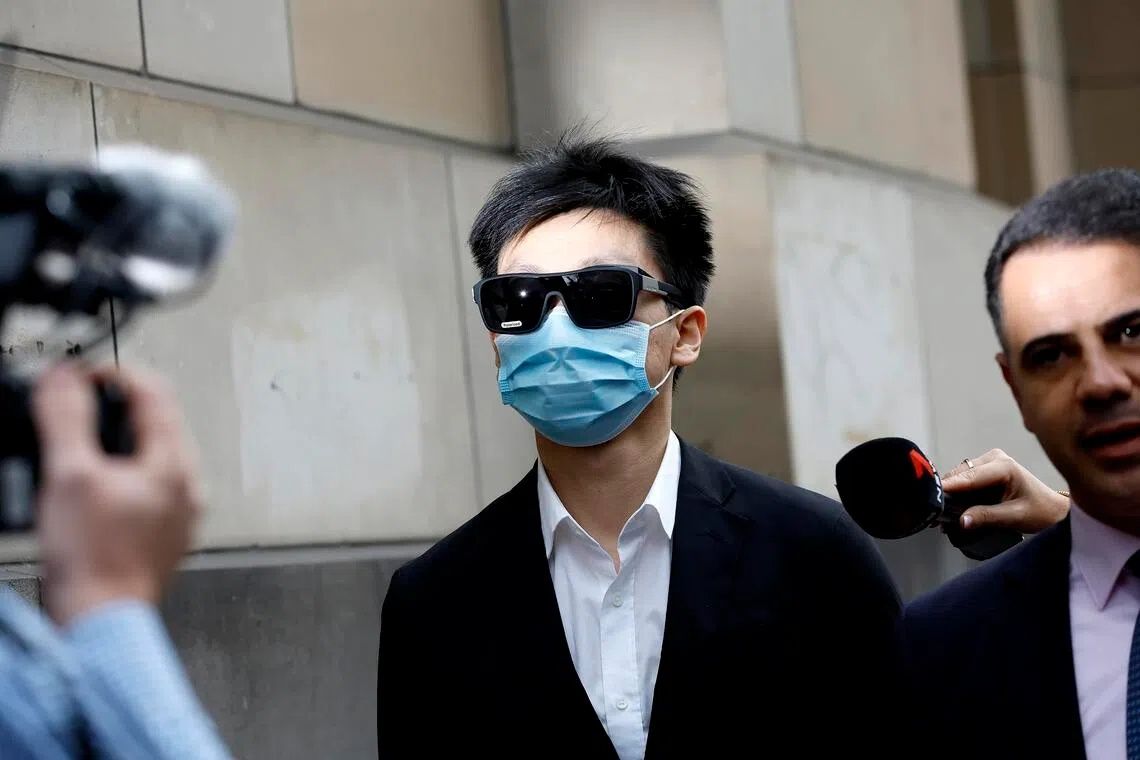
A 28-year-old trainee physician from Singapore has admitted in an Australian court to the systematic sexual recording of hundreds of fellow hospital workers, marking a significant case that raises uncomfortable questions about workplace safety and institutional accountability across the region's medical sector. Ryan Cho entered guilty pleas to 13 charges at Melbourne Magistrates Court on Thursday, including stalking, installing hidden recording devices, and producing intimate images without consent, stemming from his time working at three major healthcare facilities between 2021 and 2025.
The scale of the violations is striking. Police investigators uncovered more than 10,000 video and photographic files spanning across 500 victims from Cho's electronic devices, including a laptop, hard drive, and mobile telephone seized from his residence. Among these files were approximately 4,500 videos, each representing a breach of privacy and dignity in the most vulnerable moments. The discovery emerged after staff at the Austin Hospital located a concealed mobile phone in a mesh bag positioned inside a staff toilet, revealing that what appeared to be isolated incidents were in fact part of a coordinated pattern extending across three of Melbourne's largest medical institutions—the Austin Hospital, Royal Melbourne Hospital, and the Peter MacCallum Cancer Centre.
Choices made by medical trainees carry particular weight in professional contexts, and this case exposes systemic vulnerabilities that extend well beyond one individual's criminal conduct. Cho's presence in Australian healthcare institutions began in 2017 when he first migrated from Singapore, subsequently pursuing medical qualifications at Monash University before securing positions at the three target hospitals. His arrest came in July 2025, following the discovery at Austin Hospital, with subsequent police investigation revealing the full scope of his offending behaviour. The period between 2021 and 2025 represents years during which institutional security measures apparently failed to detect systematic misconduct of this magnitude.
The legal process reflects the severity with which Australian authorities are treating the matter. Initially, investigators laid 910 charges against Cho, a number subsequently consolidated into 13 counts through an agreement between prosecution and defence teams. During the brief court hearing, which lasted under thirty minutes, Magistrate Michelle Mykytowycz stated she was satisfied that sufficient evidence existed for jury conviction on all charges. Cho, dressed formally in black suit and white shirt, stood to enter his guilty pleas, with his father Wilson Cho, a Singapore logistics manager, observing proceedings from the courtroom's rear.
Bail arrangements underscore the complexities surrounding the case's progression. Cho remains free pending sentencing, bound by substantial conditions including a A$50,000 (S$44,850) surety lodged by his parents in 2025. His parents have committed to residing in Melbourne throughout the legal proceedings to ensure compliance with stringent bail restrictions. These conditions require Cho to report to police three times weekly, maintain absolute no-contact with witnesses, avoid hospital attendance except in genuine emergencies, surrender photography and video equipment access outside his residence, and undergo designated psychological treatment. He has already surrendered his passport, further limiting movement.
Julian McMahon, Cho's legal representative, characterized his client as a "complicated young professional man" with what would "almost certainly be recognised as complex psychological issues." This characterisation introduces the question of mental health factors underlying the criminal behaviour, though it notably does not excuse the systematic nature of the violations. The pre-sentence hearing, scheduled for November 23 and anticipated to span three days, will occur in Melbourne's County Court and is expected to include impact statements from victims, providing an opportunity for those affected to articulate the consequences of the privacy breaches and workplace violations they experienced.
The broader institutional and legal ramifications extend beyond criminal proceedings. Approximately 100 victims, predominantly women, have lodged human rights complaints against the three hospitals with the Australian Human Rights Commission, alleging sexual harassment and workplace discrimination. Tony Carbone, managing partner of Carbone Lawyers, indicated expectations that additional hospital employees would join the case proceedings. This parallel legal action addresses not only individual criminal liability but also systemic failures that permitted such conduct to continue undetected across multiple years and three separate institutions, raising questions about security protocols, workplace culture, and institutional responsibility that resonate across regional healthcare systems.
For Malaysian and Southeast Asian readers, this case presents cautionary implications regarding medical professional standards and institutional governance. The Australian Medical Practitioner Regulation Authority suspended Cho's medical registration in 2025, reflecting the immediate professional consequences of such conduct. The incident underscores that credentials and geographic location offer no immunity from criminal responsibility and that healthcare systems must implement robust monitoring and security measures to protect staff dignity and safety. The case also highlights how offshore education and migration pathways require ongoing professional accountability mechanisms, regardless of where medical professionals ultimately practice.
The convergence of criminal charges with human rights complaints represents a comprehensive legal response that addresses both individual culpability and institutional accountability. For healthcare administrators throughout the Asia-Pacific region, the case demonstrates the necessity of regular security audits, particularly in sensitive spaces, and workplace cultures where staff feel empowered to report concerning behaviour immediately. The sophistication of hidden recording technology has outpaced institutional security awareness in many settings, creating vulnerabilities that require proactive identification and mitigation.
Sentencing in November will determine the custodial and non-custodial consequences Cho faces, with victim impact statements expected to influence judicial assessment of harm. The case's prominence in Australian media reflects broader societal concern regarding privacy violations and workplace safety. For the medical profession internationally, including Malaysia's healthcare sector, it reinforces the importance of comprehensive background screening for international medical graduates, ongoing professional conduct monitoring, and institutional cultures that prioritise worker protection. The discovery that such systematic violations occurred across three major hospitals over approximately four years raises uncomfortable questions about detection capacity and institutional responses to staff concerns that merit examination across regional healthcare systems.

