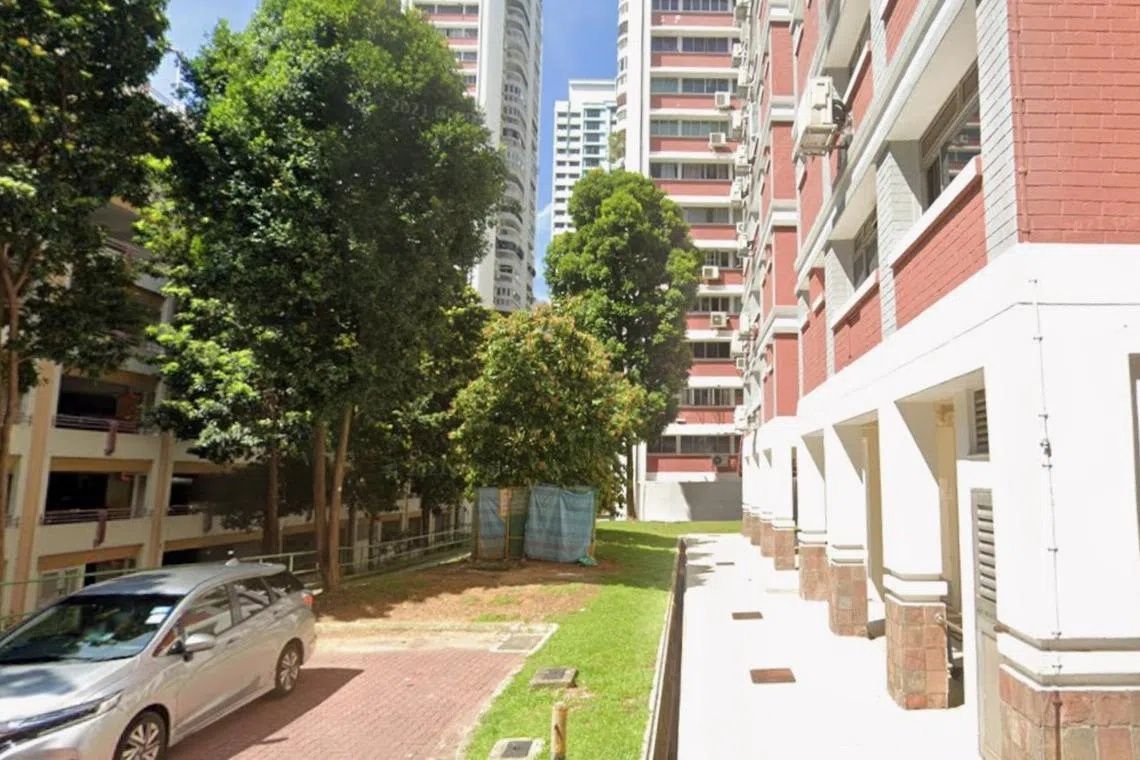
A 46-year-old woman remains in custody following a violent knife assault on an acquaintance at a residential Housing Board block in Bukit Merah, Singapore's densely populated south-central district. The incident occurred on Saturday evening at 7 Kim Tian Place, prompting police response and raising fresh concerns about sudden violent crime in HDB neighbourhoods where families and elderly residents live in close quarters.
Police received an emergency call for assistance at approximately 7.40pm on July 4, responding quickly to the scene at the five-room HDB block. Upon arrival, officers discovered evidence of a confrontation involving the 46-year-old suspect and a 43-year-old victim. The nature of the dispute between the two acquaintances remains unclear, though investigators are examining whether underlying tensions or personal grievances escalated into violence during their interaction.
The attack left visible traces at the void deck of the building, where residents typically gather, with bloodstains reported by witnesses and documented by responding officers. This public location aspect of the incident underscores how quickly intimate disputes can spill into communal spaces, potentially exposing other residents and children to traumatic scenes.
The suspect was apprehended at the scene and formally arrested on suspicion of causing grievous hurt with a weapon. Police seized the knife used in the assault as a critical piece of evidence. The charge carries significant legal weight under Singapore's Penal Code, reflecting the severity with which authorities treat armed violence and the use of weapons to inflict bodily injury.
The victim, though wounded, remained conscious when emergency responders transported her to Singapore General Hospital for medical evaluation and treatment. Her survival and responsive state suggest the injuries, while serious enough to warrant hospitalisation, did not pose an immediate life threat. Doctors would assess the extent of lacerations and determine whether surgical intervention or ongoing wound management would be necessary.
Chinese-language daily Shin Min Daily News provided additional detail about the scene, noting the visible bloodstains and the shock experienced by other residents witnessing the aftermath of such violence in their residential community. These details, while graphic, illustrate the immediate impact of sudden crime on neighbourhood safety perceptions and residents' sense of security in shared living spaces.
This incident reflects a broader pattern across Singapore's HDB estates, where close residential proximity and stress occasionally culminate in domestic or interpersonal violence. While Singapore maintains one of the world's lowest violent crime rates, such incidents remind residents and policymakers that no neighbourhood is entirely immune from sudden altercations, and that even well-policed communities can experience stabbing cases.
The police investigation remains ongoing, with detectives working to establish the exact circumstances preceding the attack. Officers will interview both the victim and suspect, examine witness statements from residents who may have heard or seen the incident, and investigate whether the dispute had a prior history or emerged spontaneously. Understanding the motive and relationship dynamics becomes crucial for prosecutors building a case and for judges determining appropriate sentencing.
For Malaysian readers, this incident offers a comparative perspective on urban crime in neighbouring Singapore. While cross-border crime occasionally dominates headlines, violent assaults involving weapons represent a persistent challenge in densely populated HDB estates, much like certain neighbourhoods in Malaysian cities face periodic spikes in violent offences. The rapid police response and evidence preservation protocols demonstrated in this case illustrate Singapore's institutional efficiency in crime management, though it also underscores that resources and swift response cannot entirely eliminate interpersonal violence in societies with millions of residents.
The Bukit Merah area, home to numerous multi-generational families and pensioners, typically experiences moderate crime rates reflective of Singapore's overall safety standards. This particular stabbing case, however, disrupts the routine calm of daily life and raises questions about whether early intervention, community mediation services, or mental health support might prevent escalation of personal disputes into violent confrontations.
Police have not yet disclosed whether the suspect or victim had prior criminal records, whether substance abuse was involved, or whether mental health factors played a role in the incident. These details, typically released as investigations conclude, often provide context for understanding how an acquaintance relationship deteriorated into weaponised violence.

