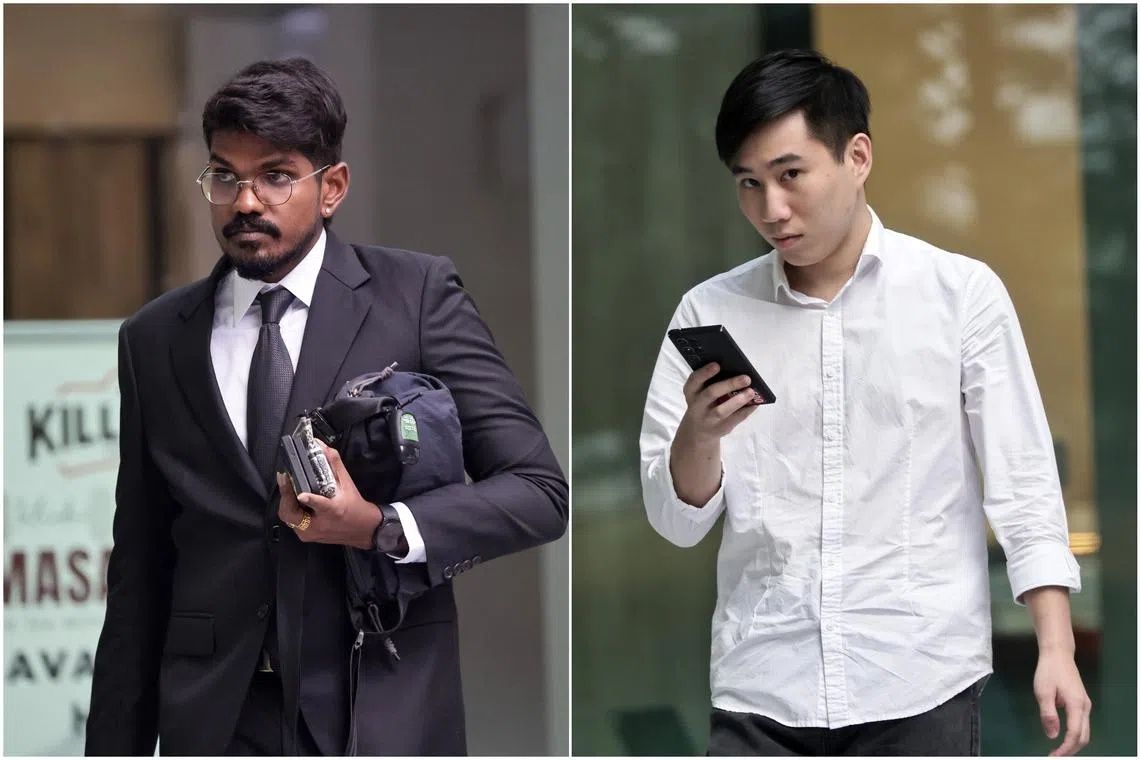
A 29-year-old Singapore Traffic Police investigation officer has been sentenced to a year and four months in prison for systematically breaching the country's Official Secrets Act and misusing police computer systems to help a friend evade justice. The case, decided by District Judge Lim Tse Haw on Thursday, underscores serious vulnerabilities in how government personnel can exploit their access to sensitive databases and the severe consequences when professional duties are corrupted by personal relationships. The incident also highlights the escalating dangers that whistleblowers and complainants face when confronting officials suspected of wrongdoing.
Shivasuria Maniam Kesaval was convicted on four counts of unlawfully accessing Ministry of Home Affairs computer systems and one charge under Singapore's Official Secrets Act. His co-offender, Brayden Ong Ying Shan, 25, a man with a history of traffic violations, was found guilty of criminal intimidation and a related OSA breach. The case emerged from a straightforward traffic matter that spiralled into an alarming abuse of authority when Ong's ex-partner reported him to police for driving without a valid licence in July 2022. What followed was a calculated exploitation of insider access that endangered the complainant's safety and compromised the integrity of Singapore's law enforcement systems.
The sequence of events began when Traffic Police colleagues, acting on the woman's report, intercepted and impounded Ong's vehicle on July 12, 2022. Rather than accept the consequences of his unlicensed driving, Ong immediately contacted Shivasuria, who was not only a friend but someone whose position gave him privileged access to police records. Between July 14 and July 26, Shivasuria performed multiple searches across government databases, extracting the woman's personal details and the original complaint filed against Ong. The court was told these searches were not conducted for any legitimate policing purpose—they were purely to serve his friend's interests in identifying and potentially retaliating against his accuser.
The information Shivasuria obtained proved weaponised by Ong with alarming speed. The investigation revealed that by deducing the timing of when the initial report was filed, Ong correctly concluded the woman was responsible for reporting him. On July 15, 2022, he confronted her with explicit death threats, telling her he would "murder" whoever had contacted authorities. In a chilling display of intimidation, he sent her a photograph of Shivasuria while boasting about having "a TP friend that is high ranking," effectively leveraging his corrupted relationship with the officer as a weapon of intimidation. Ong went further by instructing the woman to provide the names of family members, threatening that he would use Shivasuria's official position to run checks on them—a terrifying illustration of how abused official power can extend threats beyond the initial complainant to their entire household.
The woman, facing these escalating threats, lodged a formal police complaint in late July 2022. This complaint ultimately exposed both men's crimes, leading to Shivasuria's suspension from the Traffic Police in August 2022. At trial, the prosecution presented a carefully constructed case demonstrating that Shivasuria's actions were neither impulsive nor inadvertent. He had repeatedly met Ong during the period of illegal database access, had disclosed when the complaint against Ong was first made, and had clearly understood the implications of sharing information that would enable his friend to identify and threaten the complainant. The fact that Shivasuria represented himself without legal counsel and offered only a written mitigation statement that was not even read in court suggested minimal acceptance of responsibility for his actions.
The Deputy Public Prosecutor had sought 19 months imprisonment for Shivasuria, arguing he had demonstrated no genuine remorse and that his breach of trust warranted a substantial custodial sentence. The court settled on 16 months, a significant penalty reflecting the seriousness with which Singapore treats breaches of official secrecy laws and the abuse of police authority. The punishment also serves as a signal that those in positions of government trust who exploit their access to vulnerable members of the public face severe legal jeopardy, a critical deterrent given that such abuses can profoundly undermine public confidence in law enforcement and create genuine physical danger for whistleblowers and complainants.
Ong's whereabouts and circumstances changed dramatically following his conviction. On June 2, he fled Singapore by boat, abandoning his appeals and family ties. A warrant for his arrest has been issued, though his location remains unknown. The prosecution indicated that a review of his case would be scheduled for July 14, likely to consider sentencing adjustments or the enforcement of his sentence should he ever be apprehended. The fact that Ong fled rather than face sentencing reflects the gravity of his offences and suggests he understood that a substantial jail term was likely given his explicit death threats and the documented pattern of intimidation.
For Malaysia and other Southeast Asian nations, this case offers important lessons about the vulnerability of government database systems and the critical importance of strict internal oversight mechanisms. While Singapore's law enforcement and judicial systems functioned effectively in this instance—identifying the breach, prosecuting both offenders, and delivering meaningful sentences—the case demonstrates how easy it can be for insiders with legitimate system access to exploit their position. The months-long period during which Shivasuria accessed databases without detection raises questions about audit trails, supervisor oversight, and internal security protocols that should concern technology administrators across the region. The case also illustrates the particular danger that whistleblowers and complainants face in societies where they may report officials to people they believe will act in the public interest, only to discover that personal relationships and corruption have compromised that system.
Moreover, the incident underscores how the abuse of official power intersects with violence and intimidation in ways that extend far beyond the initial wrongdoing. Ong's unlicensed driving was itself a relatively minor traffic violation, yet when combined with access to police information and the willingness to threaten violence, it became a systematic effort to intimidate and potentially harm his accuser. The progression from traffic offence to database breach to death threats illustrates how corruption operates as a sliding scale—once officials begin using their access for personal benefit, the boundary between helping a friend and facilitating serious crimes becomes dangerously blurred. Shivasuria's case is therefore not merely about computer misuse; it represents a fundamental betrayal of the public trust that should resonate as a warning across the region's law enforcement and civil service establishments.

