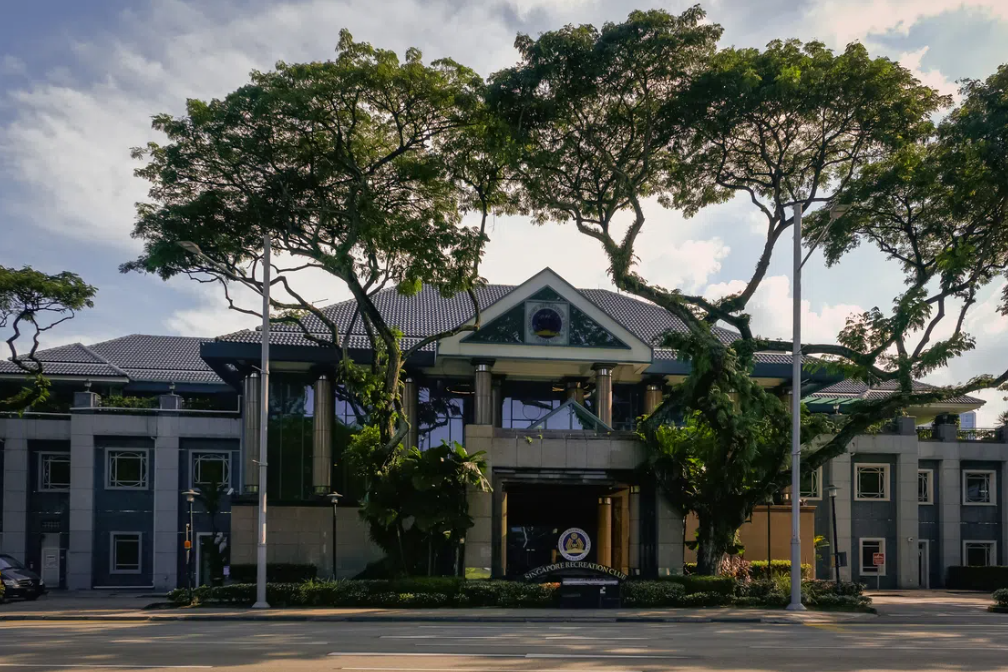
A High Court judge in Singapore has cleared the way for a full trial to examine the controversial resolution passed by members of the Singapore Recreation Club to convert its billiards room into a co-working space, rejecting management's attempt to have the lawsuit struck out before proceeding to trial. Senior Judge Chan Seng Onn's decision, announced on August 26 with detailed written reasons, determined that the case raises legitimate legal issues worthy of court examination, particularly around how the vote was structured and which votes should be counted. The ruling represents a significant setback for the club's management committee, which had sought to dismiss the challenge on procedural grounds and avoid a trial altogether.
Two billiards section members, Sean Kerwin Mathews and Mu Yee Shyong, initiated their legal challenge in November 2025 after the club passed the transformation resolution at an extraordinary general meeting on October 18, 2025. Their core argument centres on whether the vote met the required threshold under the club's Constitution. Both men contend that the resolution needed approval from a majority of the 559 members physically present at the meeting—effectively requiring at least 280 votes in favour. Since only 151 members voted for the conversion proposal, the challengers argue the resolution failed to achieve the necessary support and should be invalidated.
The voting mechanics that underpin this dispute reveal the complexities at hand. Members received two separate voting slips with different instructions. The first slip allowed members to either approve proceeding with the originally planned relocation of the billiards room and pay $4.9 million in land betterment charges, or reject that option. Critically, if someone voted "yes" on the first slip, they received no second slip. Only those who voted "no" on the first slip received a second slip offering two mutually exclusive alternatives: either converting the billiards room into a standalone co-working space, or integrating it into a broader co-working facility. Members could only choose one of these two alternatives, not both.
The outcomes of the October 18 vote illuminate why this legal dispute matters. Of 514 total votes cast, only 151 supported the second resolution—the conversion to a dedicated co-working space. Against it were 125 votes. The remaining 238 votes were either spoilt or blank, raising the central interpretive question: should blank and spoilt votes count as affirmative opposition to the measure? The club's management committee counted only the 125 explicit "no" votes when calculating whether a simple majority had endorsed the conversion, concluding that 151 votes represented 54.7 percent of valid votes and thus satisfied the threshold. Mathews and Mu argue that 55 blank votes, combined with the 125 explicit rejections, total 180 votes against—sufficient to defeat the measure.
Senior Judge Chan's assessment found merit in multiple aspects of the challengers' legal position. He identified a genuine triable issue regarding whether the Constitution's majority rule actually applied to the resolution in question, suggesting that the interpretation of governing documents was not straightforward enough to justify dismissing the case before trial. More compellingly, the judge found that the case raised legitimate questions about how to treat blank and spoilt votes when members faced restricted voting choices. Chan noted that while blank or spoilt votes ordinarily do not signify either support or opposition to a proposal, this situation appeared unique because the management committee had structured voting in a manner that prevented members from voting "no" on both available alternatives without spoiling their ballots.
The judge's reasoning touched on a fairness dimension that extended beyond mechanical vote counting. He observed that the club's management had presented members with two competing resolutions requiring them to choose between different versions of a co-working space arrangement without offering a meaningful option to reject the entire concept. This constructed constraint on voting options, coupled with the absence of a "no" button applicable to all possibilities, meant that members who wished to express categorical opposition to any co-working conversion found their position effectively devalued or eliminated. Chan concluded this arrangement potentially breached members' fundamental entitlement to vote fairly on club matters.
The club and its management committee, represented by legal counsel Walter Alexander, had contested the trial's necessity, contending that invalidating the resolution would serve no legitimate purpose and would leave the club trapped in deadlock. The management argued that the entire lawsuit lacked utility because even if courts overturned the October resolution, the underlying problem—the escalated land betterment charges and financial constraints—would remain unresolved. Judge Chan rejected this argument directly, concluding that a fresh vote conducted with proper procedures and fair voting options would represent a meaningful remedy. He emphasised that the claimants sought nothing more than a genuine, properly conducted ballot on a complex decision affecting the club's future direction.
Understanding the broader context makes this dispute particularly resonant for Southeast Asian readers familiar with similar governance tensions at clubs and associations across the region. The Singapore Recreation Club, with approximately 7,000 members, represents one of the region's storied social institutions, making decisions about its physical space and amenities matters of genuine member interest. The club initially approved a substantial $16.6 million transformation programme in March 2024, intending to relocate the billiards facilities to basement level and create a modern co-working environment on level two. Management initially budgeted $1.5 million for land betterment charges—a tax levied on increases in land value—but when actual charges reached $4.9 million, the original plan became financially untenable from the management's perspective.
The situation reveals broader questions about how governance structures in voluntary associations function when circumstances change dramatically. The management's subsequent approach—crafting resolutions that effectively forced members into a binary choice between accepting expensive relocation or choosing between two co-working variants—suggests frustration with what members had previously endorsed but could no longer afford. Yet this approach also raises concerns about whether management adequately protected members' rights to express fundamental opposition to the transformed proposal. The legal challenge, from this perspective, represents members reasserting their prerogative to make informed decisions about the organisation's direction when circumstances materially differ from those originally contemplated.
The implications of the court's decision extend beyond this single dispute. First, it signals that Singapore's judiciary will scrutinise voting procedures and governance structures closely, particularly when associations alter voting mechanisms or impose constraints on member choice. Second, it establishes that fairness in voting—not merely technical compliance with minimum thresholds—constitutes a valid legal principle deserving court protection. Third, for club members throughout Southeast Asia, the ruling reinforces that unilateral management authority to restructure governance processes faces potential legal challenge, even at well-established institutions with significant memberships. Fourth, it suggests that organisations cannot exploit procedural technicalities or voting restrictions to engineer predetermined outcomes when members' legitimate interests in fair representation remain at stake.
As the case proceeds to trial, both sides will present evidence and arguments about the Constitution's precise requirements, the intended scope of voting procedures, and how similarly situated international clubs conduct major decision-making. The trial will likely examine whether parallel procedures at other social clubs provide evidence of standard practice that might illuminate the Singapore Recreation Club's intended voting methodology. The outcome will determine not only the immediate question of whether the October resolution stands but could also reshape governance expectations across Singapore's substantial club and association sector, with potential ripple effects throughout the region.

