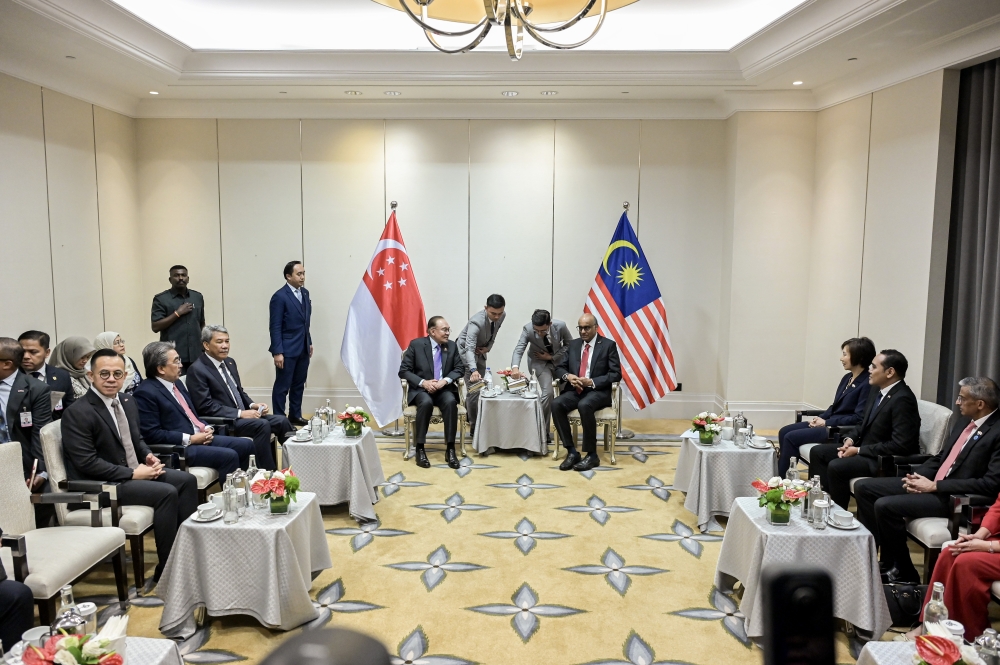
Prime Minister Datuk Seri Anwar Ibrahim on Monday received Singapore President Thalif Mahmud in a formal courtesy call at his office in Kuala Lumpur, marking a significant moment in Malaysia-Singapore diplomatic engagements. The meeting, which lasted 40 minutes, underscored the significance both nations place on maintaining regular high-level dialogue during an era of shifting geopolitical dynamics in Southeast Asia.
The encounter came as part of President Thalif's state visit to Malaysia, a visit that carries symbolic weight given the historical complexities and current interdependencies between the two neighbouring city-state and peninsular nation. Such official visits typically serve as platforms for leaders to address substantive matters affecting bilateral relations while projecting shared commitment to regional stability. The brevity of the meeting—40 minutes—suggests focused, purposeful engagement rather than perfunctory protocol, indicating both leaders had specific issues to address.
Malaysia and Singapore have long shared an intricate relationship marked by collaboration in trade, transportation, and security, alongside occasional tensions over maritime boundaries and resource allocation. The two nations maintain one of the most active bilateral trading relationships in Southeast Asia, with thousands of Malaysians commuting daily to Singapore for employment and vice versa. This deep economic integration means that diplomatic channels must remain open and productive to address emerging challenges efficiently.
The state visit by President Thalif represents Singapore's continued emphasis on engaging ASEAN partners at the highest levels, particularly Malaysia, which chairs crucial regional forums and maintains significant influence within the bloc. Malaysia's geographic position between the Strait of Malacca—one of the world's busiest shipping lanes—and the South China Sea places it at the intersection of critical global trade routes and strategic interests. Singapore, as a financial hub and logistics powerhouse, depends on smooth relations with its Malaysian neighbours to maintain its position as a regional gateway.
During such formal meetings, agendas typically encompass trade negotiations, infrastructure development, people-to-people exchanges, and regional security cooperation. The two nations have been collaborating on various fronts including water supply arrangements, which remain a sensitive but essential component of bilateral relations given Singapore's dependence on Malaysian resources. Additionally, joint efforts in combating transnational crime, terrorism financing, and maritime security form regular components of high-level discussions.
The timing of this visit carries implications for broader Southeast Asian diplomacy, particularly as nations navigate intensifying great power competition between the United States and China. Both Malaysia and Singapore maintain careful diplomatic balances, seeking to benefit from economic ties with both powers while avoiding excessive strategic alignment that might compromise their non-aligned principles. Presidential visits and courtesies between these nations signal continuity of engagement despite global complexities.
From Malaysia's perspective, reinforcing ties with Singapore becomes increasingly important as the nation pursues infrastructure mega-projects and economic diversification strategies. Singapore's advanced expertise in financial services, technology, and urban management offers valuable learning opportunities for Malaysia's policymakers. Conversely, Singapore values its access to Malaysian natural resources, labour markets, and strategic positioning within Malaysian territory for its regional operations.
The courtesy call also reflects evolving protocols in Southeast Asian diplomacy, where state visits increasingly emphasise substantive engagement over ceremonial gestures alone. Both leaders likely discussed matters extending beyond immediate bilateral concerns to encompass regional challenges such as climate change, digital transformation, and pandemic preparedness. These transnational issues require coordinated responses that transcend individual national boundaries, making collaborative frameworks essential.
For Malaysian readers, understanding the significance of such high-level visits helps contextualize the nation's role within regional power structures. Malaysia's ability to maintain productive relationships with neighbouring Singapore while engaging larger global powers determines much of its economic prosperity and political influence. The visit demonstrates that despite occasional diplomatic friction, the two nations recognise the mutual benefits of sustained cooperation and regular dialogue at all levels of government.
Looking forward, the outcomes of this meeting may influence the trajectory of several pending bilateral projects and initiatives. Infrastructure developments, particularly those affecting cross-border movement and trade efficiency, often require presidential or prime ministerial endorsement before advancing through bureaucratic channels. Additionally, decisions regarding maritime cooperation, environmental protection in shared waters, and regional security arrangements frequently depend on commitments made during such high-level encounters.
President Thalif's visit also provides opportunity to address any outstanding grievances or misunderstandings that occasionally emerge between neighbouring nations sharing land and maritime borders. Regular presidential visits serve preventive diplomatic functions, allowing leaders to resolve potential conflicts before they escalate into formal disputes that might require international mediation or intervention by larger regional powers.
The success of this meeting, while difficult to quantify from external observation, likely depends on whether both parties identified actionable items for their respective foreign ministries and specialised agencies to pursue. Follow-up mechanisms established during such visits typically involve working groups, task forces, and scheduled review sessions that maintain momentum on bilateral initiatives. These institutional frameworks ensure that courtesies translate into tangible improvements in bilateral relations benefiting both nations' citizens and regional stability more broadly.

