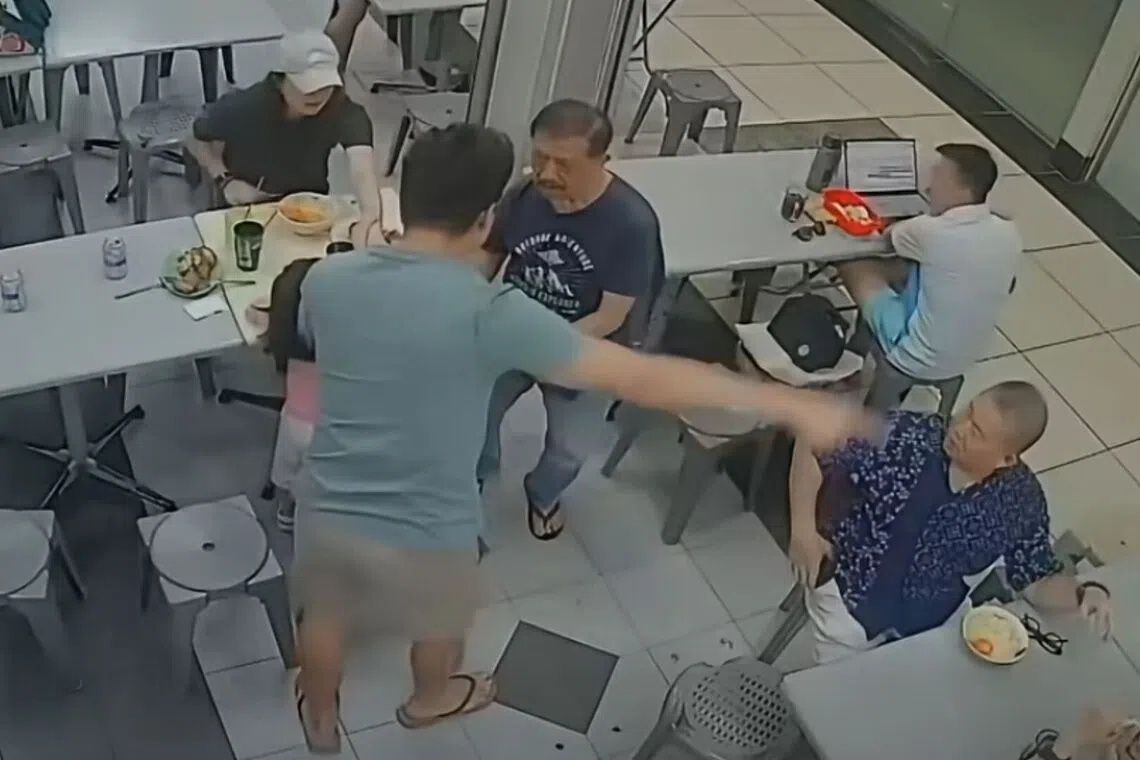
Singapore's police force has opened an investigation into a disturbing incident at a coffee shop in the East Coast area where an elderly man was allegedly shoved to the ground following a seemingly innocent gesture toward a child. The case, which emerged on social media over the weekend, has sparked broader conversations about intergenerational courtesy, personal boundaries, and proportional responses to minor transgressions in public spaces.
Authorities confirmed on Sunday, August 16 that a formal report had been filed and that investigations were underway. The incident itself occurred prior to the report being made public, with initial details emerging through a Facebook post from the elderly man's son on August 15. The circumstances surrounding the altercation reveal a complex and troubling social dynamic that raises questions about how tensions escalate in everyday settings across Singapore's bustling food establishments.
According to the account provided by the man's son, his father is in his 70s and experiences significant mobility challenges that require him to move carefully through public spaces. Despite these physical limitations, the elderly man remains active and contributes to the family's livelihood by helping out at a food stall. This detail provides important context suggesting that the man was not a random patron but someone with a specific role and connection to the location where the incident occurred.
Security camera footage posted alongside the family's initial appeal shows the elderly man navigating through the crowded coffee shop by steadying himself on tables as he walks. His gait is visibly careful and deliberate, reflecting his acknowledged difficulty with mobility. As he passes by a table where a young girl is seated, he extends his hand and gently pats the child on the head—a gesture that many in Asian cultures, particularly among the older generation, would typically regard as a benign expression of affection or kindness toward youth.
The response to this gesture, however, escalated rapidly. A woman seated at the same table as the girl immediately attempted to block the elderly man's hand by pushing it away, signaling displeasure at the physical contact. This intervention might have ended the matter, but the situation deteriorated when a man who had apparently been at the table quickly returned and confronted the elderly man verbally. Without apparent attempt at further dialogue or de-escalation, the man then forcefully shoved the elderly man to the ground, an action with serious potential consequences given the victim's age and evident physical frailty.
The aftermath of the push revealed a notable contradiction in the alleged perpetrator's behavior. According to the son's account, the man who had shoved his father subsequently apologized and even offered him a drink. This apparent reconciliation, while welcome, did not diminish the physical harm inflicted. The elderly man suffered severe back pain as a direct result of being pushed to the ground, a particularly concerning outcome for someone already dealing with mobility issues. Back injuries in elderly individuals can have cascading health implications and may significantly impact quality of life and independence.
The family's response to the incident centered on seeking public assistance in identifying the man responsible. Through his initial Facebook post at 7:14 p.m. on August 15, the son appealed to the online community for information that might help establish the identity of the alleged perpetrator. The post gained traction within Singapore's active social media community, highlighting how digital platforms have become crucial tools for documenting and investigating local incidents.
In a follow-up post the next morning at 9:55 a.m. on August 16, the son expressed gratitude to concerned netizens and acknowledged those who had come forward with relevant information. However, he noted that despite these efforts and the public attention generated, he still lacked definitive identification of the man involved. This gap between the desire for accountability and the practical challenges of identification underscores the limitations of crowd-sourced investigations, even in an era of ubiquitous camera phones and security systems.
The incident touches on several significant social tensions present in modern Singapore. First, it highlights generational differences in attitudes toward physical contact with children and appropriate boundaries in public spaces. Second, it raises questions about how disputes are resolved when differing expectations about social norms collide. Third, it illustrates the vulnerability of elderly citizens in crowded public environments and the potential consequences when confrontations occur. For Malaysian and Southeast Asian readers, the case resonates as an extreme example of how misunderstandings rooted in cultural practices and modern sensibilities can rapidly deteriorate into physical conflict.
The police investigation now focuses on establishing a clear account of events and determining whether the man's actions constitute an assault or whether mitigating circumstances reduce culpability. Authorities will likely review additional security footage, interview witnesses present at the coffee shop, and obtain statements from all parties involved. The case may ultimately test Singapore's legal framework around proportionality in self-defense and the appropriate response to perceived threats or inappropriate behavior.
This incident also raises broader questions about conflict resolution and the role of proportional responses in civil society. Many observers have noted that an apology and offer of refreshment, while gestures toward reconciliation, cannot fully address the physical harm inflicted on an elderly person. The case demonstrates how quickly social situations can deteriorate and underscores the importance of maintaining composure and employing verbal communication before resorting to physical force, particularly when the perceived transgression is minor and the recipient is elderly or vulnerable.
As the police investigation proceeds, the case serves as a reminder of the delicate social contract that enables diverse communities to coexist peacefully in densely populated urban environments. It highlights the importance of mutual respect across generational lines, clarity about acceptable forms of interaction in public spaces, and measured responses to situations that provoke concern or offense. For the elderly man involved, the incident has resulted not only in physical injury but also in the distressing experience of being publicly confronted and knocked to the ground, raising important considerations about duty of care and proportionality in everyday interactions.

