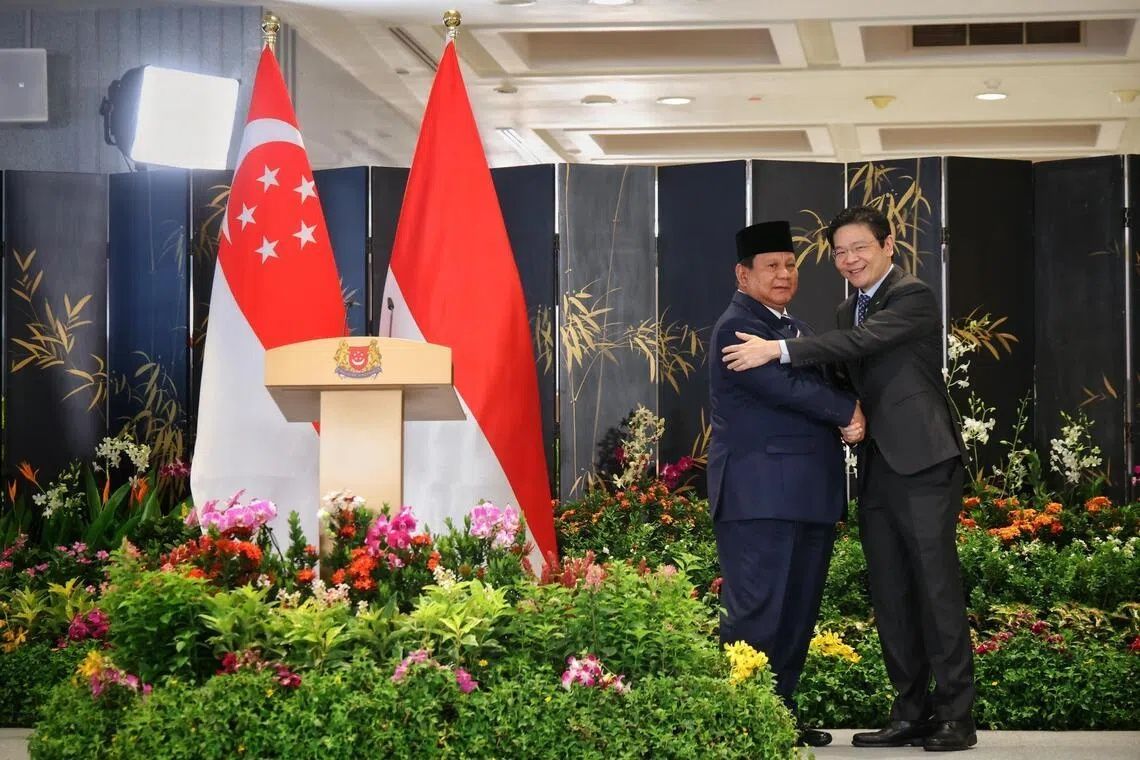
Prime Minister Lawrence Wong is set to make an official visit to Jakarta on Monday, July 6, for a high-level bilateral summit with Indonesian President Prabowo Subianto. The Singapore-Indonesia Leaders' Retreat represents the cornerstone of diplomatic engagement between the two neighbouring nations, bringing together the highest echelons of both governments to chart the course of their relationship and explore new avenues of cooperation. This gathering, which will be hosted by President Prabowo, marks only the second such annual retreat to be held under the current leadership of both countries, underscoring its significance as a platform for direct dialogue between the two leaders.
The previous Leaders' Retreat took place in Singapore during June 2025, establishing a cadence of alternating venues between the two capitals. The April 2024 gathering in Indonesia, held at the Bogor Presidential Palace, featured then Prime Minister Lee Hsien Loong and then President Joko Widodo, with both PM Wong and President Prabowo participating as designated successors to their respective offices. The continuity of this mechanism demonstrates the institutionalised nature of Singapore-Indonesia relations and the commitment both governments have to maintaining regular strategic dialogue at the apex of their administrations.
According to Singapore's Prime Minister's Office, the retreat serves as a reaffirmation of the profound and lasting bilateral relationship that has been cultivated between Singapore and Indonesia over decades. Both governments have signalled their determination to expand and deepen the scope of their cooperation, moving beyond the foundational pillars of trade, investment, and defence that have historically anchored their partnership. The PMO statement emphasised that the leaders will use the platform to review progress on bilateral initiatives launched since the previous retreat and to identify fresh opportunities for collaboration that align with the strategic interests and development priorities of both nations.
During the retreat, PM Wong and President Prabowo are anticipated to conduct a comprehensive review of bilateral projects that have advanced since their last meeting. This stocktaking exercise is essential for both capitals to assess implementation progress, identify bottlenecks, and recalibrate strategies where necessary. Beyond project-specific discussions, the two leaders will engage in broader strategic conversations regarding regional and global developments, allowing them to synchronise their perspectives on major international issues and coordinate positions on matters of mutual concern within ASEAN and the wider global order.
The retreat occurs at a particularly dynamic moment in Singapore-Indonesia relations, as both countries have begun expanding their cooperative agenda into frontier sectors that reflect contemporary development priorities and technological advancement. The green economy represents a critical area of mutual interest, given the region's vulnerability to climate change and the economic opportunities inherent in the transition to sustainable energy systems. Cross-border electricity trade has emerged as a practical avenue for deepening integration, with potential to enhance energy security across the region whilst advancing renewable energy adoption. Additionally, carbon capture and storage technologies present opportunities for industrial collaboration and environmental stewardship.
Artificial intelligence and digital connectivity feature prominently on the bilateral agenda, reflecting recognition by both governments that technological leadership will define competitive advantage in the coming decades. These sectors offer pathways for skill transfer, research collaboration, and the development of digital infrastructure that benefits both economies. The expansion into these forward-looking domains signals that Singapore-Indonesia cooperation is not merely maintaining historical ties but actively positioning both nations for success in an evolving global economic landscape characterised by rapid technological disruption and climate imperatives.
Financial ties between the two countries remain remarkably robust, with Singapore maintaining its position as Indonesia's leading source of foreign direct investment throughout 2025. The contribution of US$17.4 billion in that year—equivalent to approximately S$22.4 billion—reflects the confidence of Singapore investors in Indonesia's economic fundamentals and growth prospects, whilst simultaneously underscoring the interconnectedness of the two economies. This substantial investment flow creates a foundation of economic interdependence that reinforces political and strategic alignment between the governments.
PM Wong will travel to Jakarta accompanied by a delegation of senior ministers representing crucial portfolios across the Singapore government. Deputy Prime Minister and Minister for Trade and Industry Gan Kim Yong will bring expertise on bilateral trade and commercial partnerships. Coordinating Minister for Public Services and Minister for Defence Chan Chun Sing represents Singapore's commitment to defence cooperation and institutional coordination. Foreign Minister Vivian Balakrishnan will facilitate diplomatic discussions and broader regional perspectives, whilst Minister for Social and Family Development Masagos Zulkifli and Minister for Manpower and Minister-in-charge of Energy and Science and Technology Tan See Leng will address sectoral cooperation in their respective domains.
The composition of this delegation reflects the whole-of-government approach that Singapore has adopted towards its relationship with Indonesia, ensuring that cooperation extends across economic, defence, social, and technological domains. This comprehensive engagement model allows both countries to identify synergies and coordinate policies across multiple levels of bilateral interaction, rather than restricting dialogue to foreign ministries alone. During PM Wong's absence from Singapore, Coordinating Minister for National Security and Minister for Home Affairs K. Shanmugam will assume the role of acting prime minister, ensuring continuity in the Singapore government's operations and decision-making processes.
For Malaysian observers and policymakers, the Singapore-Indonesia retreat holds significance beyond the bilateral sphere. The relationship between ASEAN's most developed economy and its largest archipelago-based member demonstrates how sustained institutional engagement and strategic adaptation can deepen integration between neighbouring nations. The expansion of bilateral cooperation into emerging sectors such as green energy and artificial intelligence reflects regional trends that have implications for Malaysia's own positioning within Southeast Asia. The demonstration of robust economic ties—evidenced by Singapore's substantial investment flows to Indonesia—offers lessons regarding the importance of creating stable regulatory environments and investment-friendly policies that attract regional capital.
The retreat also provides a window into how ASEAN's major economies are responding to contemporary global challenges. Climate change, digital transformation, and energy security dominate the agenda not merely as bilateral issues but as regional imperatives that require coordinated responses. As Singapore and Indonesia deepen their cooperation in these areas, the trajectory they establish may influence broader regional approaches to these challenges, potentially shaping policy frameworks that affect all Southeast Asian nations. The outcomes of this retreat, whilst primarily focused on bilateral advancement, will likely have ripple effects across the region's economic and political landscape.

