Singapore's Prime Minister Lawrence Wong has conveyed his condolences to Indonesia's President Prabowo Subianto following a pair of seismic events that struck the Indonesian archipelago over a 24-hour period, causing significant casualties and widespread structural damage. The first and more devastating quake occurred off the coast of Flores in eastern Indonesia on August 15, while a secondary tremor measuring magnitude 6.1 struck near the northern coast of Sumatra several hours later, underscoring the region's vulnerability to tectonic activity.
The initial earthquake that impacted Flores registered a magnitude of 7.7, making it a substantial seismic event capable of causing considerable destruction. According to Indonesian authorities' assessment released on August 16, the disaster claimed the lives of more than 50 individuals, while at least 135 others sustained injuries from collapsed structures and falling debris. Hundreds of residential and commercial buildings across the affected areas suffered damage ranging from minor structural compromise to complete destruction, affecting entire communities and rendering numerous structures uninhabitable.
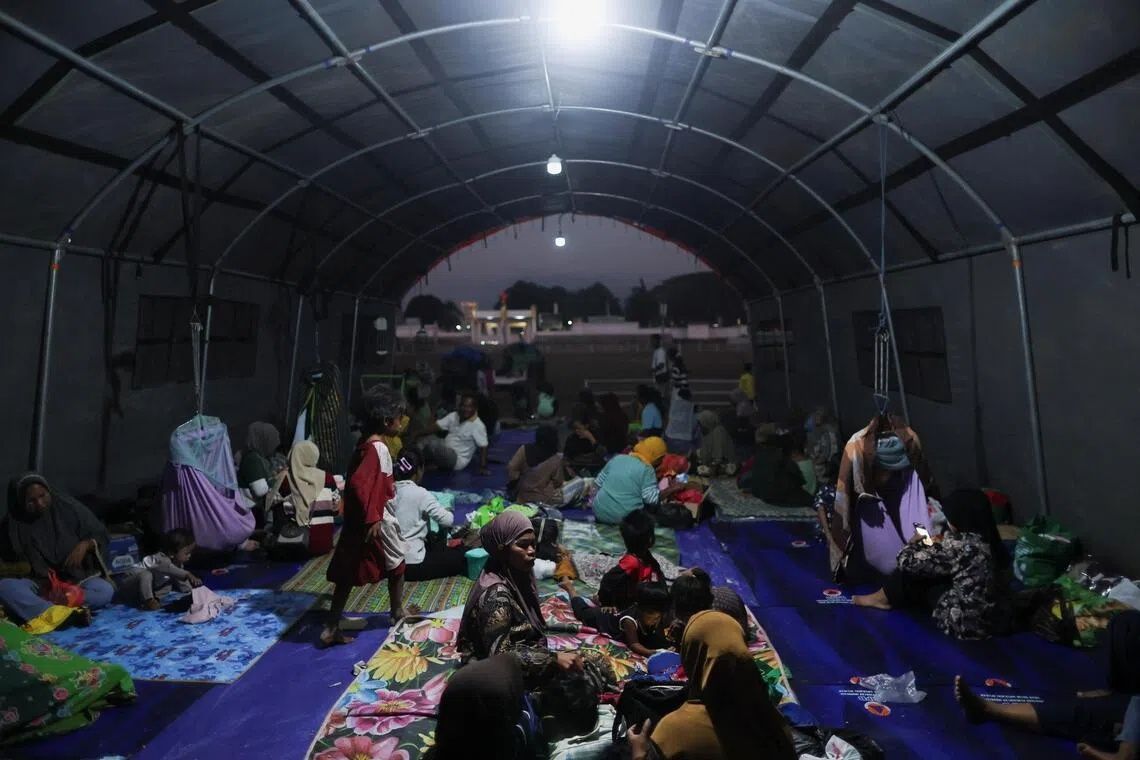
The human displacement caused by the earthquakes proved immediate and extensive. Close to 5,000 residents evacuated their homes when the initial shock waves struck early on August 15, seeking safety in open areas and temporary shelters. What compounded the crisis was the exceptional frequency of aftershock activity that followed the main event, with seismic monitoring revealing nearly 1,000 subsequent tremors occurring within hours of the primary quake. This relentless seismic activity prevented displaced residents from safely returning to their homes, even where structural damage was limited, as the risk of additional collapses remained substantial.
On August 16, Prime Minister Wong publicly articulated Singapore's position through a Facebook statement, acknowledging the human toll and expressing genuine sympathy for those affected by the dual disasters. His message conveyed sadness regarding the loss of life and the material destruction inflicted upon Indonesian communities, while affirming that these sentiments were shared by the entire Singapore Government and not merely expressed in his personal capacity. The statement represented an official diplomatic gesture reinforcing bilateral relations between the two neighbouring nations during a moment of crisis.
Wong's communication extended beyond expressions of sorrow to encompass practical acknowledgment of the ongoing emergency response efforts. His statement explicitly recognised the demanding work being undertaken by Indonesian authorities and emergency personnel engaged in search and rescue operations, as well as relief coordination across affected regions. This recognition served to validate Indonesia's crisis management response while signalling Singapore's awareness of the comprehensive challenges involved in responding to a major natural disaster of this magnitude across a geographically dispersed area.
The aftermath of the Flores earthquake revealed urgent humanitarian gaps that required immediate international attention. Survivors scattered across damaged communities faced critical shortages of basic necessities as of August 16. Emergency shelter remained desperately needed, as thousands without habitable dwellings sought protection from the elements. Food security presented an acute problem given supply chain disruptions caused by infrastructure damage. Medical needs among the injured population could not be adequately met with existing local capacity, necessitating pharmaceutical supplies and medical equipment. Access to potable water became compromised across numerous settlements due to damage to water infrastructure, creating public health risks beyond the direct earthquake casualties. The lack of reliable electricity presented compounding challenges for both emergency operations and basic humanitarian functions, while generators represented essential equipment for powering medical facilities and water purification systems.
Indonesia's position as one of the world's most seismically active regions stems from its location along the Pacific Ring of Fire, where multiple tectonic plates interact. The archipelago experiences frequent earthquakes of varying magnitudes, yet major events like the Flores quake still cause substantial casualties and disruption due to the concentration of population centres in vulnerable areas and the continuing challenge of ensuring earthquake-resistant construction standards across all building types. This latest disaster joins a long historical record of seismic events affecting Indonesia, adding to the national experience of disaster management and recovery.
For Malaysia and the broader Southeast Asian region, the earthquakes underscore the shared vulnerability to natural disasters that characterises the geography of the area. The speed and scale at which such disasters can occur, combined with the volume of displaced persons and humanitarian needs they generate, reinforces the importance of regional cooperation frameworks and disaster preparedness mechanisms. Singapore's prompt diplomatic response reflects the regional understanding that natural disasters recognise no borders and that expressions of solidarity carry practical significance for affected populations.
The second earthquake striking Sumatra, though registered at a lower magnitude of 6.1, demonstrated the unpredictable nature of seismic activity in the region and raised concerns about potential cascading disasters. The absence of reported casualties from the Sumatra quake suggested either that the tremor struck in a less densely populated area or that the lower magnitude resulted in reduced structural damage. However, it served as a reminder that Indonesia faces genuine multi-hazard risks, with major fault systems capable of generating significant seismic events across vast distances simultaneously.

