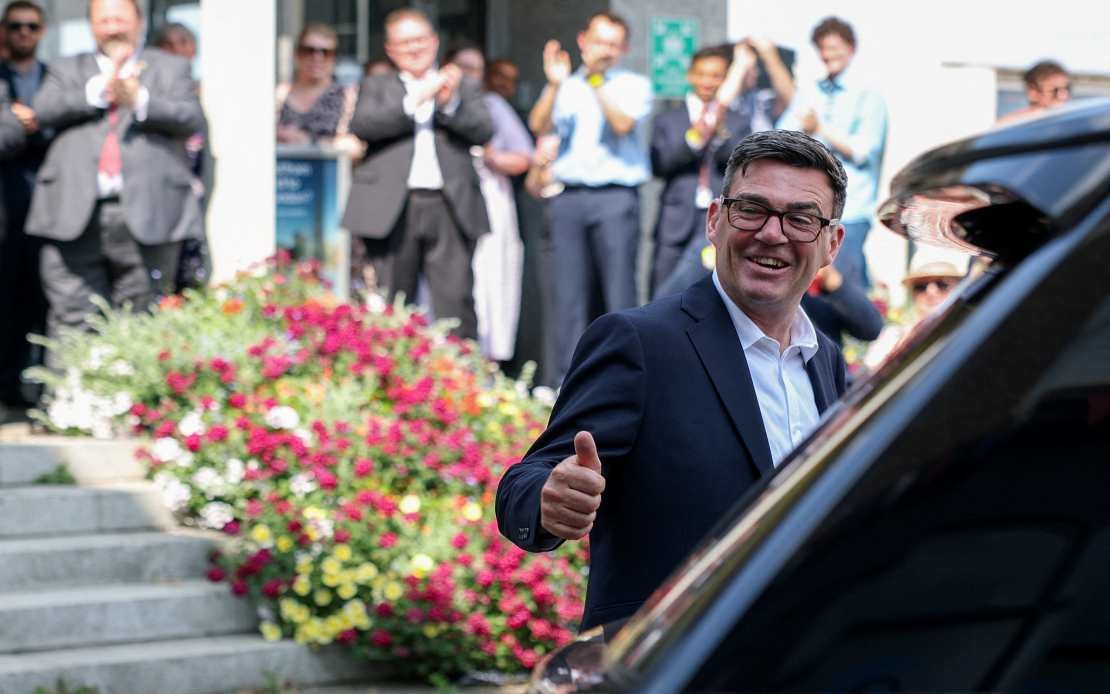
Singapore Prime Minister Lawrence Wong has formally congratulated Andy Burnham following his appointment as the United Kingdom's new prime minister, signalling the island nation's commitment to deepening ties with London under the Labour leader's administration. The congratulatory correspondence, delivered on Monday, reflects Singapore's diplomatic approach to leadership transitions among its key partners, and underscores the importance both nations place on their evolving relationship in an increasingly complex geopolitical landscape.
In his message, Wong extended warm wishes to Burnham as he assumes responsibility for navigating the UK through a period marked by substantial geopolitical upheaval and economic uncertainty. The Singapore premier framed this moment as a critical juncture requiring steady leadership, positioning his own nation as a sympathetic partner capable of understanding the multifaceted challenges confronting contemporary democracies. By acknowledging these pressures explicitly, Wong signalled that Singapore recognises the domestic complexities awaiting Burnham while simultaneously offering collaborative support.
The Singapore leader highlighted the historical depth of the bilateral relationship, which extends far beyond recent years to encompass a Strategic Partnership that has been carefully cultivated across multiple decades. This institutional framework provides the foundation upon which both governments have constructed extensive networks of cooperation, reflecting genuine mutual confidence and aligned interests. Wong's emphasis on this historical continuum serves to reassure the new British administration that Singapore views the relationship as stable and enduring, transcending individual leadership changes or temporary diplomatic fluctuations.
Wong articulated Singapore's intention to broaden cooperation across several strategically important domains. Innovation and scientific advancement represent contemporary priorities where both nations possess complementary strengths, with Singapore's focus on emerging technologies and the UK's research capabilities creating natural synergies. Defence collaboration stands equally prominent in Singapore's conception of the relationship, reflecting regional security concerns and the established military partnerships between the two countries that have evolved considerably since Britain's strategic pivot toward the Indo-Pacific.
A particularly significant dimension of Singapore's outreach involves emphasising the value of partnership during periods of global instability. Wong's framing—that trusted partners can accomplish more through coordinated action than through isolated efforts—reflects a sophisticated understanding of contemporary international relations. This messaging serves multiple purposes: it flatters Burnham by identifying Singapore as a trusted ally, it provides a philosophical justification for deepening ties, and it subtly encourages the new British government to maintain or expand its engagement in Asian affairs.
Singapore's particular emphasis on the UK's role as an ASEAN Dialogue Partner reveals the multilateral dimension of bilateral relationships in Southeast Asia. As a major regional grouping, ASEAN values sustained engagement from major powers, and the UK's participation in this framework provides legitimacy and weight to regional forums. Singapore, as a key ASEAN member, has a vested interest in ensuring that Britain maintains and strengthens its commitment to regional engagement, which carries implications for security architecture and economic cooperation across Southeast Asia.
The Five Power Defence Arrangements represent a specific institutional mechanism through which Singapore and the UK cooperate on security matters, alongside Australia, Malaysia, and New Zealand. Wong's reference to this arrangement underscores the practical military dimensions of the partnership and signals Singapore's satisfaction with British participation in this sophisticated regional security framework. The explicit mention suggests that Singapore hopes to see continuity and potential expansion of this cooperation under Burnham's leadership.
Wong's reference to Singapore's assumption of ASEAN Chairmanship introduces a forward-looking dimension to the congratulatory message. This rotating position carries significant responsibilities and provides Singapore with enhanced platform to shape regional agendas. By noting the timing of both Singapore's chairmanship and the UK's G20 presidency in 2027, Wong identifies a synchronised opportunity for coordinated action on multilateral challenges. This strategic observation suggests that Singapore views the leadership transition in London as an opportunity to align efforts on global governance and regional issues simultaneously.
The reference to addressing shared global and regional challenges provides substance to what might otherwise be ceremonial diplomatic language. Climate change, maritime security, economic resilience, supply chain vulnerabilities, and technology governance represent examples of substantive areas where Singapore and the UK can cooperate meaningfully. Wong's invocation of these broader challenges contextualises the bilateral relationship within larger frameworks of international concern, elevating Singapore's significance as a potential partner in addressing issues that transcend bilateral interests.
According to official confirmation from Buckingham Palace, Burnham held an audience with King Charles III on Monday and received the formal invitation to form a government, completing the constitutional process through which he becomes Prime Minister. This official confirmation provides the factual foundation for Singapore's congratulatory outreach, demonstrating that the message arrives at an appropriately ceremonial moment in British political transition. The timing of Singapore's response reflects the diplomatic protocols through which nations acknowledge leadership changes among peer governments.
For Malaysian readers and broader Southeast Asian observers, this diplomatic exchange illustrates the multilayered nature of contemporary international relations. Singapore's calibrated response demonstrates how small nations strategically position themselves in relationships with major powers by emphasising shared interests, institutional frameworks, and complementary capabilities. The explicit references to ASEAN engagement and regional security arrangements underscore how bilateral relationships operate within multilateral contexts that affect the entire region, including Malaysia's own positioning within these frameworks and structures.
The broader significance of this exchange extends beyond ceremonial pleasantries. It reflects the UK's sustained commitment to the Indo-Pacific region at a time when London has explicitly reoriented its strategic focus eastward. Singapore's enthusiastic engagement with this British pivot confirms regional receptiveness to UK involvement in Asian affairs. For Southeast Asia more broadly, including Malaysia, British engagement provides counterbalance to other major power influences and contributes to a more pluralistic regional security environment with multiple centres of partnership and cooperation.

