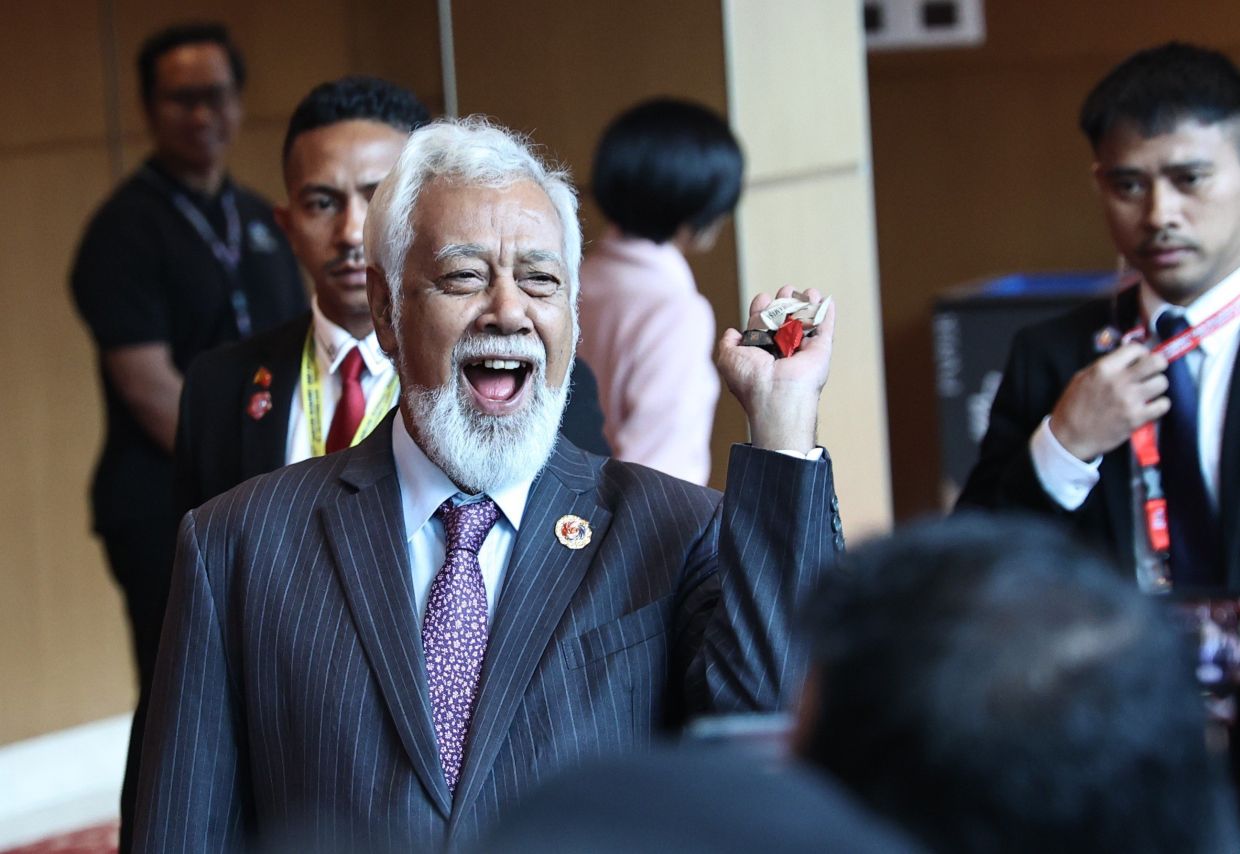
Singapore is determined to position Timor-Leste not merely as a passive recipient of Asean membership benefits but as an active participant capable of shouldering regional responsibilities, Prime Minister Lawrence Wong declared during his groundbreaking visit to Dili on July 3. The message carries particular weight given Timor-Leste's formal accession as the bloc's 11th member state on October 26, 2025—the culmination of a patient 14-year journey that began with an initial application in 2011 and progressed through observer status in 2022. Wong's emphasis on contribution rather than consumption reflects Singapore's strategic vision for how a newly-integrated Southeast Asian nation can mature within the regional architecture.
The centerpiece of Singapore's refreshed engagement is an upgraded support package designed to equip Timorese institutions for the substantial administrative and diplomatic burdens that accompany Asean chairmanship. Timor-Leste has signalled its intention to assume the rotating chairmanship in 2029, a prospect that Wong characterised as reflecting genuine institutional ambition rather than ceremonial aspiration. The new initiative will include bespoke technical workshops conducted in Dili for government officials, providing them with detailed briefings on the multifaceted demands of stewardship. Additionally, Singapore intends to deploy Timorese attachés to its own chairmanship machinery when the city-state assumes the role in 2027, creating a mentorship structure whereby officials can observe firsthand how a seasoned Asean operator manages the complexities of regional consensus-building and agenda-setting.
Wong's characterisation of the Asean chairmanship as "a massive and significant responsibility and undertaking" underscores the genuine institutional challenges that lie ahead for Timor-Leste. The role extends far beyond ceremonial functions; it requires orchestrating dialogue between ten diverse economies with competing interests, managing the ASEAN Regional Forum and other associated mechanisms, and maintaining the diplomatic finesse necessary to preserve the bloc's precious consensus. For a nation still consolidating its own state institutions and emerging from recent independence struggles, the 2029 ambition represents an extraordinary commitment. Singapore's willingness to shoulder significant preparatory labour signals confidence in Timor-Leste's capacity to succeed, whilst also reflecting older Asean members' collective interest in ensuring that the bloc's newest addition does not falter under the weight of leadership.
Beyond the chairmanship trajectory, Singapore and Timor-Leste are establishing a permanent institutional mechanism for bilateral consultation between their respective foreign ministries, mirroring the structured engagement that Singapore maintains with other Asean partners. This formalisation of dialogue channels marks a qualitative shift in the relationship, elevating it from post-independence peacekeeping solidarity into something resembling the diplomatic architecture that characterises relationships between established regional actors. The timing carries historical resonance; Singapore was among the first nations to commit personnel for peacekeeping operations when Timor-Leste sought independence in 1999, a commitment that Wong emphasised reflects enduring ties now being deepened through institutional evolution.
Cooperation will expand across multiple sectors deliberately chosen to address Timor-Leste's developmental priorities. Human resource development emerges as a particular focus, reflecting Singapore's recognition that institutional capacity remains the binding constraint on Timor-Leste's ability to execute ambitious governance agendas. Education and healthcare cooperation likewise target the foundational domains where Southeast Asian capacity-building typically generates the most substantial long-term dividends. These initiatives acknowledge that Asean membership, whilst politically significant, must translate into tangible improvements in state capacity, human capital formation, and public service delivery if the arrangement is to prove durable and mutually beneficial.
Wong's visit itself represents a symbolic watershed—the first undertaken by a Singapore prime minister to Timor-Leste since the nation's independence. The carefully calibrated message, delivered at what Wong termed a "natural point" in the bilateral relationship, sends powerful signals about Singapore's assessment of Timor-Leste's trajectory. The visit occurs neither in the immediate aftermath of accession nor at some distant future juncture, but at precisely the moment when establishing substantive institutional foundations becomes crucial. This timing suggests Singapore sees a window of opportunity during which Timorese institutional frameworks remain plastic enough to absorb training and mentorship, yet sufficiently developed to benefit from structured guidance.
Economic dimensions constitute an important but secondary theme in Singapore's strategic approach. Wong acknowledged that several "intrepid" Singaporean entrepreneurs have already ventured into Timor-Leste's emerging market, recognising that economic diversification beyond the country's oil and gas foundations represents both a developmental imperative and a potential avenue for commercial collaboration. As Timor-Leste attempts to develop hospitality, infrastructure, and blue economy sectors, Singaporean investors and expertise could plausibly play constructive roles. However, Wong's framing emphasised caution alongside opportunity, noting that emerging market entry demands that businesses approach the undertaking with clear-eyed realism about local complexities and commitment to long-term partnership development rather than quick returns.
The broader Southeast Asian context illuminates why Singapore would invest such diplomatic and institutional energy in Timor-Leste's successful integration. A prosperous, capable, and effectively-governed Timor-Leste strengthens the entire Asean edifice, ensuring that the bloc's geographical presence extends further into the maritime zone separating Southeast Asia from the Australian continent. Conversely, a Timor-Leste that struggles under institutional burdens or fails to develop robust state capacity could become a source of regional fragility. Singapore's strategic interest in ensuring that the newest member succeeds encompasses both idealistic commitment to collective Asean prosperity and hardheaded recognition that the bloc's overall stability depends upon every member's ability to govern effectively and participate constructively in regional affairs.
Wong's encouragement to Singaporeans contemplating business or cultural engagement with Timor-Leste carried a subtle message about how the region's development proceeds most successfully. Rather than presuming that knowledge and expertise flow unidirectionally from established economies toward emerging ones, he advocated for genuine intercultural curiosity and willingness to learn from local contexts. This reflects a maturing understanding within Singapore's foreign policy establishment that sustainable regional relationships require mutual respect and reciprocal knowledge exchange rather than paternalistic imposition. For Malaysian observers particularly, Wong's comments about learning from developing partners resonate with broader Southeast Asian discussions about how middle-income nations can productively interact with their lower-income neighbours.
Timor-Leste's youth constitutes both demographic asset and institutional challenge. The nation possesses a young, growing population coupled with natural resources and substantial underdeveloped potential. Yet youthful populations and nascent institutions can prove volatile if economic opportunity and governance legitimacy fail to develop in tandem. Singapore's investment in institutional strengthening, education, and human capital development appears calibrated to address precisely this configuration of risks and opportunities. By helping Timor-Leste develop capable state institutions and skilled personnel, Singapore simultaneously invests in regional stability and creates conditions under which bilateral and multilateral cooperation can flourish.
The decision to upgrade support packages and establish new mechanisms reflects Wong's evident assessment that Timor-Leste represents a particularly significant moment in Asean's institutional evolution. Unlike previous enlargements, Timor-Leste's accession carries symbolic weight related to Southeast Asian religious and cultural diversity, geographic reach, and the bloc's commitment to inclusive regionalism. Singapore's willingness to make substantial institutional commitments toward ensuring Timor-Leste's success demonstrates how seriously regional powers take this particular enlargement. For the Southeast Asian region more broadly, the precedent established through Singapore's mentoring approach may shape how other Asean members engage with future development partnerships and capacity-building initiatives. The framework being constructed around Timor-Leste's chairmanship preparation could ultimately serve as a model for how established regional actors support newer members' progression toward greater institutional responsibility.

