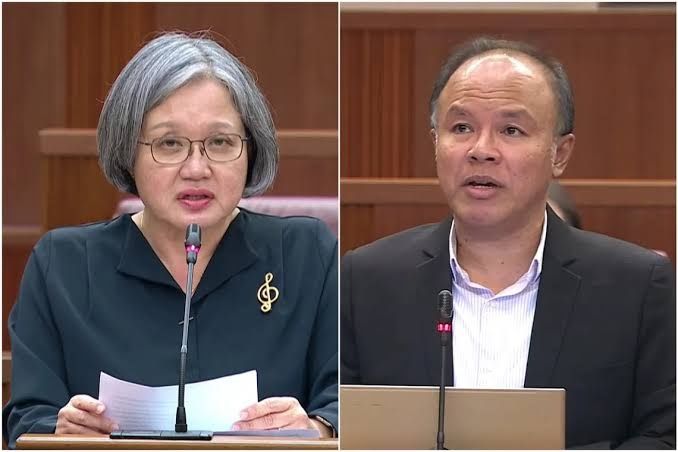
The Singapore Parliament has formally closed its investigation into misconduct by Workers' Party leaders Sylvia Lim and Faisal Manap, with the government confirming that no penalties can be imposed against them due to the expiration of statutory time limits under parliamentary privileges law. Leader of the House Indranee Rajah made this announcement on July 7 in a ministerial statement, explaining the technical legal reasons why Parliament's enforcement powers had been exhausted despite the underlying factual findings against the two opposition figures remaining intact.
The saga originated from false statements made to Parliament's Committee of Privileges by three Workers' Party leaders in connection with former Sengkang GRC MP Raeesah Khan's fabricated anecdote about police conduct delivered in the chamber in 2021. Khan had invented an account she presented as fact, triggering an official investigation. The committee subsequently discovered that party leader Pritam Singh had instructed Khan to conceal the lie, while Lim and Manap, who were both Aljunied GRC MPs at the time, denied knowledge of these discussions despite being present at relevant meetings. All three were found to have provided false testimony to the committee.
The conduct of Pritam emerged as substantially more serious than that of his two colleagues. The committee determined he had directly solicited Khan to maintain the falsehood indefinitely, describing his role as the primary culprit. In contrast, Lim and Manap occupied what investigators characterised as subsidiary positions in the misconduct. Parliament elected to refer only Pritam for independent criminal investigation and prosecution, allowing him to mount a legal defence with full counsel representation. The decision to delay action against Lim and Manap pending the resolution of Pritam's case was intended to ensure procedural fairness to all three.
Pritam's legal journey extended over several years, ultimately culminating in his conviction by the District Court in February 2025 for misleading Parliament. He subsequently appealed this conviction, but the High Court upheld the original judgment in December 2025, definitively confirming his culpability. This judicial affirmation also substantiated the Committee of Privileges' earlier findings regarding Lim and Manap's dishonesty, validating the investigative work conducted by Parliament's internal processes.
Despite this confirmation, Parliament discovered it lacked the institutional power to impose disciplinary sanctions on Lim and Manap. The Parliament (Privileges, Immunities and Powers) Act, which governs such matters, contains specific temporal constraints on the legislature's authority to penalise misconduct. Under Section 22 of this statute, Parliament may only address breaches occurring either during the current parliamentary session or during the immediately preceding session of the previous Parliament. The original false statements occurred during the first session of the 14th Parliament, which dissolved following the 2025 general election.
The 15th Parliament commenced in September 2025 following that election. Because the offences now fell outside the permissible window defined by the legislation—they did not occur in the current session nor in the second session of the 14th Parliament—the institution found itself bereft of legal standing to administer punishment. Indranee acknowledged this outcome with evident frustration, noting that under different temporal circumstances she would have recommended an alternative course of action. She emphasised that Parliament's own previous decision to extend leniency to Lim and Manap while awaiting Pritam's criminal proceedings, though undertaken in good faith, inadvertently contributed to this procedural dead end.
The ministerial statement underscores a significant gap between Parliament's capacity to investigate and confirm misconduct and its ability to enforce consequences. Indranee explained that ordinarily breaches under parliamentary privileges legislation can be addressed swiftly, frequently within the same session Parliament convenes. The statute contemplates occasional delays, permitting cross-session handling in subsequent parliamentary sittings. However, these temporal flexibility provisions contain firm outer boundaries designed to provide finality and closure to institutional disciplinary matters.
Parliament did retain one remaining avenue for expression: it could pass a motion registering formal disapproval of Lim and Manap's conduct. However, Indranee contended this step had effectively been accomplished already. In January, Parliament passed a motion declaring Pritam Singh unsuitable to serve as Leader of the Opposition, a declaration that simultaneously communicated Parliament's unambiguous stance that deliberate falsehoods to the legislature or its committees constitute profoundly dishonourable conduct warranting serious consequences. This earlier motion thus rendered an additional gesture redundant from Indranee's perspective.
The Workers' Party itself had addressed the matter internally just one week prior to Parliament's formal closure. At the party's cadre meeting and elections on June 28, members voted to retain Pritam as leader despite his criminal conviction. This internal endorsement proceeded without public division, suggesting the party had moved past the controversy and was prepared to absorb the reputational damage while maintaining continuity in leadership. The Workers' Party represents Singapore's largest opposition bloc, and the conviction of its leader, while damaging, did not precipitate an internal leadership crisis.
From a Malaysian perspective, this episode illuminates how different democratic systems navigate the accountability of legislators and institutional dysfunction. While Singapore's Parliament privileges framework operates with considerable sophistication, its strict temporal limitations demonstrate that even well-drafted statutes can generate unintended consequences where timelines intersect unfavourably with institutional processes. The case also reveals the tension between procedural fairness—giving individuals time to contest allegations through courts—and enforcement practicality when statutory windows close regardless of substantive justice outcomes.
Sylvia Lim herself rose in Parliament to confirm she did not object to Indranee's statement, adding that she had already articulated her response during the January motion debate. She reiterated that references to her conduct in Pritam's High Court appeal judgment derived exclusively from prosecution evidence presented during his trial, and she had not been called as a witness to present her perspective directly to the court. This assertion underscores a procedural complexity affecting the two subsidiary actors: their misconduct was established through the Committee of Privileges investigation and confirmed through another's criminal proceedings, yet they themselves never faced independent judicial examination.
The closure of this matter represents a symbolic endpoint for a controversy that had consumed parliamentary attention across multiple years and parliamentary terms. The substantive findings—that Lim and Manap deliberately misled investigators—remain judicially and legislatively confirmed despite the inability to enforce penalties. For Singapore's opposition and international observers tracking parliamentary accountability mechanisms, the case exemplifies both the strengths and limitations of institutional discipline frameworks when legal technicalities can override substantive misconduct determinations.

