A 55-year-old man was arrested in Singapore on July 5 after police deployed a Taser against him during an incident in which he brandished a saw near a residential housing block. Officers responded to a call for assistance at Block 539 Bedok North Street 3 at approximately 3.25 in the afternoon, where the man had been spotted wielding the tool in a threatening manner.
According to a police statement issued the same day, the individual repeatedly ignored commands from responding officers to relinquish the saw. Compounding the difficulty of the situation, he continued shouting incoherently, making verbal de-escalation efforts increasingly challenging. The convergence of these factors—a visible weapon, non-compliance, and erratic behaviour—created a volatile scenario that law enforcement personnel needed to bring under control swiftly to protect public safety.
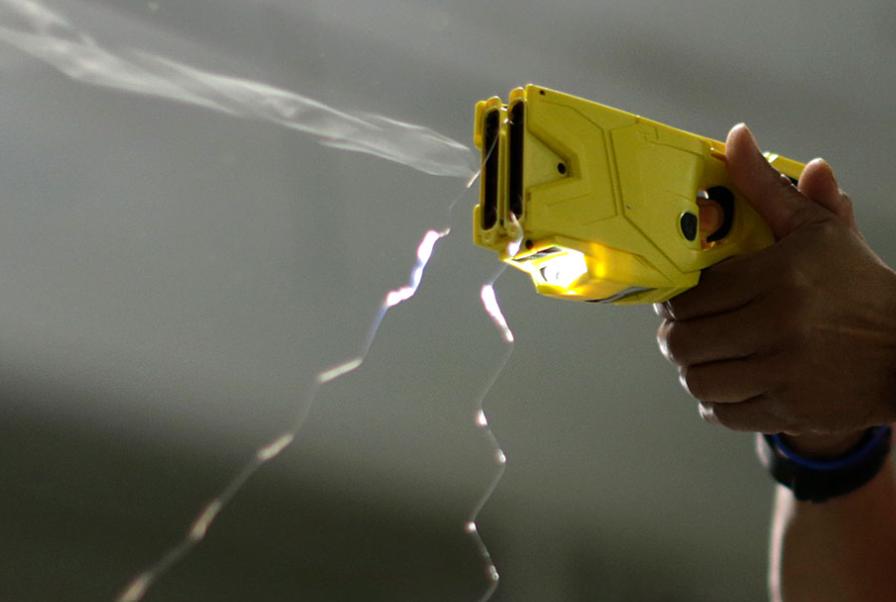
Facing a subject unwilling to respond to conventional warnings and direction, police officers made the tactical decision to deploy a Taser as a means of de-escalation and containment. This electroshock weapon allowed officers to incapacitate the man without causing severe injury, bringing the immediate threat to an end. Following the Taser deployment, he was successfully restrained and taken into custody while remaining conscious.
The man was subsequently transported to Changi General Hospital for medical evaluation and care. No other individuals sustained injuries during the confrontation, and police confirmed that the immediate public safety threat had been contained without collateral damage. The incident highlighted the challenges faced by law enforcement in managing individuals exhibiting signs of psychological distress or substance impairment in public spaces.
The arrested individual now faces a series of criminal charges stemming from the incident. These include public nuisance, possession of an offensive weapon in a public place, and a suspected offence related to the consumption of controlled drugs. The combination of charges reflects the multifaceted nature of the incident, which involved both weapon possession and apparent substance involvement.
The drug-related allegation has been referred to Singapore's Central Narcotics Bureau for further investigation and handling. This agency specialises in combating drug-related offences and will determine whether the individual was indeed under the influence of a controlled substance and whether additional drug-related charges are warranted. Investigations into all aspects of the case remain ongoing, with authorities gathering evidence and statements from witnesses and responding officers.
The incident underscores the recurring challenge Singapore faces in managing public safety when individuals exhibit signs of mental health crises or substance abuse in residential areas. Housing Board estates, which are home to the majority of Singapore's population, represent particular focal points for such incidents because of their dense residential character and the concentration of vulnerable populations. When emergencies occur in these settings, police must balance the need for swift action with the imperative to minimise harm to the individual and surrounding residents.
The use of tasers by Singapore police has become increasingly common in situations where individuals are armed or violently non-compliant. Law enforcement agencies argue that electroshock weapons offer a middle ground between verbal de-escalation and lethal force, potentially reducing injuries to both officers and suspects. However, such deployments remain closely scrutinised by civil society groups and media observers who monitor police conduct and public safety practices.
This incident also reflects broader Southeast Asian concerns regarding substance abuse and public disorder. Many countries in the region have been grappling with rising drug consumption and its associated social consequences, including erratic public behaviour and violence. The referral to the Central Narcotics Bureau indicates that Singapore continues to treat drug-related offences with particular gravity, maintaining its well-known zero-tolerance stance toward narcotic substances.
For Malaysian observers, the incident offers insights into how a neighbouring jurisdiction manages public safety challenges that are not dissimilar to those faced domestically. The coordination between general police operations and specialised drug enforcement agencies demonstrates one model for addressing the intersection of public disorder and substance abuse. Furthermore, the case illustrates the operational considerations police services must navigate when deploying less-lethal force options in densely populated urban environments where bystander safety is paramount.

