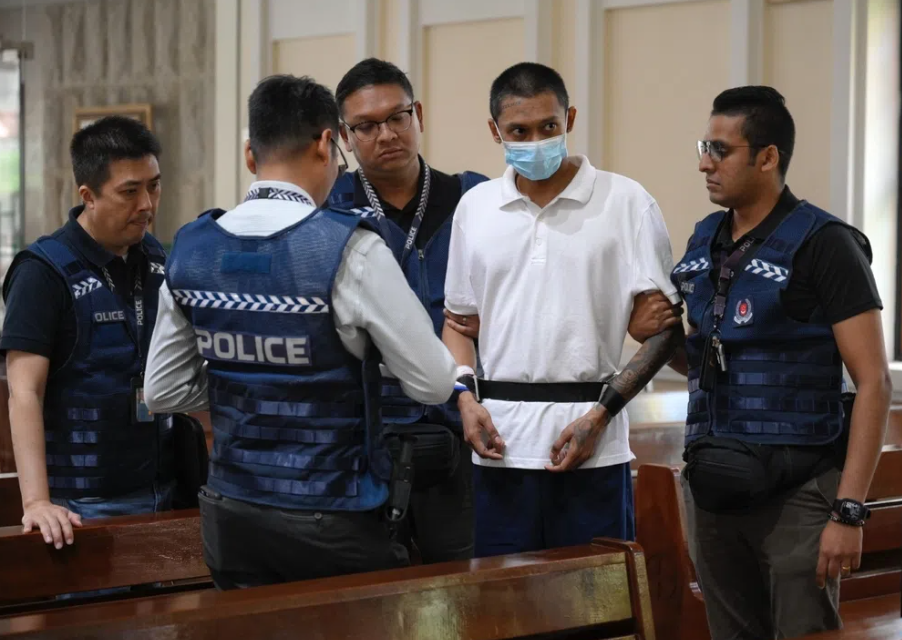
A 38-year-old man in Singapore has received a jail sentence of four years and three months, together with nine strokes of the cane, for launching a violent knife attack on a Catholic priest during a children's mass at St Joseph's Church. Basnayake Keith Spencer entered a guilty plea on Friday, 21 August, to charges of voluntarily causing grievous hurt with a dangerous weapon and weapon possession. The District Judge hearing the case, Shaiffudin Saruwan, emphasised that the unprovoked assault on a defenceless clergyman warranted a sentence reflecting the gravity of the offences, particularly given the setting and timing of the attack.
The incident occurred on the evening of 9 November 2024, when approximately 900 worshippers gathered at the church for mass. Basnayake arrived alone at approximately 5.30 pm and initially sat in a pew in the church hall. Before the service progressed, he consumed five pills in total—two to maintain focus and three later to steady his nerves upon realising the mass was designated for children. His actions suggest a degree of premeditation and awareness, though prosecutors would later characterise him as being in a drug-induced psychotic state at the time of the assault.
As communion began around 6.15 pm, two priests positioned themselves to administer the sacrament to the congregation. Reverend Christopher Lee, then 57 years old, stood at one station while a colleague presided at another. Basnayake initially queued behind the second priest but inexplicably switched positions to join Father Lee's line. When it came his turn to receive communion, he abruptly produced a 23-centimetre foldable knife with a 10-centimetre blade and thrust it forcefully into the priest's mouth. The attack was sudden and savage, leaving Father Lee bleeding profusely from the wound.
The immediate aftermath revealed both the severity of the injuries and the swift intervention of worshippers. Father Lee sustained an eight-centimetre laceration on his tongue, a three-centimetre cut on his upper left lip, and a four-centimetre wound at the corner of his mouth. Though dazed and bleeding, the priest managed to grab the rear pocket of Basnayake's jeans, preventing further attacks on other congregants. Members of the congregation, including an off-duty police officer among the worshippers, quickly subdued Basnayake and restrained him until police arrived. He was arrested at the scene without further incident.
Father Lee was transported immediately to hospital, where blood had pooled around his mouth from the puncture wound. He remained hospitalised for six days and was discharged on 15 November, receiving 40 days of medical leave. The long-term consequences proved substantial: the priest required speech therapy for months following the attack, reflecting the severity of trauma and physical damage to tissues critical to human communication. The assault not only caused immediate bodily harm but inflicted lasting complications that affected his professional capacity as a minister.
Police searching Basnayake following his arrest discovered he carried multiple weapons beyond the knife used in the attack. Officers found a penknife measuring 14.5 centimetres, an additional flip knife, and a fishing gaff—a pole equipped with a sharp hook. The array of bladed implements suggested a pattern of carrying dangerous items, raising questions about intent and premeditation. This arsenal of weapons strengthened the prosecution's argument that Basnayake posed a substantial risk to public safety and a significant likelihood of reoffending.
Barring authorities from releasing him on bail in December 2024, prosecutors presented a compelling case that Basnayake warranted detention as a dangerous individual with high reoffending potential. He has remained in remand for more than a year and nine months since his arrest. This extended detention period reflected judicial concern about his threat to community safety, particularly given his history of violence. The prosecution's successful opposition to bail highlighted the severity with which the courts viewed both his current conduct and his previous criminal record.
The defendant's history of violence became a pivotal consideration in sentencing deliberations. In 2019, Basnayake had been convicted of voluntarily causing hurt with a dangerous weapon and sentenced to one year imprisonment. That earlier incident involved stabbing his then-girlfriend in the buttocks with a kitchen knife while under the influence of methamphetamine. The repetition of weapon-based violence, separated by five years, suggested an entrenched pattern rather than an isolated lapse in judgment. His recidivism indicated that previous incarceration had failed to deter him from deploying weapons against others.
During the sentencing hearing, the Deputy Public Prosecutor Xu Sijia acknowledged that Basnayake had been intoxicated and experiencing a drug-induced psychotic episode at the time of the attack on Father Lee. However, prosecutors contended that despite his altered mental state, he retained sufficient awareness and cognitive capacity to make deliberate choices regarding his assault. The argument that he maintained some degree of consciousness about his actions proved influential in the court's rejection of more lenient sentencing proposals. This distinction between loss of control and partial awareness shaped the final judgment.
Barrister Ashwin Ganapathy, representing Basnayake through the Public Defender's Office, mounted a mitigation strategy centring on remorse and proportionality. He urged the court to impose a jail term of less than four years alongside nine strokes of the cane, emphasising his client's expressions of regret and shame regarding his actions. The defence submission appealed to principles of proportionate punishment, suggesting that the prosecution's recommended range of four years three months to four years eleven months exceeded what justice required. However, the court ultimately sided with the prosecution's assessment of appropriate punishment.
District Judge Shaiffudin Saruwan's sentencing remarks underscored the particular gravity of the offence's context. The judge noted that the attack occurred at the precise moment Father Lee was administering a sacred religious ritual to the congregation. This timing amplified the offence beyond simple assault: it violated a sacred space and ceremony, disrupted spiritual communion for 900 worshippers, and created genuine potential for mass panic and cascading injuries. The judge's statement reflected understanding that the impact extended beyond the single victim to encompass the broader community present and the sanctity of religious practice violated.
The case carries implications for Southeast Asia's religious and public safety landscapes. It underscores vulnerabilities in faith communities during peak attendance periods and raises questions about security protocols in places of worship across the region. Churches, temples, and mosques throughout Malaysia and Singapore now confront the sobering reality that violence targeting clergy and congregants remains a tangible threat. While isolated incidents cannot mandate fortress-like security postures that inhibit spiritual gathering, communities must grapple with balancing accessibility and safety. The attack also highlights the ongoing challenge of managing individuals with histories of weapon-based violence and substance abuse issues, particularly when psychological crises intersect with criminal propensity.

