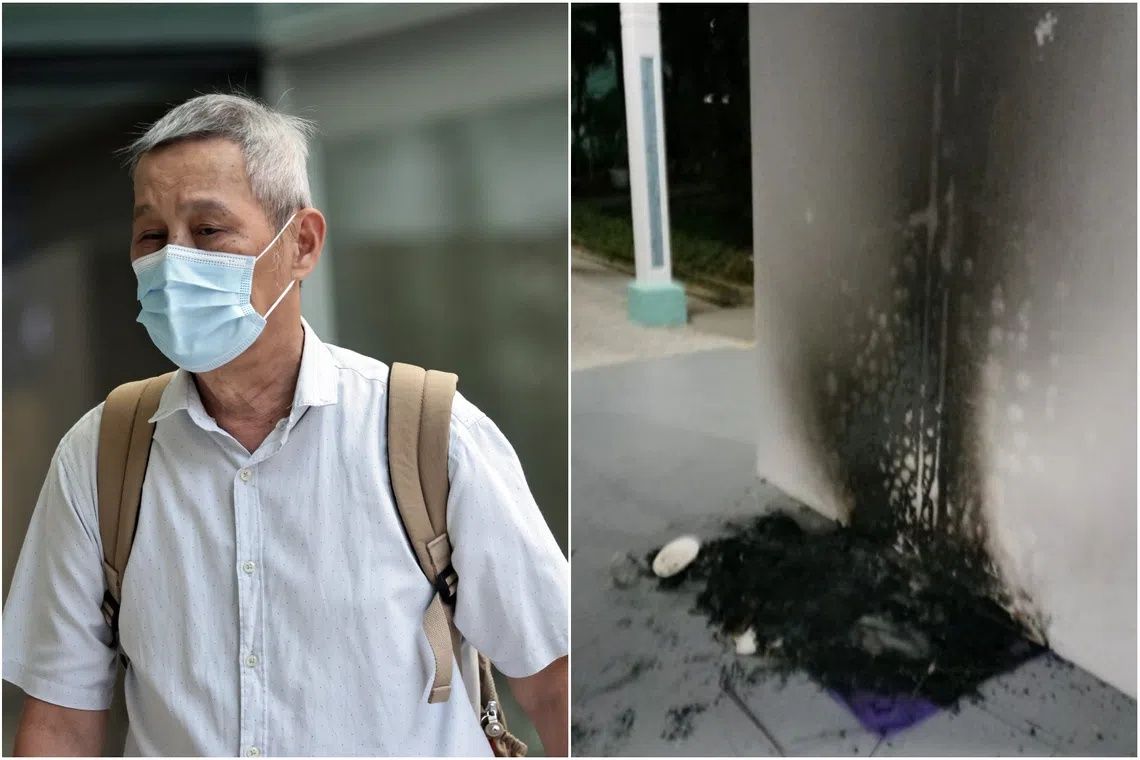
A 68-year-old retiree in Singapore's Bukit Batok district has been sentenced to three months' imprisonment after deliberately torching cardboard shelters constructed for community cats. Koh Teng Boo pleaded guilty to committing mischief by fire on Tuesday, accepting responsibility for multiple incidents that resulted in more than S$900 worth of damage to the ground and walls at a void deck pavilion near his residence on Bukit Batok East Avenue 4.
The dispute centred on simple cardboard structures that residents had erected to provide refuge for stray cats in the neighbourhood. These makeshift homes, equipped with food and water provisions, represented part of a broader community effort to care for the area's feline population. However, from Koh's perspective, the cat houses symbolised something altogether different—a source of nuisance and a harbinger of broader sanitation concerns that threatened residential quality of life.
Koh's frustration crystallised in September 2025 when the cat houses first appeared around the void deck pavilion adjacent to his home. Rather than viewing them as charitable infrastructure, he perceived them as attracting unwanted wildlife and creating hygienic risks. According to Deputy Public Prosecutor Stephen Yeo's account at sentencing, Koh became particularly concerned that birds were being drawn to the cat houses, subsequently increasing pest pressure in the vicinity. The retiree raised his concerns with his Member of Parliament, hoping that official intervention would address what he considered an escalating problem.
When weeks passed without visible action following his parliamentary petition, Koh took matters into his own hands. In October 2025, he gathered three cat houses and deposited them into an incense burner bin before igniting them. The act represented his frustration with what he perceived as bureaucratic inaction. Rather than deterring him, the sight of replacement cat houses erected shortly after his first arson attempt only intensified his resolve. By mid-November, his patience had exhausted itself entirely.
On November 17, Koh made a second appeal to his Member of Parliament, reiterated his concerns about the cat houses, and emphasised what he described as unhygienic conditions associated with the shelters. He maintained that he bore no personal animus toward cats themselves but objected to what he characterised as an unsanitary communal practice. His complaints gained additional weight when he pointed out that residents were discarding litter directly into the cat houses, compounding the sanitation issue he found objectionable.
Despite this second formal complaint to his elected representative, conditions remained unchanged. Two days later, on November 19 at approximately 1:30 in the morning, Koh returned home after consuming alcohol and encountered yet another cat house in the vicinity. Acting on impulse, he retrieved a lighter and ignited the structure, then departed without ensuring the fire was extinguished or monitoring its behaviour. The exact circumstances of how that fire was ultimately extinguished remain unclear according to investigative records.
The following day, emboldened rather than chastened by his nocturnal act, Koh set fire to another cat house. This second deliberate act differed significantly in outcome only because two passers-by discovered the burning shelter and successfully extinguished the flames before substantial damage occurred. However, this intervention did not prevent his arrest, which followed on the same day after authorities identified him as the perpetrator.
The financial consequences of Koh's actions extended beyond mere property damage. The Jurong-Clementi-Bukit Batok Town Council invested S$913 in repairs to address damage to both flooring and walls in the area surrounding the burnt cat houses. Fortunately for Koh, his sentencing proceeding was simplified by his decision to make full restitution to the town council, demonstrating financial accountability if not full acceptance of wrongdoing.
The legal framework governing such behaviour in Singapore carries substantial potential penalties, reflecting society's serious treatment of property destruction by fire. Those convicted of committing mischief by fire with intent to cause damage to property face maximum prison sentences extending to seven years and additional financial penalties. Koh's three-month sentence, while considerably below the statutory maximum, nevertheless represents meaningful judicial sanction for his actions and serves notice of the criminal justice system's disapproval of vigilante responses to neighbourhood grievances.
This case illuminates the tension between community welfare initiatives and residential concerns that frequently emerge in densely populated urban environments. For Malaysian readers familiar with similar disputes in local housing estates and high-rise residential areas, Koh's experience offers cautionary perspective on how escalating neighbourhood conflicts can spiral beyond resolution through legitimate channels. The incident demonstrates that even reasonable-sounding objections to community practices—such as concerns about hygiene and pest control—do not justify resorting to criminal destruction of property.
The broader implications extend to how communities should address shared space disagreements. While Koh's concerns about sanitation and pest attraction may have possessed validity, his failure to exhaust formal complaint mechanisms and his subsequent resort to arson represent a fundamental breakdown in community problem-solving. For Southeast Asian cities grappling with similar animal welfare versus residential comfort tensions, the case underscores the necessity of institutional channels for dispute resolution and the legal boundaries that constrain individual action, regardless of perceived provocation.
Moreover, the alcohol-fuelled nature of Koh's final act raises questions about how intoxication intersects with decision-making regarding serious criminal conduct. His choice to act impulsively at 1:30 in the morning, combined with his failure to secure or monitor the resulting fire, demonstrates the dangerous consequences of combining substance consumption with unresolved neighbourhood grievances. The case serves as a reminder to residents across the region that formal dispute mechanisms, while sometimes frustratingly slow, remain substantially preferable to the criminal and personal consequences accompanying vigilantism.

