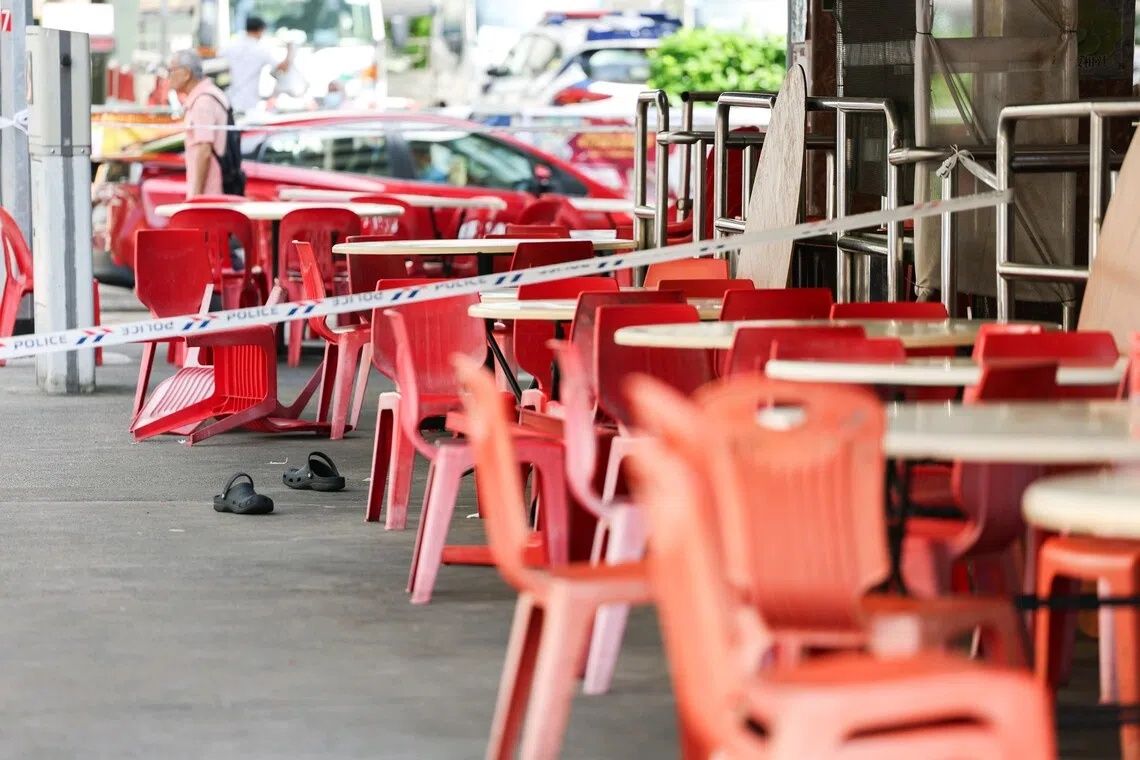
A 22-year-old man in Singapore has been sentenced to 17 months' jail for his role in a violent brawl that claimed the life of a 25-year-old victim. Pradave Shashi Kumar pleaded guilty on Tuesday to using a chair as a weapon against Dhinessh Vasie, who sustained fatal knife wounds during the altercation. The incident, which occurred along Kitchener Road on September 22, 2024, has become a watershed moment in Singapore's ongoing examination of late-night violence and gang-related altercations in the city-state.
Kumar's case represents the first judicial determination among four accused persons implicated in the tragedy. While Kumar has accepted responsibility through his guilty plea, three others remain before the courts facing significantly graver charges. Muhammad Sajid Saleem, 24, has been charged with murder in connection with the fatal stabbing, while Satish Jason Prabhas and Kirrthik Roshan Prem Ananth, both 23, are facing rioting charges. The staggered processing of these cases reflects the complexity of establishing individual culpability in chaotic street violence involving multiple perpetrators.
The sequence of events that culminated in Vasie's death began innocuously enough when Kumar, Saleem, Prabhas, Ananth and two women left a nightclub at Golden Mile Tower shortly after midnight. Their intention to continue the evening by moving to a pub in Sam Leong Road proved fateful. They arrived at approximately 4am and began walking through a back alley near the establishment when they encountered an entirely separate gathering—eight men engaged in heated discussion with three women.
What transpired next was a rapid escalation from verbal disagreement to physical violence. When Prabhas exchanged hostile words with one of the men in the larger group and subsequently threw punches, it triggered a chain reaction that would prove catastrophic. The confrontation expanded to involve Kumar and others in his party, setting in motion a pursuit that would end in tragedy. According to Deputy Public Prosecutor Jonathan Tan, as the altercation intensified, Vasie's group retreated toward the back alley in the direction of Verdun Road.
Multiple witnesses reported observing Saleem brandishing a small knife with a 7.5-centimetre blade held in downward position. The sight of the weapon prompted Vasie and his companions to flee, but Kumar and his associates pursued them relentlessly. During this chase, Saleem allegedly slashed at Vasie and two others as they attempted to escape. The violence reached its apex as Vasie neared a coffee shop situated at the intersection of Verdun Road and Sam Leong Road. His pace slowed considerably, eventually stopping at the establishment—a moment that would seal his fate.
With Vasie now stationary, Saleem caught up and allegedly thrust the knife into the victim's upper back with lethal force. What followed was a merciless assault that underscores the brutal nature of the incident. Prabhas retrieved a chair from the coffee shop and used it to repeatedly strike the now-vulnerable victim. Kumar, seizing another chair, delivered two forceful blows to Vasie's head and chest. Throughout this sustained battery, Vasie remained slumped over without attempting to defend himself or retaliate—a detail that carries significant weight in understanding the predatory nature of the attack.
The clinical nature of the assault, as described in court proceedings, distinguishes this case from spontaneous street fights where participants maintain some capacity to defend themselves. Vasie's inability to resist suggests he had been severely weakened, if not already mortally wounded, by the knife attack. The additional blows with the chair represented a continuation of violence against an incapacitated person—a factor that courts typically view with considerable gravity when determining sentences.
Police and emergency services arrived shortly after the perpetrators fled toward City Square Mall. Kumar was apprehended at approximately 5:15am the same morning. The relatively swift arrest and subsequent guilty plea demonstrate a degree of accountability, though it cannot diminish the loss of life or the trauma inflicted upon Vasie's family and friends. The sentencing framework for voluntarily causing hurt with a dangerous weapon permits imprisonment up to seven years, fines, caning, or combinations thereof, meaning Kumar's 17-month sentence falls significantly below the maximum potential penalty.
For Malaysian and Southeast Asian observers, this case illuminates recurring vulnerabilities in urban centres across the region: the intersection of nightlife culture, alcohol consumption, and male violence. The early morning timeline—4am onwards—is characteristic of incidents occurring in transitional spaces where regular authority presence diminishes and informal codes of conduct govern interactions. The involvement of multiple perpetrators in what began as a minor verbal dispute reflects how quickly such incidents can escalate in party environments where testosterone, alcohol, and group dynamics interact explosively.
The case also demonstrates the incremental accountability framework in Singapore's justice system, where multiple perpetrators face charges commensurate with their specific roles. While Kumar wielded a chair, Saleem wielded the knife; while Prabhas initiated the verbal confrontation and struck first blows, Ananth and others participated in the rioting. This differentiated approach contrasts with some jurisdictions where all participants might face identical charges, yet it requires juries and judges to parse complex factual narratives involving numerous actors.
The three remaining accused persons await trial or sentencing, with Saleem's murder charge potentially carrying capital implications depending on Singapore's application of relevant statutes. The outcomes in these cases will significantly influence how similar incidents are prosecuted across Southeast Asia, particularly given Singapore's influential position in regional legal development. For Malaysia, where gang violence remains a persistent criminal justice concern, the Kitchener Road case offers instructive lessons about night-time economy management and intervention strategies before altercations escalate to lethal violence.

