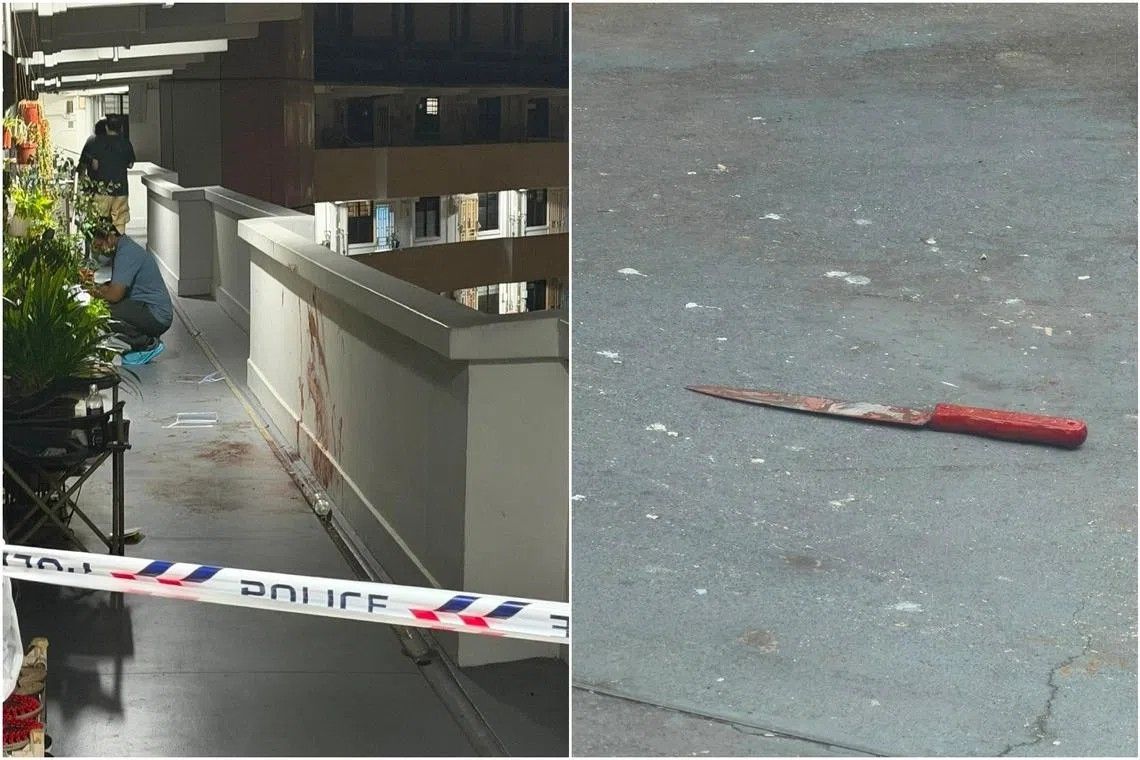
A 59-year-old man appeared before a Singapore district court via video link on July 22 to face a murder charge stemming from an incident at Block 55 Lengkok Bahru, near Redhill Road. Ng Swee Seng is accused of killing Thiyagarajan Karunakaran, also 59, in what authorities have characterised as a criminal act rather than an accidental death. The case has drawn attention to safety concerns within public housing estates and the potential for neighbour disputes to escalate into violence, an issue that resonates across Southeast Asia's densely populated urban centres where communal living arrangements are prevalent.
The Singapore Police Force responded to multiple distress calls just before 5pm on July 20, arriving at the public housing block to discover Thiyagarajan motionless in the lift lobby on the 16th floor. Emergency responders transported him to the National University Hospital, but medical staff were unable to save his life. The death marked a tragic conclusion to what may have begun as an ordinary residential disagreement, highlighting how tensions between neighbours in high-density housing can sometimes culminate in irreversible consequences.
Physical evidence at the scene suggested a violent altercation had occurred. Journalists from The Straits Times who visited the block the following day observed bloodstains and a bloodied footprint scattered across the 16th-floor corridor, indicating that the confrontation had been intense enough to leave visible marks along the shared communal space. Such evidence would likely form a critical component of the prosecution's case, potentially establishing the circumstances and severity of the alleged assault.
According to residents familiar with the building, Ng Swee Seng and Thiyagarajan occupied separate units only a few doors apart on the same floor, suggesting they would have encountered each other regularly in shared facilities and corridors. One occupant who has resided in Block 55 for approximately four years noted the proximity of their homes, which could indicate that underlying tensions had accumulated over time through repeated interactions. The spatial closeness of their residences raises questions about what might have triggered the fatal confrontation and whether warning signs had preceded the July 20 incident.
Neighbour disputes in public housing estates represent a persistent social challenge across Singapore and the wider region. Unlike landed properties where households enjoy greater physical separation, residents of high-rise blocks share elevators, staircases, corridors, and sometimes communal facilities, creating numerous opportunities for friction over noise, cleanliness, parking, or other everyday matters. When such disputes remain unresolved through informal community mechanisms or official intervention, they can fester and occasionally erupt into violence, as this case appears to demonstrate.
The timing of the alleged murder—occurring on a weekday afternoon—suggests that other residents or building occupants may have witnessed relevant events. Police would likely have interviewed neighbours and reviewed any available security footage from the building to establish a chronological account of what transpired. Such investigations are crucial not only for prosecution purposes but also for understanding the sequence of events that led to the fatal outcome.
For Malaysian readers, this case offers sobering insights into the potential consequences of unresolved neighbourhood tensions. Malaysia's own public housing sector, including Rumah Lelong properties and similar schemes, houses millions of residents in similarly compact environments. While serious violent crime between neighbours remains statistically uncommon, cases like the Lengkok Bahru incident underscore the importance of early intervention mechanisms, community mediation services, and resident education programmes to address grievances before they escalate.
The criminal charge against Ng Swee Seng reflects Singapore's stringent approach to violent crime. Murder convictions in the city-state carry severe penalties, and the case will likely proceed through the courts over several months as evidence is compiled, legal arguments are presented, and witness testimony is heard. The eventual outcome will establish both the factual circumstances and the legal responsibility of the accused.
From a broader perspective, this tragedy raises questions about community safety, early warning systems for at-risk relationships, and the adequacy of dispute resolution resources in densely populated residential areas. Housing authorities across Southeast Asia increasingly recognise that merely providing shelter is insufficient; fostering cohesive, harmonious communities requires proactive engagement, accessible conflict resolution mechanisms, and culturally sensitive approaches to mediation that address grievances before they become dangerous.
The incident also highlights the role of first responders and medical personnel in documenting evidence and attempting emergency care. Police procedures for crime scene preservation and investigation, combined with the hospital's documented efforts to save Thiyagarajan's life, form essential components of the justice process that will determine the accuracy of charges and the fairness of any eventual judgment.
As the case progresses through Singapore's legal system, it will likely generate broader discussions about neighbour relations, housing estate management, and community safety. For residents of public housing throughout the region, the incident serves as a reminder of the importance of maintaining cordial relationships with those who share their living spaces, seeking assistance from authorities or mediators when conflicts arise, and recognising that violence is never an acceptable solution to residential disagreements, no matter how persistent or frustrating they may be.

