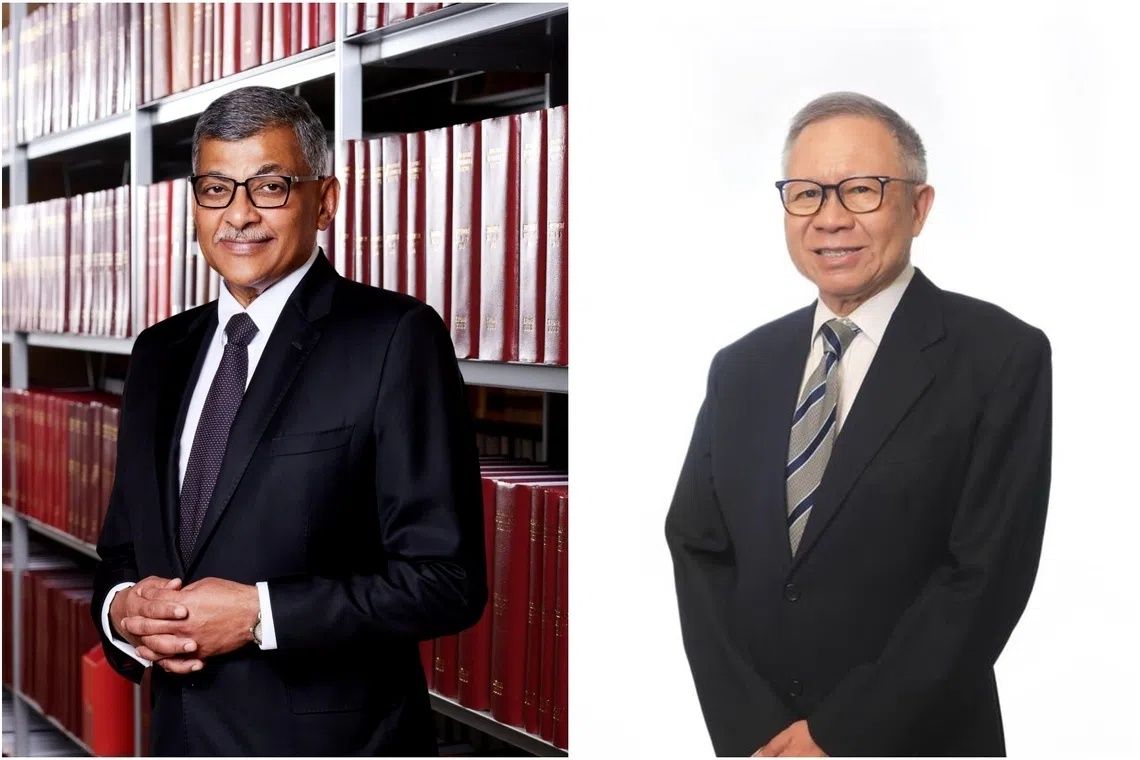
Singapore's two most distinguished public figures have been honoured for their transformative leadership and decades of dedicated service to the nation. Chief Justice Sundaresh Menon, aged 62, and Eddie Teo, 79, will receive the Order of Temasek (With Distinction) at the 2026 National Day Awards, placing them among the country's most celebrated citizens. The recognition comes as part of a broader honours programme recognising 7,491 individuals for their contributions across various sectors of Singaporean society.
Menon's appointment as Chief Justice in November 2012 marked the beginning of a 14-year tenure that fundamentally reshaped Singapore's judicial landscape. Set to retire from his position on February 26, 2027, his leadership has been defined by a comprehensive modernisation agenda that extended far beyond routine administrative improvements. Under his stewardship, the judiciary embraced digital transformation initiatives that streamlined court operations and improved public access to the legal system. The creation of the Appellate Division of the High Court and the Singapore International Commercial Court expanded the nation's judicial capacity while enhancing its position as a regional hub for dispute resolution and legal expertise.
Beyond structural reforms, Menon pioneered a therapeutic justice philosophy that fundamentally altered how the Family Justice Courts and Youth Courts operated. Rather than viewing the judiciary solely through a punitive lens, this approach emphasised rehabilitation, healing, and addressing root causes of disputes and criminal behaviour. The establishment of the Singapore Judicial College represented another significant innovation, institutionalising continuous professional development for judges and court personnel. These initiatives collectively demonstrated Menon's conviction that a modern justice system must evolve to meet changing societal needs while maintaining the integrity and independence that public confidence demands.
In his response to the honour, Menon emphasised that his 14 years represented a collaborative achievement rather than an individual accomplishment. He acknowledged that Singapore's commitment to the rule of law since independence has provided the institutional and political foundation enabling the nation's economic and social development. His statement reflected a broader understanding that judicial excellence requires not only visionary leadership but also the dedicated efforts of judges, court staff, legal practitioners, and government officials working in concert. The timing of this recognition, coinciding with the bicentennial of Singapore's legal and judicial system, underscores the historical significance of his tenure.
Eddie Teo's career trajectory represents a different but equally consequential form of public service. Spanning 56 years, his journey began in 1970 within the Ministry of Defence's Security and Intelligence Division, where his exceptional abilities quickly elevated him to directorial rank at just 31 years old. Between 1979 and 1994, he led Singapore's intelligence operations during a critical period of regional geopolitical shifts and internal security concerns. His subsequent transitions to permanent secretary for defence and then to the Prime Minister's Office positioned him at the centre of strategic decision-making during Singapore's continued economic and political consolidation.
Teo's chairmanship of the Public Service Commission from 2008 to 2018 reflected his commitment to institutional modernisation and diversity. Recognising that effective governance requires varied perspectives and expertise, he deliberately recruited commission members from academia, law, and social work backgrounds. This approach challenged traditional elitism within the civil service and signalled that meritocratic advancement could accommodate professionals from multiple disciplines. His successor role as chairman of the Council of Presidential Advisers, which he held until June 2026, brought him into close collaboration with the President on significant fiscal and constitutional matters.
The most defining moment of Teo's tenure at the Council of Presidential Advisers came during the Covid-19 pandemic. When Singapore's government sought to withdraw approximately S$40 billion (US$31.3 billion) from past reserves—the largest such drawdown in the nation's history—the President and Council conducted thorough deliberations before granting approval. This decision proved crucial to Singapore's pandemic response strategy, enabling the government to stabilise the economy, protect businesses, and preserve employment without accumulating significant public debt. Teo's role in facilitating this process demonstrated how institutional checks and balances, when properly exercised by experienced and principled leaders, can effectively guide national decision-making during crises.
Teo's reflection on his career highlights the significance of learning from Singapore's founding generation. Having worked directly under Lee Kuan Yew, Goh Keng Swee, and former President S. R. Nathan, Teo absorbed the values and strategic vision that shaped the nation-state's development. His willingness to publicly articulate this debt to predecessors and to emphasise the meaning and reward of public service carries particular relevance for contemporary Southeast Asia. As governments across the region grapple with talent retention and institutional legitimacy, Teo's 56-year record offers a counterpoint to private sector attraction, suggesting that meaningful careers in public service remain possible even if financial rewards cannot match commercial success.
The 2026 National Day honours programme recognised additional distinguished individuals whose contributions extended across multiple sectors. Alan Chan, 73, who chairs the Land Transport Authority, received the Distinguished Service Order for advancing Singapore's land transport infrastructure. Since 2016, Chan has presided over remarkable improvements in rail reliability, with mean kilometres between failures rising from 393,000 in 2017 to two million in 2026. Under his leadership, the Land Transport Authority delivered the Thomson-East Coast Line and the Singapore Rail Test Centre while accelerating electric vehicle adoption—projects that position Singapore as a leader in sustainable urban mobility within Southeast Asia. Chan's parallel service on the Public Service Commission since 2010 has enabled him to influence civil service talent development alongside his infrastructure responsibilities.
Edmund Cheng, 73, former chairman of the Civil Aviation Authority of Singapore, was similarly honoured for spanning multiple domains including aviation sector development, rehabilitation of former offenders, and cultural patronage. Such recognitions reflect Singapore's conviction that outstanding citizens often contribute across seemingly disparate fields, demonstrating that institutional leadership and civic commitment extend beyond narrow professional silos. For Malaysian observers, these honours illuminate how Singapore systematically celebrates and documents institutional memory, enabling incoming leaders to understand and build upon predecessors' achievements.
The broader significance of these awards extends beyond ceremonial recognition. In Southeast Asia's competitive regional context, where talent mobility and institutional stability represent ongoing challenges, Singapore's deliberate honouring of long-serving public figures sends a clear message about the value placed on continuity, integrity, and sustained commitment to nation-building. Menon's judicial reforms and Teo's career exemplify institutional evolution without revolutionary disruption—a model that resonates across the region. For Malaysia particularly, observing how neighbouring Singapore recognises and institutionalises the lessons from veteran administrators offers insights into succession planning and the transmission of institutional values to emerging generations of public servants.
The recognition of Menon and Teo reflects Singapore's mature approach to governance succession. Rather than viewing retirement as erasure, the nation celebrates and documents the contributions of departing leaders, creating institutional narratives that guide future administrators. As Menon steps down from the Chief Justice role in early 2027, his honours and public reflection on his tenure ensure that his modernisation philosophy remains embedded within the judiciary's DNA. Similarly, Teo's public statements about the rewards of public service provide inspiration for younger Singaporeans contemplating government careers. These awards thus serve functions beyond individual recognition, operating as instruments of institutional culture transmission within Singapore's highly effective governance framework.

