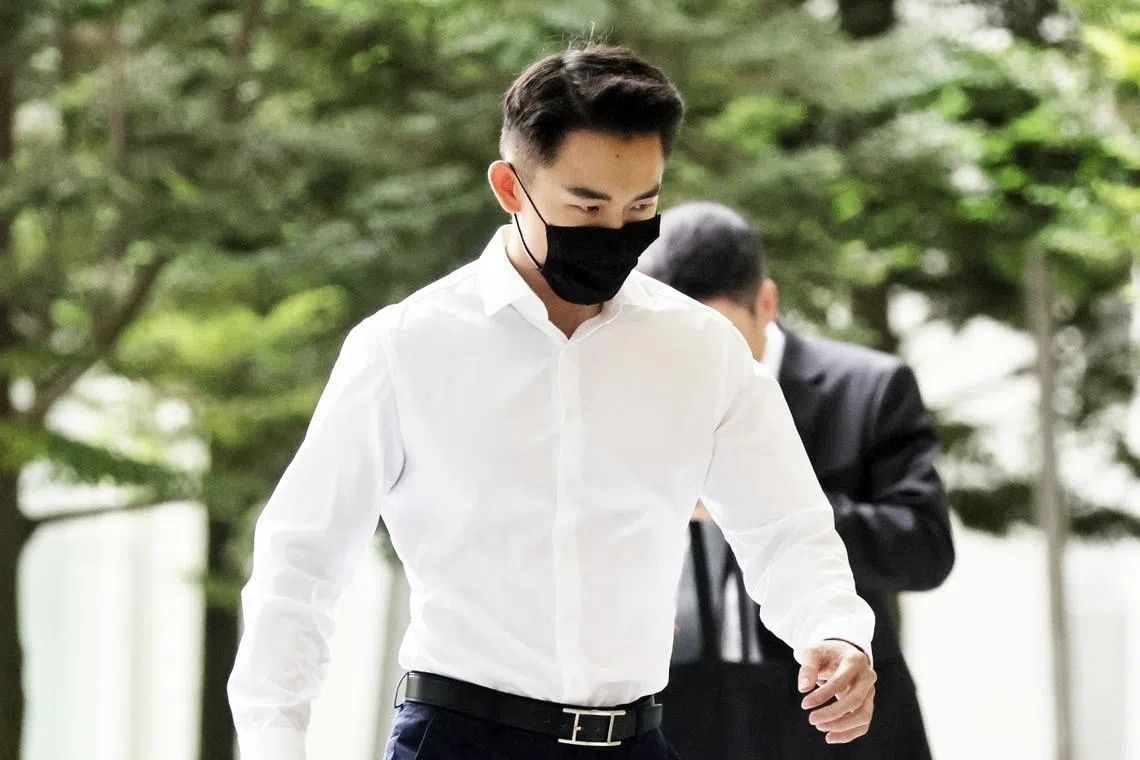
A 36-year-old doctor in Singapore has been convicted of consuming MDMA following a high-profile police operation at a luxury hotel villa that resulted in the largest group drug arrest at a single private event in recent memory. Rayson Lee Rui Sheng and his acquaintance Tan Li Ming, 29, were each found guilty on Tuesday of one count of drug consumption by District Judge A Sangeetha, marking a significant outcome in a case that has attracted considerable attention within Singapore's legal and medical communities.
The convictions stem from a coordinated law enforcement operation conducted in the early morning hours of 8 August 2023, when police received intelligence about illegal drug activity taking place at a villa within the Sofitel Singapore Sentosa hotel complex. Officers arrived shortly after 5:30am and discovered numerous substances suspected to be controlled drugs on the premises, including MDMA and ketamine, along with associated paraphernalia. The scale of the operation escalated when the Central Narcotics Bureau was summoned to the scene, ultimately resulting in the arrests of 49 men ranging in age from 21 to 46 years old, making it one of the most significant single-venue drug arrests in Singapore in recent years.
The case against Lee and Tan rested substantially on forensic evidence obtained through hair and urine analysis conducted by the Health Sciences Authority. Lee's case is particularly notable because his position in the medical profession and his professional standing make the conviction more socially prominent. Prosecutors established that both men's urine samples contained traces of MDMA, while their hair samples demonstrated the presence of both ecstasy and ketamine. This dual confirmation through different biological samples provided the Crown with a compelling forensic foundation, as hair analysis typically indicates pattern drug use over an extended period rather than a single consumption incident.
The defendants' primary legal strategy centred on challenging the Crown's narrative by asserting that their drinks had been surreptitiously adulterated without their knowledge. Lee claimed that during the early morning hours at the villa, he consumed three beverages provided by individuals he did not recognise and had not previously encountered. Tan offered a more detailed account, describing his observation of several unknown men near a kitchen area using a syringe to extract liquid from a bottle and inject the contents into plastic cups. He further claimed that after drinking from one such cup, he noticed white residue at the bottom of the glass. When he allegedly inquired about the substance being syringed into the drinks, Tan said he was told it was "G-water" intended to produce a feeling of intoxication, a claim he maintained he did not comprehend at the time.
Despite the detailed nature of these accounts, the judge found them fundamentally lacking in credibility. District Judge A Sangeetha emphasised a critical inconsistency in the defendants' narrative: both men continued willingly consuming additional drinks throughout the evening despite their purported concern that the beverages at the venue might be contaminated. This behavioural contradiction undermined their central defence assertion, as rational individuals genuinely concerned about consuming adulterated drinks would presumably cease consumption rather than continue imbibing from the same source. The judge further noted that the hair sample findings demonstrated prior drug use patterns, suggesting these were not isolated incidents of unwitting consumption but rather evidence of established substance abuse practices.
The prosecution team, led by Deputy Public Prosecutors Jocelyn Teo and Dhiraj G Chainani, systematically dismantled the defendants' case by highlighting the absence of any corroborating evidence to support their core allegations. The Crown emphasised that neither man could identify specific individuals who allegedly spiked their drinks, could not describe these perpetrators in meaningful detail, and could not articulate a coherent narrative about how such adulteration occurred. The prosecutors characterised the defence strategy as relying on "hypothetical scenarios and unexplored possibilities," including unsubstantiated claims about unidentified foreign nationals at the venue. This rhetorical framing was designed to illustrate the speculative nature of the defendants' evidence in contrast to the concrete, laboratory-verified findings presented by the Crown.
A secondary argument advanced by the defence involved the potential seizure of plastic cups that allegedly contained drug residue. Lee and Tan's legal representatives contended that police and CNB officers had failed to secure certain cups that might have tested positive for controlled substances, thereby undermining the prosecution's case. However, the prosecutors effectively countered this argument by demonstrating that even if such cups had been seized and contained drug traces, this would have merely confirmed that the defendants consumed drug-contaminated beverages—a fact already established through forensic analysis—without proving that such consumption was genuinely unknowing or non-consensual.
Lee's account of his movements that evening provided additional context that prosecutors leveraged in their closing arguments. He initially attended a birthday celebration at the villa beginning around 8pm on 8 August 2023, then departed to visit a nightclub in Clarke Quay where he was introduced to Tan. Both men subsequently returned to the villa during the early morning hours, arriving independently. Once there, Lee claimed the gathering had expanded considerably and included many attendees he had not previously encountered. This narrative detail proved significant because it established that Lee knowingly placed himself in an environment populated by strangers consuming beverages in an unsupervised setting, a factual foundation that supported the court's scepticism regarding his claims of victimisation.
The defendants' credibility was further undermined by additional evidence presented during trial. Lee acknowledged that during a trip to Thailand in June 2023, approximately two months before the Sentosa incident, he had intentionally consumed pills provided by unknown individuals on two separate occasions. This prior conduct suggested a willingness to consume substances from non-medical sources without verification of their composition or legal status, a pattern that contradicted his characterisation of himself as an unwitting victim in the August incident. The cumulative weight of this evidence—forensic confirmation through independent laboratory analysis, observed behavioural inconsistencies, absence of corroborating identifications, prior documented drug consumption, and demonstrated willingness to consume substances from unknown sources—created a compelling case that overcame any reasonable doubt regarding the defendants' knowing participation in drug consumption.
For Malaysia and the broader Southeast Asian region, this case carries implications regarding enforcement priorities across the region's law enforcement agencies. Singapore's aggressive approach to private drug events, coordinated multi-agency responses, and sophisticated forensic investigation protocols represent a model increasingly replicated throughout Southeast Asia as governments strengthen drug enforcement capabilities. The case also reflects growing concerns across the region about recreational drug use among professional classes, a demographic shift that has prompted intensified enforcement attention.
The conviction of a medical doctor carries particular symbolic weight within Singapore's professional regulatory framework and broader public health discourse. Medical councils across Southeast Asia have historically taken serious disciplinary action against doctors convicted of drug-related offences, and this case will likely inform discussions about professional standards and fitness-to-practise determinations throughout the region. The case demonstrates that Singapore's courts will not accept speculative or unsubstantiated defences when confronted with solid forensic evidence, a principle that has ramifications for how legal strategies are formulated in analogous cases across jurisdictions with comparable evidentiary standards and scientific resources.

