Singapore's internal security authorities have taken action against two citizens over concerns related to violent extremism, in cases connected to the broader pattern of radicalisation stemming from the ongoing Israeli-Palestinian conflict. The Internal Security Department announced the measures on Wednesday, highlighting how geopolitical turmoil overseas is driving security risks within the island nation and underscoring challenges faced across Southeast Asia in countering online extremism among young people.
The younger case involves Cyrus Dzulqarnain Al-Shahriar, a 19-year-old student issued a restriction order, while a 30-year-old customer service worker named Tarmizi Mohd Taha received a detention order. Although the authorities characterise the two situations as separate incidents, both individuals show evidence of having absorbed extremist narratives triggered by Hamas' October 2023 attacks on Israel and the subsequent conflict. These represent the seventh and eighth Singaporeans to face Internal Security Act measures whose radicalisation was catalysed by that conflict, indicating a sustained pattern rather than isolated cases.
Cyrus' trajectory demonstrates the complex pathways through which young people in the digital age absorb and integrate multiple strands of extremist ideology. Beginning in 2022, he joined various online religious discussion groups seeking deeper knowledge of Islam as a faith. However, the open nature of such digital spaces exposed him to content that blended anti-Western narratives with virulent anti-LGBTQ messaging, leading him to create social media posts that explicitly encouraged violence against that community. This early phase represents a common entry point for individuals subsequently drawn toward more violent ideological frameworks.
The shifting nature of his extremism illustrates what authorities describe as "composite violent extremism" or a "salad bar" approach to radicalism, wherein individuals selectively borrow from multiple, sometimes contradictory extremist belief systems to construct a personalised justification for violence. Following the October 2023 escalation, Cyrus consumed pro-Hamas content online and came to interpret the group's actions against Israeli civilians as a legitimate form of religious struggle. By 2024, he contemplated travelling to Gaza to participate in combat but abandoned the plan due to practical constraints and personal fear rather than ideological reconsideration.
The situation intensified when Cyrus encountered members of a niche online extremist faction centred on violent accelerationist ideology. These individuals envision triggering societal collapse through orchestrated violence, expecting this chaos to ultimately establish Islam as the dominant global force. They view Western nations, including Singapore, as proxy extensions of American power and Zionist interests. Cyrus formally joined a private chat group associated with this network in early 2025 and began celebrating historical terrorist attacks, including Al-Qaeda's September 2001 assaults that killed over 2,900 people and the 2002 Bali Bombings that claimed more than 200 lives.
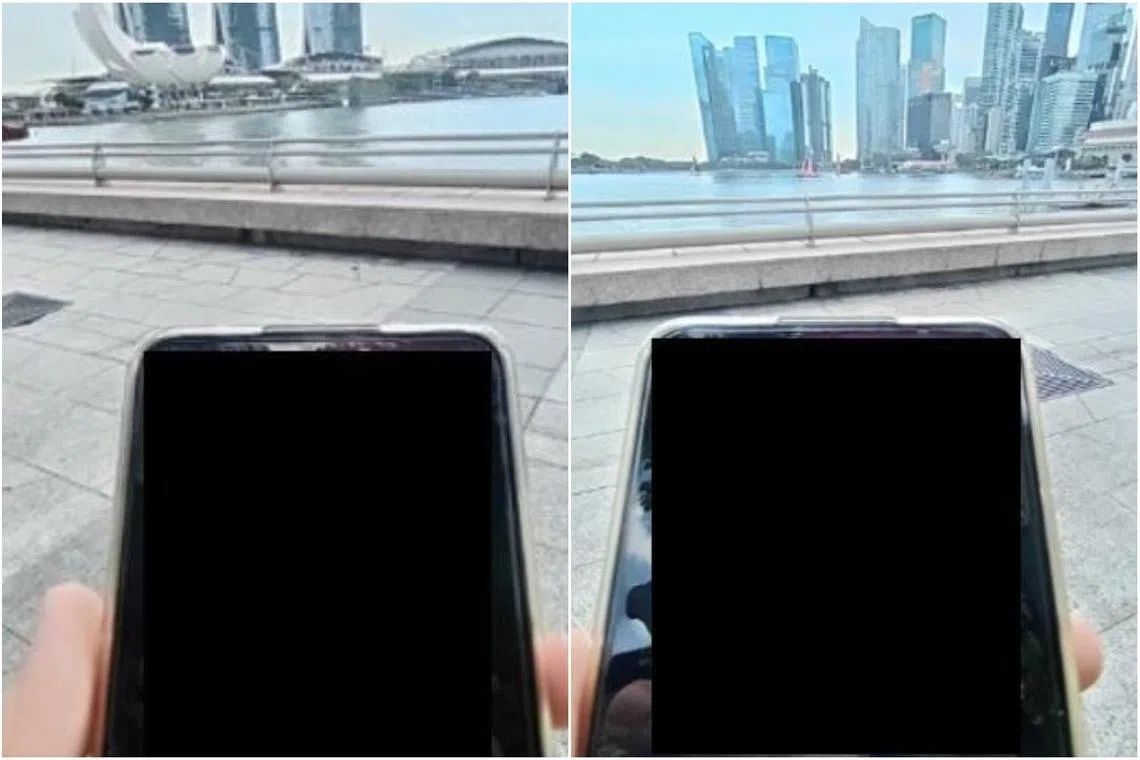
Particularly notable is the performative dimension of his extremism. At the direction of senior group members, Cyrus travelled to Singapore's Esplanade area on multiple occasions to photograph extremist materials with the Marina Bay Sands skyline visible in the background, then publicised these images on his social media accounts in November 2025 as a pledge of allegiance. This public positioning reflected his conviction that participating in the group's "digital jihad" campaign—which involved harassing individuals perceived as anti-Islam online—represented a duty. He distributed fabricated information designed to damage reputations and posted content that directly incited violence while simultaneously glorifying Hamas and the Syrian militant organisation Hay'at Tahrir al-Sham.
A particularly disturbing dimension emerged when Cyrus began consuming content related to Elliot Rodger, the 22-year-old perpetrator of a 2014 mass shooting near the University of California, Santa Barbara that claimed six lives and injured fourteen others. Rodger's attack, motivated by resentment over romantic rejection and social isolation, has become iconic within incel circles—a subculture of predominantly male individuals who identify as involuntarily celibate and express deep antagonism toward women and society broadly. After exploring incel forums online, Cyrus adopted this identity and posted violent threats against women using dehumanising language, while simultaneously fantasising about perpetrating attacks within schools targeting LGBTQ individuals and heterosexual couples.
The authorities assess that whilst these violent fantasies remained at the ideational stage without progressing toward concrete planning or preparation, the cumulative pattern of supporting terrorist groups and inciting violence through online postings constitutes sufficient security concern to warrant intervention. Significantly, Cyrus did not share these radical perspectives or violent imaginings with family members or classmates, suggesting a compartmentalised online existence divorced from his offline relationships. The Internal Security Department has indicated that he will undergo rehabilitation programming designed to address his underlying radical convictions and provide alternative ideological frameworks.
The parallel case of Tarmizi Mohd Taha presents a different but complementary threat assessment. The 30-year-old customer service officer explicitly acknowledged his willingness to conduct violent attacks within Singapore if directed to do so by Hamas leadership. His background as a logistics assistant during military service in the Singapore Police Force enhanced the perceived seriousness of this commitment, given his familiarity with operational planning and security protocols. His stated motivation—belief that participation would facilitate the spiritual status of martyrdom—represents a direct merger of operational capability with violent ideological commitment.
The conjunction of these cases underscores the multifaceted challenge that Singapore and neighbouring Southeast Asian democracies confront in addressing self-radicalisation driven by international conflicts. The Israel-Palestine dispute, whilst geographically distant, has become a mobilising narrative for extremist recruitment in the region, particularly among digitally connected youth who consume content through borderless platforms. The authorities' characterisation of the threat as increasingly diverse, with younger people blending jihadist narratives, incel ideology, violent accelerationism, and anti-Western politics into bespoke belief systems, reflects the fragmentation and mutation of extremism in the online era.
For regional security analysts and policymakers, these developments carry significance beyond Singapore's borders. The patterns evident in Cyrus' case—the progression from religious enquiry through online radicalisation networks, the performative dimension of extremism, the blending of geopolitical grievance with personal alienation, and the deliberate use of social media to signal commitment—represent dynamics that affect other Southeast Asian nations similarly integrated into global digital networks. The challenge of distinguishing between protected political speech and actionable security threats, particularly when extremism lacks traditional hierarchical structure and instead operates through loosely affiliated online communities, remains unresolved across the region.
Authorities have emphasised that the lack of ideological coherence within composite extremism does not diminish its threat level. Individuals drawing eclectically from multiple radical frameworks may prove less predictable and more adaptable than those adhering to established terrorist organisational structures. Rehabilitation efforts must therefore address not only the specific content of extremist beliefs but the underlying psychological vulnerabilities and social alienation that render individuals susceptible to such diverse radicalising influences. Singapore's response through detention and rehabilitation programming reflects broader regional approaches, yet questions persist about the long-term effectiveness of security-focused interventions in addressing the social and technological drivers of self-radicalisation among isolated young people across Southeast Asia.