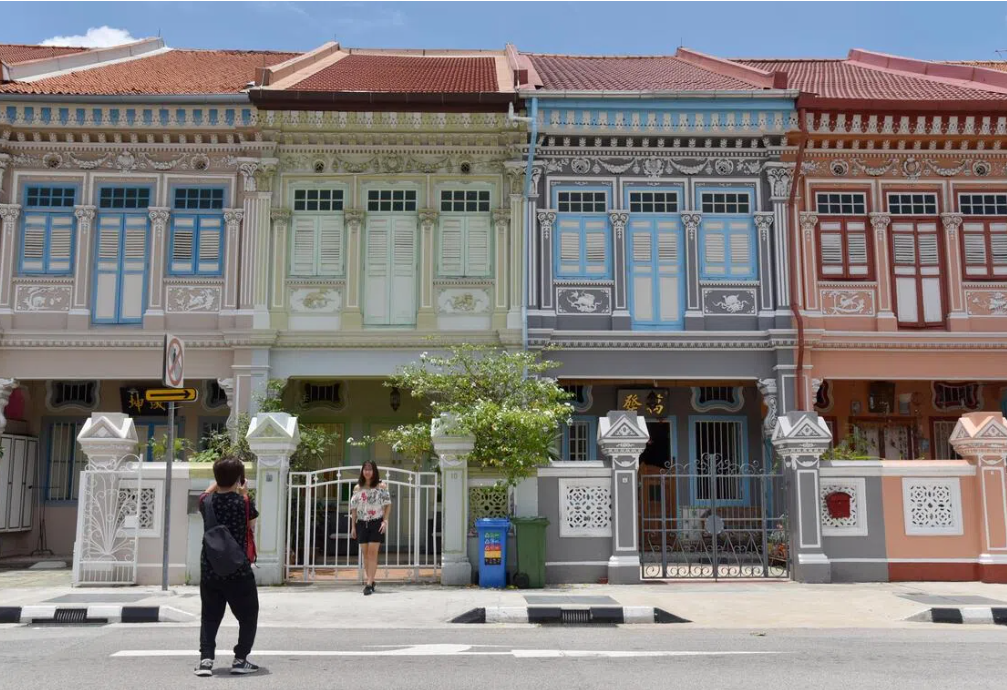
Singapore is rolling out an incentive-driven tourism campaign designed to steer international visitors toward neighbourhood exploration and evening entertainment during the August-to-October period, with the initiative leveraging ride-hailing platform Grab as the primary vehicle for distribution. Announced jointly by the Singapore Tourism Board and Grab on August 11, the scheme introduces two complementary voucher offerings accessible through the Grab Travel Pass, a bundled discount programme that encompasses transport, dining, and activities. The timing is strategic, aligning with the Singapore Grand Prix scheduled for October 2 to 11 and the Singapore River Festival running from September 11 to 20, creating multiple occasions for leisure travel and discovery.
The first voucher delivers a 20 per cent discount on journeys to and from four designated neighbourhood precincts: Katong-Joo Chiat, Tiong Baru, Mandai and Sentosa. Redemption is capped at two uses per customer, preventing unlimited stacking while encouraging visitors to sample multiple areas. The second component specifically targets nocturnal exploration, providing a singular 20 per cent discount on any Grab ride between 7pm and 4am to entertainment districts including Holland Village, Clarke Quay, Boat Quay and Robertson Quay. This temporal segmentation reflects a deliberate strategy to activate Singapore's evening economy, an increasingly important revenue stream as tourism boards globally recognise that nightlife districts and cultural precincts drive significant spending beyond accommodation and food.
Access to these vouchers requires tourists to enrol in the Singapore Grab Travel Pass upon arrival, a mechanism that doubles as a data-collection tool for the Singapore Tourism Board while offering tangible savings. The bundled pass structure means visitors purchasing a travel pass gain immediate access to transport benefits, lowering the perceived cost of neighbourhood mobility and thereby reducing friction for exploring areas beyond the traditional central business district. For Grab, the partnership represents expansion of its regional influence, with Alejandro Osorio, the company's Singapore managing director, emphasising the platform's role in facilitating granular, neighbourhood-level tourism experiences rather than mass-market attractions.
The campaign's geographic reach extends across Southeast Asia through targeted digital advertising, reflecting Singapore's strategic positioning within the region's tourism hierarchy. Terrence Voon, the Singapore Tourism Board's executive director for Southeast Asia, highlighted the significance of Grab's penetration across key source markets, indicating that the partnership leverages existing user bases in Indonesia, Thailand, Vietnam and other regional economies. This approach recognises that immediate-neighbouring markets represent both the easiest and most economical acquisition channels for incremental tourism growth, particularly among younger, digitally-native travellers accustomed to ride-hailing platforms.
This initiative extends a broader reorientation of Singapore's tourism messaging initiated in February with the "We don't wait for fun" campaign, which targets affluent young adults aged 25 to 39. That campaign, already deployed across nine markets including China, deliberately repositioned Singapore away from its established luxury-tourism image towards one emphasising discovery of lesser-known precincts such as New Bahru and Joo Chiat. By highlighting heritage neighbourhoods and grassroots cultural nodes, the Singapore Tourism Board is attempting to capture travellers seeking authenticity and local immersion, demographics that typically spend more extensively than volume-oriented leisure tourists.
Singapore's tourism sector has demonstrated robust recovery and growth trajectories in recent years. International visitor arrivals reached 16.9 million in 2025, surpassing the 16.5 million recorded in 2024, while tourism receipts climbed to an unprecedented $32.8 billion. These figures underscore the economic weightiness of tourism within Singapore's broader economy, particularly given the city-state's land constraints and reliance on high-value sectors. The Singapore Tourism Board projects continued expansion, forecasting that 2026 international arrivals will range between 17 million and 18 million, with associated spending reaching $31 billion to $32.5 billion, suggesting confidence in sustained demand despite regional competitive pressures.
Governmental commitment to tourism infrastructure and development is evident in the commitment of $740 million in funding over the next five years, announced by Grace Fu, the minister in charge of trade relations and sustainability and environment, in May. This capital allocation signals intent to enhance tourism assets, whether through facility upgrades, neighbourhood improvements or marketing campaigns. For Malaysia and other regional competitors, Singapore's systematic approach to tourism development—combining public funding with private-sector partnerships, data-driven targeting and experiential diversification—presents both competitive challenge and strategic benchmark.
The voucher mechanism itself reflects evolving consumer preferences and digital adoption patterns across Southeast Asia. Ride-hailing applications have achieved near-ubiquitous smartphone penetration in urban markets, making Grab an accessible distribution channel for tourism incentives that older voucher systems could not match. The integration of tourism discounts directly within an app that serves daily mobility needs increases visibility and redemption rates compared to separate promotional materials. From a behavioural economics perspective, providing ride subsidies removes a primary friction point for visitors considering neighbourhood exploration, addressing the common tourist concern about transportation costs and convenience in unfamiliar areas.
For Malaysian stakeholders, particularly those in tourism, hospitality and transport sectors, Singapore's campaign underscores the intensifying competition for regional tourist flows. The strategy of combining major events—the Formula 1 Grand Prix and River Festival—with persistent, ongoing neighbourhood-focused discounts creates multiple touchpoints for visitor acquisition and engagement. Malaysia's own tourism initiatives must contend with Singapore's superior digital infrastructure, governmental resource availability and established international brand recognition. However, Malaysia's distinct advantages in cultural authenticity, natural attractions and lower-cost positioning remain relevant differentiators, provided they are effectively marketed and supported by comparable digital infrastructure and partnership models.
The campaign's emphasis on neighbourhood discovery also reflects a maturation of Singapore's tourism sector beyond repetitive visits to iconic sites. Experienced travellers, particularly those from affluent Southeast Asian markets, increasingly seek variety and discovery rather than standard tourist itineraries. By packaging neighbourhood access through ride-hailing subsidies, Singapore positions itself as a city of multiple experiences and continued discovery rather than a single-visit destination. This approach may prove particularly effective in retaining repeat visitors and converting casual tourists into regular travellers, ultimately maximising lifetime customer value.
The partnership between a public-sector tourism authority and a private multinational platform like Grab also exemplifies modern destination marketing, where shared data access and mutually aligned incentives drive collaborative campaigns. Grab gains user engagement and transaction volume; the Singapore Tourism Board gains visitor distribution and foot traffic; and tourists receive tangible cost reductions. This ecosystem approach, increasingly common in leading tourism markets, differs markedly from traditional promotional models that relied on advertising agencies and print media. Southeast Asian tourism boards seeking competitive advantage must similarly embrace digital-first partnerships and platform-mediated incentive structures.
Looking forward, the campaign's success metrics will likely extend beyond simple voucher redemption rates to include neighbourhood-level spending patterns, visitor satisfaction scores and repeat visitation intentions. If the initiative demonstrates that subsidised transport access effectively drives neighbourhood visitation and associated spending in secondary entertainment and dining precincts, the model may become replicable across other periods and geographic zones within Singapore. For regional competitors and observers, tracking this campaign's outcomes offers valuable intelligence regarding effective levers for tourist behaviour modification and regional market dynamics.

