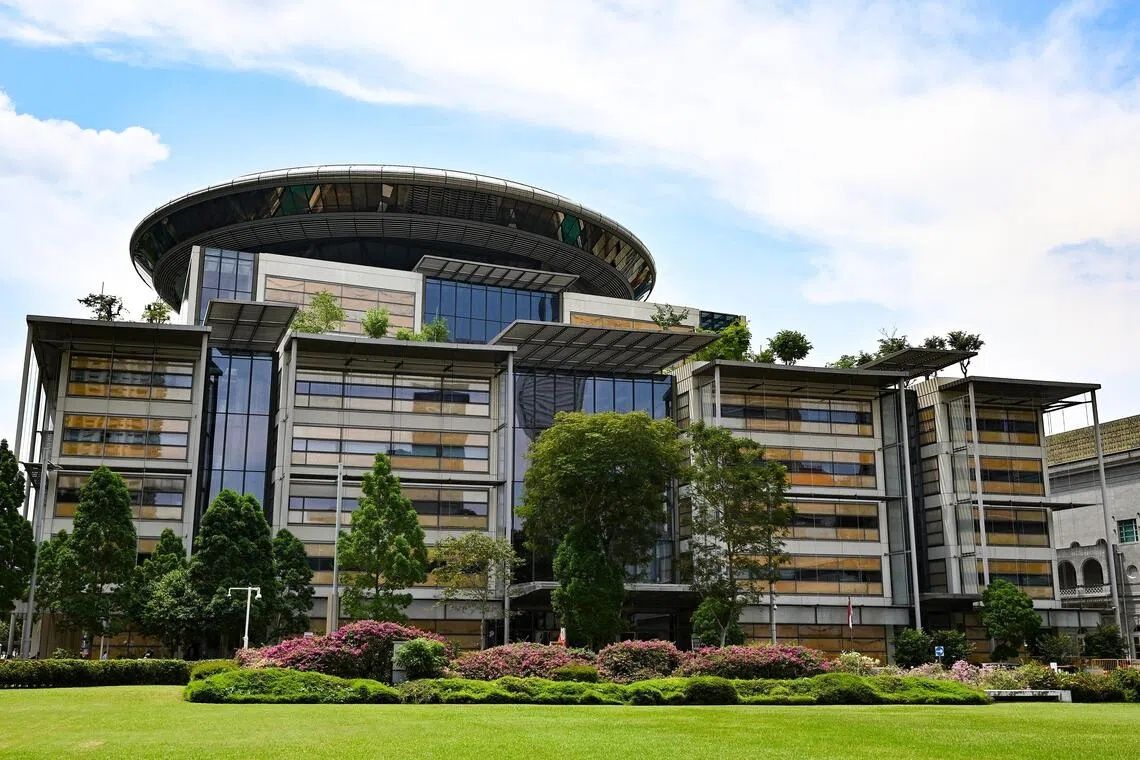
Singapore's highest court has dealt a significant blow to a Chinese national accused of large-scale cybercriminal activity by rejecting his attempt to overturn the police seizure of his personal belongings. Wang Yunhe's challenge has been entirely dismissed by the Court of Appeal, which issued detailed reasons for its decision on August 4 after hearing arguments on July 9. The ruling represents a decisive moment in a case that carries implications for extradition proceedings and the legal boundaries between criminal investigation and judicial oversight in Southeast Asia's financial hub.
Wang stands accused of orchestrating a sophisticated malware distribution scheme that penetrated millions of residential computers globally. He was indicted in a Texas court in May 2023 on multiple serious charges including conspiracy to commit computer fraud, wire fraud, and money laundering. His arrest in Singapore on May 24, 2024, followed an official extradition request from United States authorities, with officers seizing 50 items from him during the operation. Since his detention, he has remained in remand pending committal proceedings that will determine whether Singapore will surrender him to face American justice.
The crux of Wang's legal challenge centred on twelve specific items that police confiscated during his arrest. These included bank cards, mobile phones, flash drives, computing devices and a laptop—materials that investigators considered critical evidence in establishing his alleged crimes. Wang maintained that the American extradition request lacked sufficient specificity and precision, arguing it was too general and vague for local authorities to lawfully justify seizing these particular items. He further contended that Singapore's police officers possessed no reasonable grounds for suspecting that the confiscated materials constituted either evidence of the alleged offences or proceeds derived from criminal activity.
Wang's attempt to recover these items involved a convoluted legal journey that ultimately undermined his position. He initially filed an application before a magistrate seeking a court ruling that the seizure was unlawful. However, the magistrate dismissed his application, prompting Wang to request permission to commence judicial review proceedings to overturn that decision. When a High Court judge rejected this request, Wang appealed to Singapore's Court of Appeal, which constituted his final avenue for relief.
The three-judge appellate panel, led by Chief Justice Sundaresh Menon alongside Justice Hri Kumar Nair and Justice Debbie Ong, identified a fundamental jurisdictional problem with Wang's approach. The judges determined that he should never have brought his initial application before the magistrate at all. The Extradition Act, upon which the magistrate's authority supposedly rested, contains no provision permitting fugitives to challenge police seizures before a magistrate. The court emphasised that such challenges must be directed exclusively at the High Court through proper judicial review mechanisms, not at the subordinate court level.
This jurisdictional error had cascading consequences for Wang's entire legal strategy. The judges noted that if Wang genuinely believed the police had acted unlawfully, he was required to file a judicial review application to the High Court against the police directly. Critically, this pathway demanded that the application be lodged within three months of the seizure itself. Wang's application to the magistrate, however, came nearly nine months after police seized his belongings, meaning he had already exhausted the strict statutory deadline for bringing a judicial review challenge. By circumventing the direct High Court route and attempting to use the magistrate as an intermediary, Wang had effectively sidestepped procedural safeguards designed to ensure timely legal challenges.
The appellate court suggested that both parties may have overlooked the magistrate's lack of jurisdictional authority because Wang's application had been grouped together with other extradition-related matters that properly fell within the magistrate's purview. This bundling of applications, while administratively convenient, created legal confusion about which forum had the authority to hear which issues. However, the court made clear that such practical considerations could not override fundamental principles about where different categories of legal challenges must be heard.
Even had the initial application been correctly filed, the court identified another procedural misstep in how Wang pursued his appeal. Rather than seeking judicial review as his first resort against the magistrate's decision, Wang should have first filed an application for criminal revision—a distinct procedural remedy under Singapore law. This layering of required procedural steps reflects the sophistication and technical complexity of Singapore's legal system, where choosing the wrong mechanism can prove fatal to a claim regardless of its substantive merits.
Beyond these procedural deficiencies, the court determined that Wang had failed to establish even an arguable case on the merits of his challenge. The judges found no credible basis for arguing that reasonable suspicion was lacking. This substantive dismissal reinforced that even if Wang had navigated the procedural maze correctly, his underlying factual assertions were insufficiently compelling. The combination of both procedural failure and substantive weakness left his position entirely untenable.
The decision carries particular significance for Malaysia and the broader Southeast Asian region as it clarifies how regional courts will handle extradition cases involving cross-border cybercriminal activity. Singapore's approach demonstrates a willingness to enforce strict procedural requirements while maintaining robust judicial oversight, a balance that other jurisdictions will likely observe. The ruling also reflects Singapore's commitment to international cooperation on serious crimes, particularly those involving digital infrastructure threats that affect entire nations.
Wang's case underscores the growing challenge of cybercrime prosecutions in an increasingly digitalised Southeast Asia. As criminals exploit cross-border networks to target millions of devices simultaneously, the capacity of regional law enforcement and courts to pursue and successfully prosecute such offenders becomes critical infrastructure for broader digital security. The Court of Appeal's decision removes a significant obstacle to Wang's eventual extradition to the United States, where he will face trial on the substantive criminal charges.
The rejection of Wang's appeal also illustrates how legal systems can inadvertently complicate cases when applications are structured improperly or filed in incorrect forums. His nine-month delay in challenging the seizure proved particularly consequential, suggesting that those facing extradition must act with considerable speed to mount procedural challenges. For legal practitioners and accused persons navigating extradition frameworks, the decision provides a cautionary lesson about the importance of following precise procedural pathways rather than seeking creative alternatives through lower courts.
As Wang remains in remand pending the committal hearing, the judicial process moves inexorably toward determining his extradition status. The Court of Appeal's dismissal of his seizure challenge removes one layer of litigation that might have delayed proceedings. His case will continue to draw attention from cybersecurity experts, international law enforcement agencies, and regional policymakers concerned with transnational digital crime, establishing precedents that will likely influence how similar cases are handled throughout Southeast Asia for years to come.

