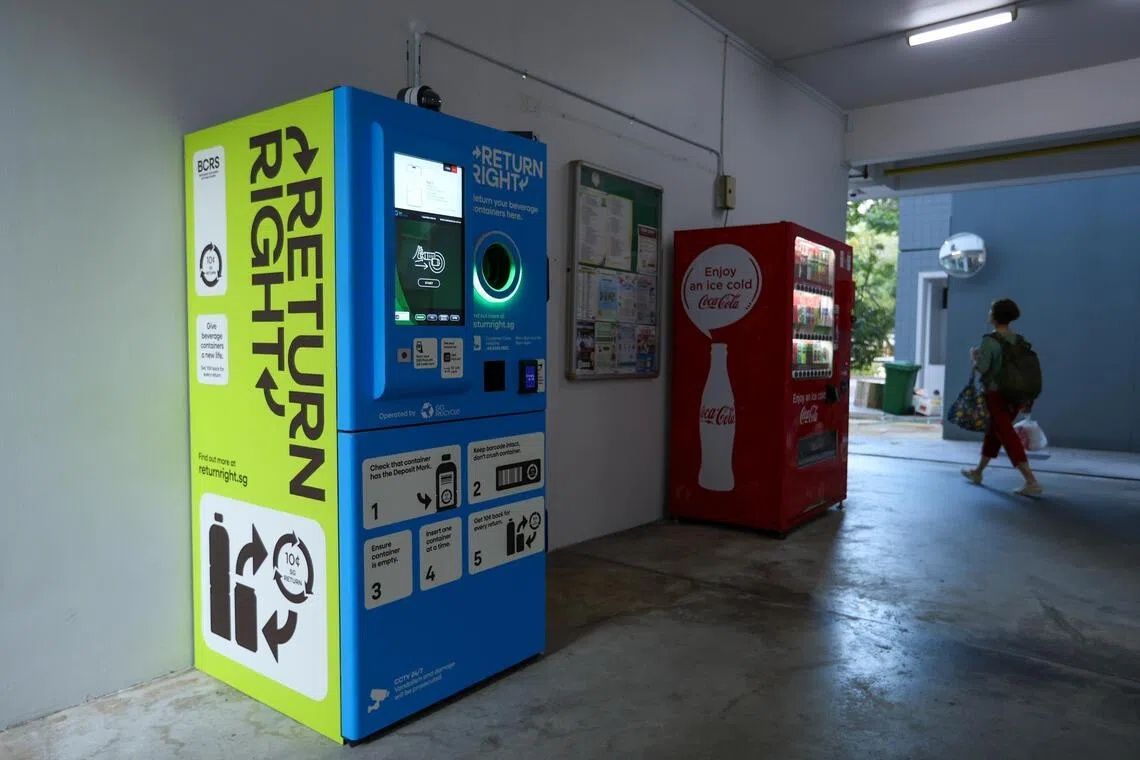
Singapore's National Environment Agency has moved to quash public suspicions regarding the integrity of its recycling initiative, rejecting claims that money has been misappropriated or lost to corruption in the administration of the Beverage Container Return Scheme. The agency issued a detailed clarification on August 15 to address online speculation that had gained traction following parliamentary remarks about the programme's early performance figures.
The controversy appears rooted in a misunderstanding of how transaction data was presented to lawmakers. When Senior Minister of State for Sustainability and the Environment Janil Puthucheary informed Parliament on August 5 that 5.5 million beverage containers had been returned through reverse vending machines between April and July, he simultaneously noted that more than one million successful refunds had been processed. Some online commentators interpreted this dual statistic as evidence that deposits were only returned for a fraction of the containers submitted, implying that the remaining funds had vanished into official coffers.
The National Environment Agency's clarification reveals the source of confusion: the statistics measure different things. While 5.5 million individual containers were dropped into machines, these items were processed across 1.1 million separate transactions. This distinction proves crucial, as the agency explained that customers routinely return multiple containers in a single use of a machine. On average, consumers deposited 5.5 containers per visit, meaning that the transaction count accurately reflects the number of times refund requests were fulfilled rather than the total number of items returned.
Calculating the total refund amount based on these figures yields approximately S$550,000 (US$429,822) in deposits reimbursed to consumers. Each beverage container carries a 10-cent deposit under the scheme's design, so dividing the deposit amount by the average number of containers per transaction confirms that funds have been returned at the correct rate. The agency's straightforward arithmetic effectively disarms suggestions that public money intended for recycling participants has been diverted or retained.
The Beverage Container Return Scheme itself represents a policy innovation in Singapore's environmental strategy, introduced on April 1 to incentivise recycling while creating accountability in the consumer beverage chain. Under the mechanism, shoppers pay an additional 10 cents when purchasing canned or bottled drinks, with the understanding that this deposit becomes refundable upon returning the empty container to any participating reverse vending machine. The deposit system combines economic incentive with practical convenience, as consumers can recoup their costs relatively quickly.
Despite the scheme's straightforward logic, implementation has encountered several technical obstacles that contributed to the erosion of public confidence. Early users reported that reverse vending machines occasionally malfunctioned, rejecting valid containers and preventing refunds from being issued immediately. Some customers described lengthy delays in receiving reimbursements, having been forced to contact the scheme operator directly via email to resolve transaction failures. These friction points, while ultimately resolved, generated frustration among consumers accustomed to seamless digital transactions and may have created an environment where suspicion could flourish when official statistics proved ambiguous.
Janil provided some reassurance during his earlier parliamentary address, noting that the overwhelming majority of transactions and returns had proceeded without difficulty. He acknowledged that isolated problems had emerged at certain machines, but emphasised that the scheme operator BCRS had worked collaboratively with equipment manufacturers and venue operators to identify and quickly resolve these technical glitches. His comments suggested that early operational challenges were being treated as expected teething problems rather than systemic failures warranting fundamental redesign.
The regulatory oversight structure supporting the scheme includes requirements that BCRS file annual financial reports with the National Environment Agency, creating a formal auditing mechanism. This institutional architecture was designed to ensure transparency and prevent the type of financial misconduct that online commentators had hypothesised. The existence of these reporting obligations, combined with the agency's willingness to publicly address community concerns, suggests that Singapore's environmental authorities view public trust as essential to the scheme's long-term viability.
For Malaysian observers, Singapore's experience offers instructive lessons about the intersection of recycling policy, digital technology, and public communication. As Malaysia pursues its own environmental objectives and considers extended producer responsibility schemes, the Singaporean case demonstrates both the potential of deposit-return systems to drive behaviour change and the importance of technical reliability and clear public communication in preventing misinformation. The controversy, even if ultimately grounded in misunderstanding rather than actual impropriety, illustrates how statistical presentations to lawmakers can ripple through public discourse when they appear to raise unanswered questions about government accountability.

