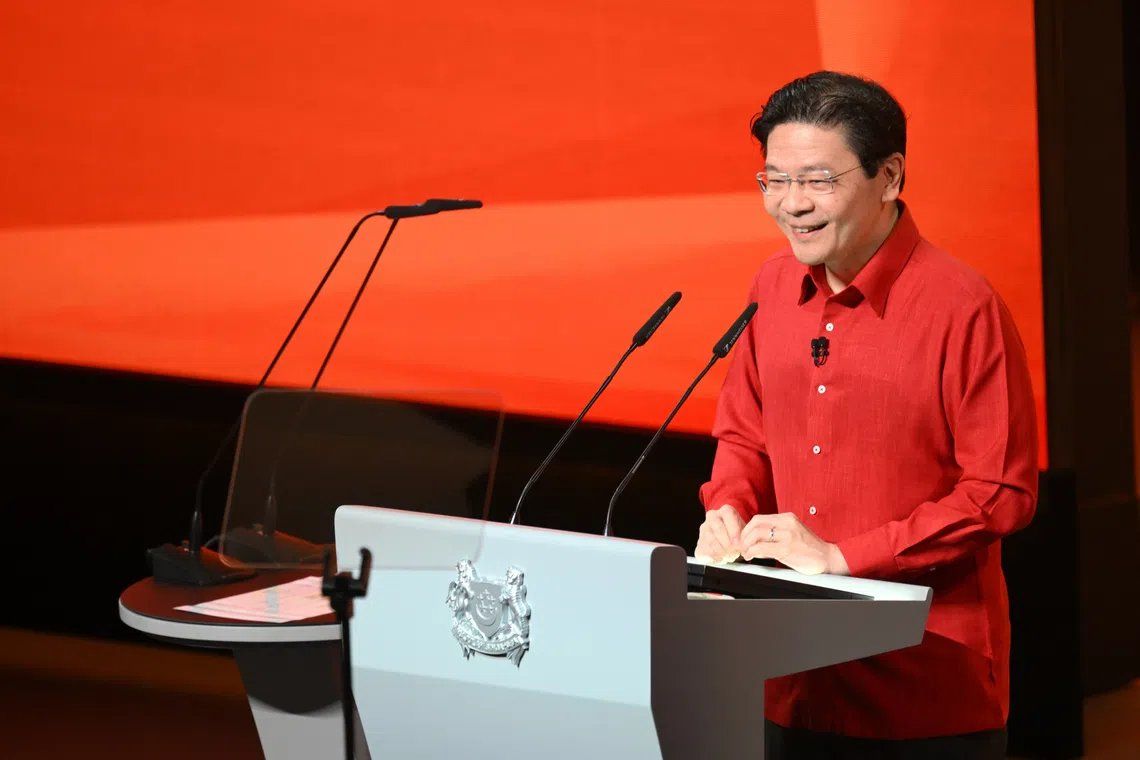
Singapore's transport authorities are preparing motorists for significant traffic disruptions in the Ang Mo Kio area this coming Sunday as the city-state readies itself for Prime Minister Wong Sheng Wei's third National Day Rally address. The police announced through social media on Thursday that multiple routes surrounding ITE College Central will be completely closed to general traffic, imposing what is expected to be a lengthy and comprehensive set of restrictions that will affect both commuters and residents navigating the northern corridor of the island.
The closure window extends for nearly 19 hours, running from 5 o'clock in the morning until just before midnight on August 23. This extended timeframe reflects the logistical complexity of hosting a major national political event and underscores Singapore's emphasis on security and crowd management during such occasions. The affected corridor includes several critical arteries that normally handle substantial daily traffic flows, suggesting that alternative routes may experience heightened congestion as vehicles are diverted away from the affected areas.
Specific stretches targeted for closure comprise both slip roads and multiple lanes across Ang Mo Kio Avenue 5, which serves as a major east-west connector in that sector. The slip road connecting Ang Mo Kio Avenue 5 to Ang Mo Kio Drive in both directions will be entirely inaccessible, effectively severing direct connections between these two important thoroughfares. Additionally, authorities will restrict the extreme left lane of Ang Mo Kio Avenue 5 heading towards the Central Expressway between lamp posts 74A and Ang Mo Kio Drive, and again between lamp posts 79 and 81. The extreme right lane in the direction of Ang Mo Kio Avenue 8, positioned between lamp posts 83A and Ang Mo Kio Avenue 10, will similarly be sealed off.
The restrictions reveal a deliberate strategy to maintain a secure perimeter around the venue while preserving minimal traffic flow along non-essential lanes. Authorised vehicles will retain access throughout the closure period, as will police and emergency response units, ensuring that essential services can continue unimpeded and that rapid response capabilities remain intact. The police have emphasised that these provisions are non-negotiable, and enforcement will be rigorous.
To manage the impact on motorists, the authorities have committed to deploying police officers, auxiliary police personnel, and private security staff along all affected stretches. These personnel will be tasked with directing traffic, assisting confused drivers, and maintaining orderly conditions as vehicles navigate around the closed sections. This human-centred approach complements the physical barriers and signage that will delineate the closure zones, creating multiple layers of communication to ensure compliance and safety.
Parking enforcement will reach heightened levels during this period, with authorities warning that vehicles parked in violation of restrictions or those creating obstruction will be removed swiftly. This zero-tolerance stance reflects Singapore's broader approach to event management and traffic discipline. The police have publicised a helpline—1800-218-0000—for members of the public with queries, providing a direct channel for residents and commuters to obtain clarity about the restrictions and discuss potential exemptions or special circumstances.
PM Wong will commence his address at 6.45 in the evening, delivering remarks first in Malay before proceeding to Mandarin, with the English-language portion scheduled for 8 o'clock. This tripartite linguistic approach reflects Singapore's multicultural fabric and ensures that all major communities can engage directly with the prime minister's policy messages. The speech will be transmitted across all local television channels and radio networks, reaching Singaporeans in their homes and workplaces, while simultaneous streaming on the Prime Minister's Office and PM Wong's YouTube channels will extend accessibility to digital audiences.
For those unable to catch the live transmission, recorded versions will be available from August 24 onwards on both YouTube and the Prime Minister's Office website, allowing asynchronous viewing and archival purposes. This multi-platform distribution strategy reflects contemporary media consumption patterns and ensures equitable access across demographic groups and technological preferences.
The National Day Rally serves as Singapore's premier annual occasion for top political leadership to address citizens directly, offering both retrospective assessment of national progress and forward-looking policy announcements. The event functions as a barometer of government priorities, allowing observers both domestic and international to gauge the administration's emphasis areas and strategic thinking. PM Wong's third such address carries particular significance as it demonstrates continuity in his leadership and provides an opportunity to report on the implementation of policies articulated in previous rallies.
For Malaysian readers and Southeast Asian observers, Singapore's meticulous planning and security protocols surrounding such events underscore the administrative sophistication that characterises the city-state's governance. The detailed announcement of traffic arrangements reflects a commitment to transparency and public communication, qualities that have become hallmarks of Singapore's approach to managing major civic occasions. The extent of disruption imposed, while potentially burdensome for affected motorists, illustrates how the island's leadership prioritises the security and symbolic importance of state events.
Regional commentators have noted that Singapore's National Day Rally speeches often contain policy announcements with implications extending beyond the island's borders, particularly regarding trade, regional integration, and security cooperation. As such, observers throughout Southeast Asia, including Malaysia, frequently monitor these addresses for insights into Singapore's strategic positioning and potential shifts in regional diplomatic priorities. The coming address therefore warrants attention from those seeking to understand the trajectory of Singapore's governance and its evolving relationship with neighbouring states in an increasingly complex geopolitical environment.

