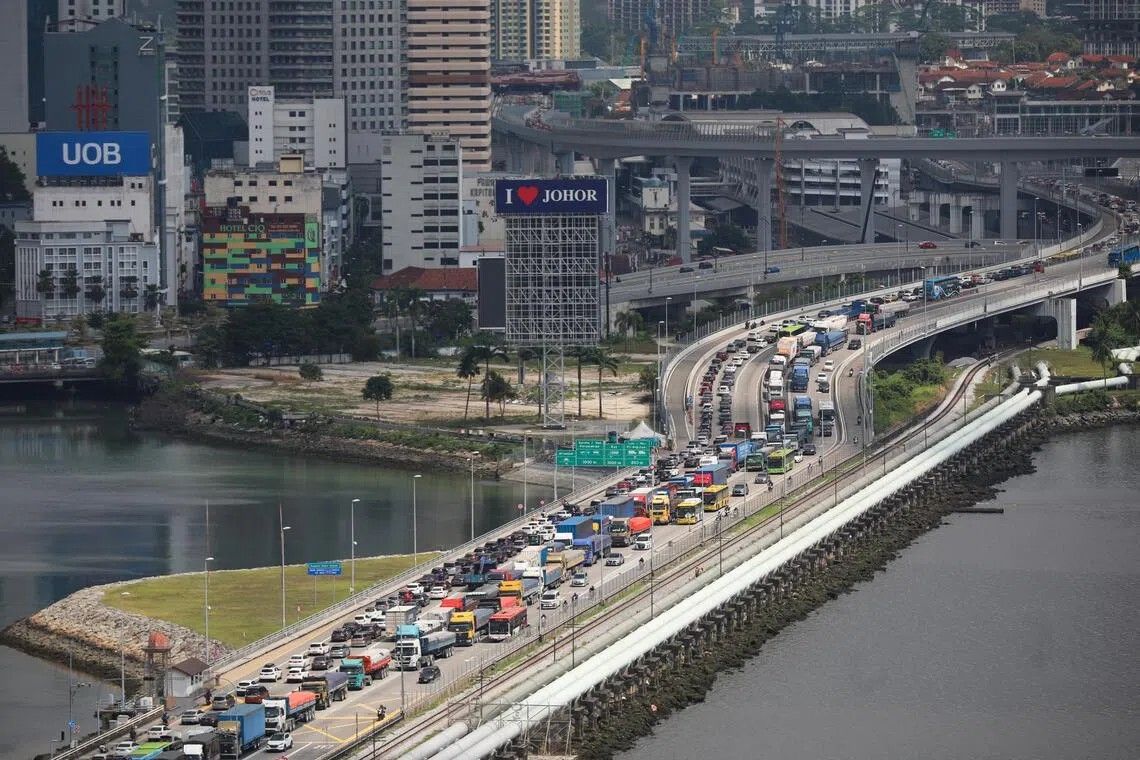
Singapore's border authorities are preparing for a surge in cross-frontier traffic during the National Day long weekend spanning August 7 to 10, with officials explicitly warning motorists to expect "very heavy traffic" at the Woodlands and Tuas checkpoints. The Immigration and Checkpoints Authority (ICA) has released guidance advising travellers to adopt strategic timing and digital solutions to navigate what is anticipated to be one of the busiest holiday periods for land-based movement between Singapore and Malaysia.
The scale of border crossings during Malaysian holiday periods has become increasingly pronounced in recent years. During the combined Hari Raya Haji, Vesak Day weekend and June school holidays between May 26 and June 28, more than 18 million individual border transits were recorded across the two major checkpoints. This extraordinary volume underscores how deeply integrated regional travel has become for residents of both countries, with shopping, leisure, and family visits driving substantial cross-border movement. The figures reflect not only casual tourism but also the economic interdependence and social connections that characterise the Singapore-Malaysia relationship.
Peak-hour congestion has reached unprecedented levels in recent months. On June 19 alone, more than 598,000 travellers processed through immigration at the two checkpoints, shattering the previous daily record of 589,000 set on December 19, 2025. During high-traffic periods, motorists reported waiting times stretching to three hours for immigration clearance, a figure that incorporates delays from traffic backups originating in Malaysia itself. Such extended queuing periods reflect not merely an inconvenience but a systemic bottleneck that affects both productivity and traveller experience across the region.
The ICA has implemented several countermeasures to accelerate processing and reduce congestion, though capacity constraints remain a fundamental challenge. One primary recommendation encourages travellers to generate QR codes through the MyICA mobile application, a digital approach that has streamlined immigration procedures for vehicle occupants. Additionally, the New Clearance Concept for motorcycle riders and their passengers employs facial recognition technology, which has yielded demonstrable improvements in throughput. The initiative has boosted clearance rates by more than 35 per cent during departure peaks compared with pre-pandemic 2019 levels, translating to an additional 7,600 travellers per hour through the system.
Security measures have intensified across all checkpoints since February 28 amid heightened global security concerns, particularly following geopolitical developments in the Middle East. These enhanced protocols, while necessary for safeguarding travellers and border integrity, inevitably contribute to processing times. The ICA must balance security imperatives with operational efficiency, a tension that becomes acute during peak holiday periods when volume surges demand the most robust screening.
Behaviour at the checkpoints has emerged as a significant factor undermining traffic flow. During the recent May to June holiday period, 52 motorists were apprehended for traffic-related offences and dangerous road conduct at the borders. Queue-cutting represents a particularly disruptive violation, as it destabilises the carefully managed flow of vehicles through lanes and checkpoints. The ICA has responded by implementing penalties including mandatory U-turns and re-queuing from the back of the line, effectively doubling a driver's waiting period. In severe cases, offenders have been barred from entering Singapore, a sanction that escalates consequences significantly. Such enforcement actions communicate that individual impatience carries collective costs for all travellers.
For Malaysian readers and cross-border commuters, the implications are substantial. Those planning to visit Singapore for the National Day weekend should consider postponing non-urgent trips or timing their journeys during off-peak windows such as early mornings before 6 AM or late evenings after 10 PM, when checkpoint volumes drop considerably. Families undertaking long-planned holiday excursions should factor in substantially longer travel times than historical averages. The advisory extends beyond private motorists to commercial drivers and delivery personnel whose delays propagate through supply chains and service sectors.
The digital infrastructure now available provides a meaningful efficiency advantage for those who utilise it proactively. Installing the MyICA application and generating QR codes prior to travel represents a simple yet consequential step that can shorten immigration processing by several minutes. For motorcycle users, the facial recognition system eliminates paper document verification, enabling faster passage during congested periods. These tools represent the incremental optimisation that authorities can offer within existing physical infrastructure constraints.
Looking forward, the sustained growth in cross-border traffic volume raises strategic questions about checkpoint capacity and infrastructure expansion. The June 19 record-breaking figure suggests that current systems are operating near saturation during peak periods. Both Singapore and Malaysia have discussed long-term infrastructure improvements, including additional lanes and processing facilities, but such projects require time to fund, design, and construct. In the interim, behaviour-based compliance and technology-enabled efficiency remain the primary levers available to authorities and travellers respectively.
The National Day weekend serves as a microcosm of broader regional mobility trends. As Singapore consolidates its position as a regional hub and Malaysia's economy continues its integration with Southeast Asian networks, cross-border traffic will likely continue escalating during holiday periods. The challenge facing authorities is maintaining border security and integrity while facilitating the legitimate movement of people and goods that underpins economic and social cohesion. For individual travellers, the message is clear: preparation, patience, and compliance represent the most pragmatic responses to the anticipated congestion ahead.

