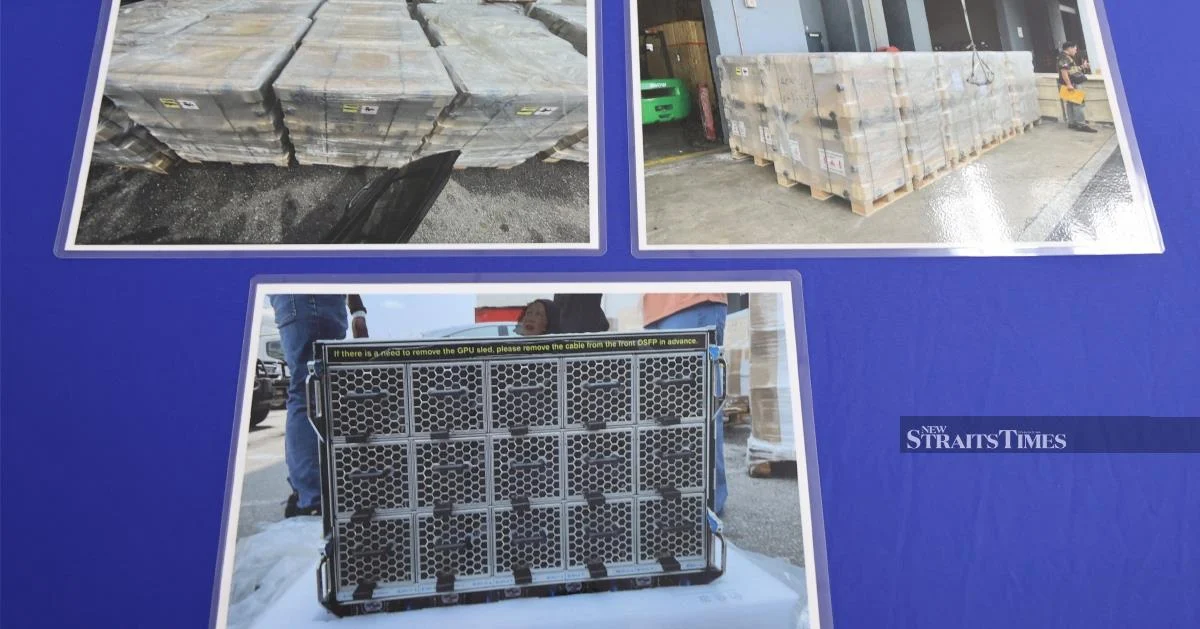
Singapore law enforcement has moved decisively against suspected violators of international trade regulations, seizing a luxury residential property worth exceeding US$40 million on Wednesday as authorities pursue inquiries into an alleged scheme involving the unauthorised transfer of advanced artificial intelligence chips. The asset seizure marks an escalation in enforcement actions against financial crimes that breach US export control frameworks—restrictions that have become increasingly stringent as Western nations tighten oversight of semiconductor technology transfers to prevent circumvention of sanctions regimes and strategic limitations.
The investigation underscores Singapore's position as both a global financial hub and a jurisdiction where high-value illicit transactions can occur. The city-state has positioned itself as a critical node in Southeast Asian commerce, but this prominence simultaneously makes it attractive to those seeking to exploit its sophisticated banking infrastructure and business-friendly environment for questionable purposes. The seizure of such a substantial property signals that Singapore's authorities view the suspected violations as serious enough to warrant immediate asset forfeiture and criminal investigation.
Artificial intelligence semiconductors represent some of the most tightly controlled technology in the world, with the United States maintaining detailed licensing regimes to restrict their sale and transfer to certain countries and entities. These restrictions stem from national security concerns, as advanced AI processing chips have potential dual-use applications spanning both civilian artificial intelligence systems and military applications. The alleged breach of these controls represents a significant regulatory violation with potential geopolitical implications for the broader technology supply chain.
For Malaysian observers, this case carries particular relevance given the region's role in electronics manufacturing and semiconductor distribution. Malaysia has substantial semiconductor assembly and testing facilities, and the nation sits within Asia's complex supply chain networks. Any disruption caused by enforcement actions against smuggling operations can reverberate through regional logistics and manufacturing operations, affecting businesses that depend on lawful cross-border movement of controlled technologies. The investigation may also prompt Malaysian authorities to review their own oversight mechanisms for preventing such breaches within the country's jurisdiction.
The property seizure mechanism used by Singapore authorities reflects the jurisdiction's sophisticated approach to combating financial crimes by targeting the proceeds and instruments of illegal activity. When authorities can demonstrate a connection between assets and criminal enterprise, they can move to forfeit or freeze those assets pending criminal proceedings. In this instance, the luxury bungalow—presumably purchased using funds derived from the alleged smuggling scheme—became subject to seizure as an instrument of the suspected fraud.
The broader context of this investigation reflects mounting international tension around technology transfer. The United States has progressively tightened restrictions on semiconductor exports, particularly those involving advanced processors suitable for machine learning applications. These controls gained prominence following concerns that such technologies might strengthen the artificial intelligence capabilities of strategic competitors, making enforcement of these restrictions a priority for American officials and their international partners.
Singapore's willingness to pursue these investigations and execute such high-value seizures demonstrates the nation's commitment to maintaining compliance with international trade regimes and preserving its reputation as a rules-based financial centre. The jurisdiction faces careful balancing pressures: it must remain attractive to legitimate businesses while simultaneously demonstrating sufficient law enforcement rigour to deter criminal activity. Conversely, overzealous enforcement could discourage the international commerce that forms the backbone of Singapore's economy.
The investigation may involve multiple suspects and potentially international dimensions, given that alleged export control violations typically require smuggling operations spanning borders. Regional law enforcement agencies, including those in Malaysia, may eventually be drawn into coordinating investigative efforts if the suspected smuggling network extended into neighbouring jurisdictions. Such cross-border investigations require careful diplomatic coordination and mutual legal assistance arrangements.
For businesses operating in the technology sector across Southeast Asia, this case serves as a cautionary reminder of the serious consequences attached to breaching export control regulations. Penalties can include criminal prosecution, substantial financial penalties, and asset forfeiture—outcomes that extend far beyond the immediate business transaction in question. Companies must implement robust compliance frameworks to ensure they are not inadvertently facilitating prohibited technology transfers or associating with parties engaged in such schemes.
The seizure also highlights Singapore's expanding role in policing international financial crimes beyond traditional concerns of money laundering or terrorist financing. As artificial intelligence becomes increasingly central to economic competition between major powers, control of semiconductor technology distribution has become a core national security matter. Singapore's proactive stance in investigating these matters positions the jurisdiction as a cooperative partner in the broader Western effort to maintain control over critical technology flows.

