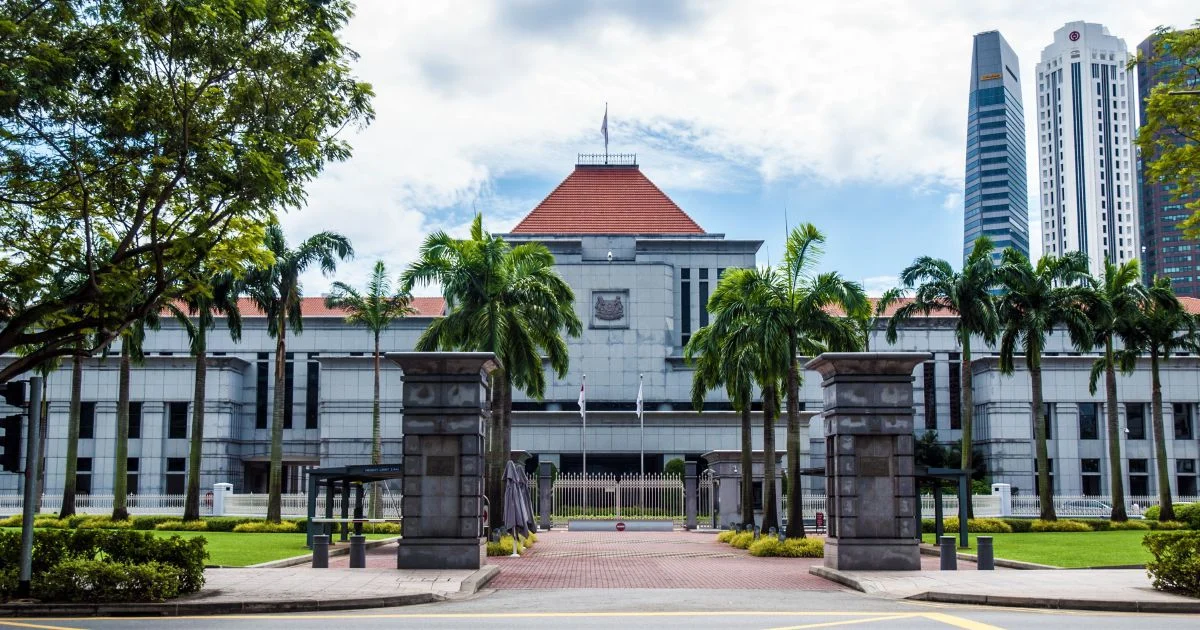
Singapore's police force has detained a 40-year-old individual in connection with two separate bomb threats that targeted the nation's Parliament House and the Home Team Science and Technology Agency office, authorities announced on Wednesday. The arrest underscores ongoing security vigilance around vital government institutions and reflects the city-state's commitment to safeguarding parliamentary and administrative operations against potential threats.
The suspect is accused of making the anonymous threats, which prompted immediate responses from security personnel and authorities tasked with protecting these high-profile locations. Both venues represent critical nodes in Singapore's governance infrastructure—Parliament House serves as the legislative heart of the nation, while HTX functions as a specialized research and development entity supporting Singapore's internal security and law enforcement capabilities.
The timing and nature of these threats raise concerns about the vulnerability of government communications channels to malicious actors. Anonymous bomb threats directed at multiple government facilities within a concentrated period suggest either a coordinated campaign or an individual intent on testing the responsiveness of Singapore's security apparatus. The dual targeting strategy indicates that the threat maker may have been seeking to stretch emergency response resources or create widespread alarm.
Singapore has consistently maintained one of the world's most sophisticated and comprehensive security frameworks, with substantial investment in counter-terrorism protocols and threat assessment mechanisms. The swift identification and apprehension of the suspect demonstrates the effectiveness of investigation techniques, including likely digital forensics, telecommunications analysis, and conventional detective work. Law enforcement agencies appear to have rapidly traced the anonymous communications back to their source.
For regional observers, the incident carries broader implications. Southeast Asia has experienced periodic security concerns related to various threat categories, from conventional crime to extremist activities. Singapore's capacity to respond decisively to such threats offers a model, albeit one that other nations in the region may find difficult to replicate given differences in technological infrastructure and investigative resources. The case illustrates how even wealthy, well-developed city-states must contend with security challenges posed by determined individuals.
The Home Team Science and Technology Agency's inclusion among the targeted facilities is particularly significant, as HTX specializes in developing cutting-edge technologies for internal security operations. Threats directed at this organization may reflect awareness of its strategic importance or could be random selections by someone targeting multiple government entities. HTX's work spans forensics, cybersecurity, and emerging security technologies, making it a symbol of Singapore's technological sophistication in governance.
Bomb threats, whether credible or hoax calls, impose substantial costs on government operations. Security personnel must treat each threat with appropriate seriousness, triggering evacuations, sweeps, and resource diversion from routine duties. Parliamentary sessions may face disruption, and public confidence in institutional security can be shaken. The psychological impact of such threats extends beyond the immediate targets to the broader public consciousness regarding safety and preparedness.
The arrest raises questions about investigative methodology in the digital age. Anonymous threats transmitted through modern communication channels often leave digital footprints through internet service providers, cellular networks, or messaging platforms. Cybercriminal specialists working within Singapore's police apparatus likely deployed sophisticated tools to de-anonymize the threat maker, possibly involving international cooperation with technology companies or foreign law enforcement agencies if cross-border communication channels were utilized.
Legal consequences for bomb threat offenders in Singapore are typically severe. Making false threats of violence or terrorism-related acts can result in imprisonment and substantial fines under Singapore's Penal Code and the Internal Security Act provisions. The prosecution will likely pursue charges that reflect both the gravity of threatening critical government infrastructure and the resources expended in response.
From a Malaysian perspective, the incident underscores the interconnected security environment within Southeast Asia. Cross-border security cooperation, intelligence sharing, and coordinated responses to potential threats remain essential given the region's economic integration and shared transportation networks. Both nations participate in regional security frameworks and maintain bilateral law enforcement cooperation mechanisms that facilitate rapid information exchange.
The case also highlights evolving threat landscapes in developed, stable societies. Traditional security analysis often focuses on organized groups or ideologically motivated actors, yet individual malcontents with access to communication technology can generate significant disruption and resource expenditure. Intelligence and law enforcement agencies across the region must balance between addressing organized threats and responding to lone actors whose motivations may range from political grievance to mental health crises to simple mischief.
As the investigation progresses through Singapore's judicial system, the case may yield insights into threat-making methodologies and the vulnerabilities of communication systems. Public disclosure of investigative techniques may be limited to protect operational security, but information about how the suspect was apprehended could inform regional security practices more broadly. Singapore's transparent approach to publicizing arrests and prosecutions, combined with its judicial openness, allows neighboring nations to learn from its experiences.
The incident ultimately reinforces that even in highly secure, developed jurisdictions with advanced technological capabilities and professional law enforcement agencies, threats to government institutions remain a persistent challenge requiring constant vigilance, rapid response capacity, and continuous evolution of security protocols to address emerging methodologies employed by potential threat makers.

