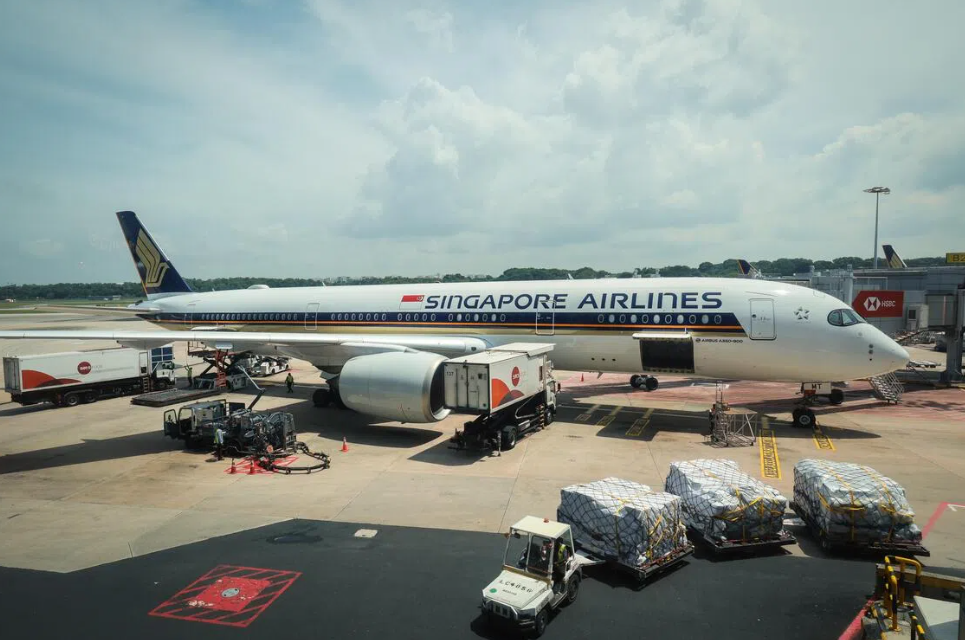
Singapore Airlines faced an operational disruption when one of its ultra-long-range flights bound for New York had to turn back to Changi Airport just hours after departing on August 12. Flight SQ22, which was scheduled to leave at 11:35pm that evening, encountered a technical malfunction that necessitated the return journey, forcing the airline to coordinate an emergency response involving passenger transfers and crew replacements. The Airbus A350-900 aircraft touched down at Changi at 3:06am on August 13, about three and a half hours after the initial departure.
The SQ22 service represents one of the most demanding long-haul routes in global aviation, with a scheduled flight duration exceeding 18 hours and a distance of approximately 16,700 kilometres to Newark in New Jersey. Singapore Airlines operates this non-stop connection as a flagship route, demonstrating the operational capability required to maintain such extended services. The technical issue that prompted the diversion was not disclosed by the airline's spokesperson, who declined to specify the nature of the problem when responding to media enquiries two days after the incident.
The airline's operational response illustrated the complexity of managing large-scale passenger disruptions on intercontinental flights. All 133 passengers and 17 crew members were systematically disembarked after the aircraft was towed to a remote parking bay to undergo repairs, preventing them from walking directly to the terminal. Instead, passengers were transported via buses, a standard procedure that nonetheless added to the overall inconvenience and extended wait times during an already stressful situation.
A critical constraint affecting the airline's recovery options was the regulatory flight time limitation governing crew operations. The original flight crew had already utilized a significant portion of their allowable flight hours during the initial takeoff and return, meaning they would exceed their maximum duty limits if they continued with the replacement aircraft. This regulatory framework, which exists globally to ensure pilot rest and maintain safety standards, necessitated the deployment of a fresh crew for the continuation flight. The airline did not elaborate on the specific regulatory limits or how much time the original crew had already accumulated.
Passengers faced a waiting period while Singapore Airlines arranged for a replacement aircraft and crew to become available. To mitigate passenger discomfort during this extended delay, the airline distributed food vouchers to all affected travellers, allowing them to purchase meals and refreshments while in the terminal. The combination of the overnight timing, the initial flight disruption, and the subsequent wait created a challenging experience for hundreds of people whose journeys to the United States were significantly derailed.
The replacement aircraft eventually departed Singapore at 5:41am on August 13, roughly six hours after the original flight returned. Despite the delayed start, the substitute aircraft successfully completed the journey and arrived at Newark Airport at 12:15pm local time that same day. Although passengers ultimately reached their destination, the experience came with considerable disruption to their schedules, particularly those with tight connection times or business commitments on the East Coast of the United States.
The airline's customer service approach during the crisis earned some recognition from affected passengers. One traveller posted on Reddit that Singapore Airlines handled the situation "incredibly well" from a logistical perspective, managing the complexities of transferring hundreds of people and arranging alternative transport with apparent efficiency. However, this same passenger expressed frustration about the lack of transparency regarding the underlying technical problem. The traveller specifically mentioned disappointment that no explanation was provided for why the aircraft required towing or why passengers could not immediately access their checked baggage during the transition.
The information vacuum around the technical issue highlights a recurring tension in airline communications during disruptions. While safety investigations and maintenance protocols sometimes require limiting immediate disclosures, passengers expect basic explanations for significant service interruptions. The airline's reluctance to specify what went wrong left unanswered questions about whether the problem was serious or relatively minor, whether similar issues might affect other flights, and whether passengers should have concerns about future bookings on this route.
Singapore Airlines extended its apology to all affected customers, emphasizing that passenger and crew safety constituted the paramount consideration in deciding to return and repair the aircraft rather than continuing with a potentially compromised machine. The airline stated it would provide affected customers with regular updates and necessary assistance, including rebooking on alternative connecting flights for those whose original plans were disrupted beyond the point of salvage. These customer service measures, while standard practice, acknowledge the significant inconvenience imposed on international travellers whose long-haul journeys already demand considerable time commitment and planning.
The incident underscores the operational challenges inherent in maintaining the world's longest non-stop commercial flights. The SQ22 route exemplifies the cutting edge of aviation capability, with modern aircraft like the A350-900 specifically engineered for extended operations and passenger comfort over record distances. When technical issues occur on such flights, the recovery process becomes exponentially more complex than on shorter routes, involving crew rotation limitations, passenger coordination at scale, and the need to source replacement aircraft from limited available inventory. For Southeast Asian carriers competing on premium long-haul markets, maintaining service reliability while managing inevitable technical issues remains a critical operational and reputational challenge.

