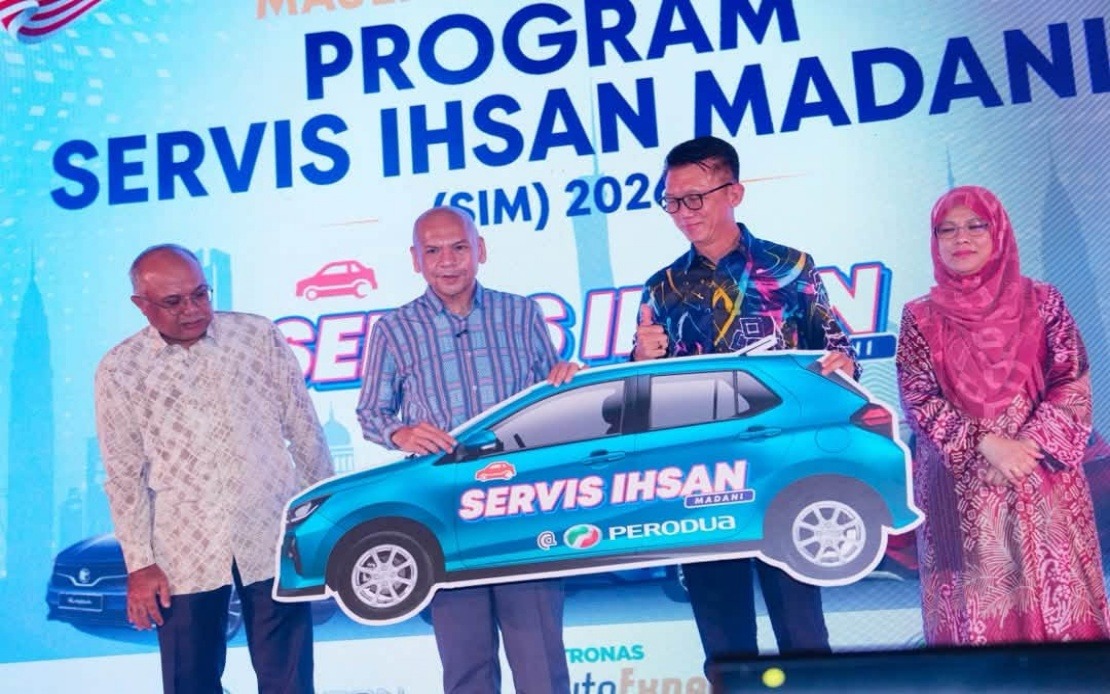
The Ministry of Domestic Trade and Cost of Living has broadened its Service and Maintenance (SIM) programme to encompass Perodua and Proton vehicles, marking a significant extension of the government's consumer assistance efforts ahead of National Month 2026. Minister Datuk Armizan Mohd Ali announced the expansion during ceremonies at KPDN level celebrations in Putrajaya, underscoring the government's commitment to making essential services more affordable for Malaysian households struggling with rising operational costs.
Under the enhanced programme, vehicle owners will receive a RM70 subsidy when they book maintenance services at participating dealerships and workshops, subject to standard terms and conditions. This rebate scheme applies across a substantial network encompassing 221 Perodua service centres, 186 Proton outlets, and 124 PETRONAS AutoExpert facilities, creating a combined footprint of 531 locations throughout the country. The comprehensive reach ensures that both urban and rural populations have reasonable access to subsidised maintenance, addressing regional disparities in automotive service availability that often disadvantage drivers outside major metropolitan areas.
Booking arrangements have been streamlined through digital channels, with customers able to arrange appointments via the respective service providers' mobile applications. This digital-first approach aligns with Malaysia's broader digital transformation agenda and caters to the preferences of younger vehicle owners accustomed to app-based interactions. By integrating the subsidy programme into existing booking platforms, the government minimises friction in the consumer experience whilst maintaining administrative efficiency and accurate tracking of subsidy disbursement.
The expansion represents a deliberate strategic choice to prioritise domestic automotive manufacturers. By extending the SIM programme to Perodua and Proton exclusively, rather than offering subsidies across all vehicle brands, the government supports local industry competitiveness whilst encouraging Malaysian owners of these vehicles to maintain their cars properly. This targeted approach reflects industrial policy objectives that balance consumer relief with support for domestic manufacturers facing intense international competition.
Minister Armizan framed the initiative as integral to the Payung RAHMAH MADANI umbrella, positioning vehicle maintenance support within a broader philosophy of equitable prosperity for ordinary Malaysians. The RAHMAH MADANI framework encompasses multiple cost-of-living interventions designed to ease financial pressures on middle and lower-income households. By coupling maintenance subsidies with this larger narrative, the government communicates a unified message about addressing affordability concerns across multiple essential services simultaneously.
Regular vehicle maintenance carries substantial public health and safety implications beyond individual consumer concerns. Properly maintained vehicles exhibit fewer mechanical failures that could result in accidents, reducing strain on emergency services and healthcare systems. Additionally, vehicles in good mechanical condition produce fewer emissions, contributing to improved air quality in urban centres where pollution levels frequently exceed health-recommended thresholds. By incentivising preventive maintenance through subsidies, the government indirectly promotes road safety and environmental protection whilst reducing hidden costs that poor maintenance might otherwise impose on broader society.
The timing of the expansion coincides with National Month 2026 and Malaysia Day celebrations, enabling the government to integrate consumer benefits with patriotic messaging. This alignment suggests a sophisticated communications strategy that connects individual economic relief to national pride and governance legitimacy. When citizens directly experience tangible government assistance with maintenance costs during national celebrations, the psychological association reinforces perceptions of responsive and people-focused administration.
Beyond the automotive maintenance component, the ministry is coordinating complementary initiatives throughout National Month. The Jualan Ihsan RAHMAH 9.9 online sale scheduled for September 9 represents a coordinated push to make essential goods more affordable through discounted pricing between 10 and 30 per cent. Prime Minister Datuk Seri Anwar Ibrahim previously endorsed this September online campaign, signalling high-level government commitment to making the initiative successful. Participation from TikTok Shop Malaysia and other commercial platforms demonstrates how digital marketplaces can be mobilised to support government cost-of-living objectives whilst providing retailers with promotional opportunities.
The breadth of National Month activities—encompassing vehicle maintenance subsidies, online consumer sales, cultural initiatives like the Batik Hues Exploration Competition, and workplace engagement through the HKHM 2026 Office Decoration Competition—suggests a comprehensive approach to translating Malaysia MADANI's aspirational philosophy into concrete experiences. Each initiative targets different population segments and consumption patterns, collectively creating multiple touchpoints through which citizens encounter government support.
For Malaysian consumers, particularly those with Perodua or Proton vehicles, the RM70 maintenance subsidy provides meaningful relief from routine operating expenses. Whilst individual savings may seem modest, aggregate benefits accumulate significantly when considered across a household's total annual vehicle maintenance expenditures. For price-sensitive consumers or those managing multiple vehicles, the programme creates genuine financial assistance that could influence spending patterns across broader household budgets.
The programme's emphasis on encouraging regular maintenance reflects sophisticated understanding of vehicle ownership challenges in Malaysia's climate. The tropical environment, characterised by high humidity and intense rainfall, creates accelerated wear on vehicle components including batteries, brake systems, and suspension mechanisms. Government subsidies that facilitate preventive maintenance help combat premature deterioration whilst reducing catastrophic failure risks that would impose far costlier repairs on individual owners.
Implementation success will depend substantially on awareness and accessibility. Whilst digital booking platforms reduce transaction barriers, many vehicle owners—particularly older demographics—may remain unaware of the subsidy's availability or unfamiliar with app-based reservations. KPDN and its partner services must invest in targeted communications campaigns, particularly through traditional media channels and dealership communications, to ensure widespread programme comprehension across diverse demographic segments.
The expansion demonstrates how government cost-of-living interventions can simultaneously support multiple policy objectives—consumer relief, industrial development, environmental protection, and road safety—through carefully designed programmes. As Malaysia navigates economic pressures and rising household expenses, such multi-purpose initiatives offer efficient approaches to translating governance commitments into measurable improvements in citizens' daily lives.

