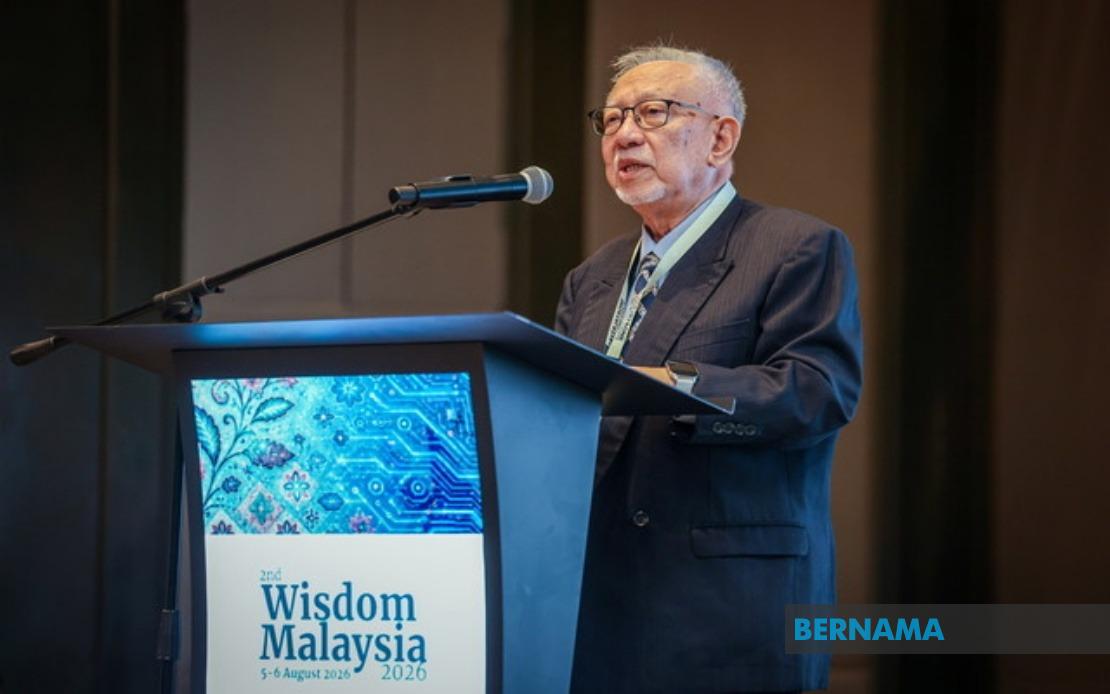
Former High Court Judge Datuk Syed Ahmad Idid Syed Abdullah has raised a stark warning about the consequences of failing to shield those who expose wrongdoing, arguing that such failure fundamentally weakens the machinery meant to combat graft. Speaking at the 2nd Wisdom Malaysia Conference 2026 in Kuala Lumpur on August 6, he contended that without robust protection for whistleblowers, organisations become havens for dishonesty and criminal activity, as no principled individual would risk retaliation to report abuses of power.
The former judge's remarks underscore a troubling paradox in governance: the very individuals most willing to uphold institutional integrity are often those most vulnerable to intimidation and career ruin when they speak out. When organisations respond to whistleblowing with suppression and intimidation rather than genuine investigation, they effectively signal that silence is rewarded and courage is punished. This inverts the moral order within public and private institutions, creating a self-selecting environment where only the corrupt feel safe operating openly. Syed Ahmad Idid framed whistleblowing not as disloyalty or slander, but as an essential act of justice—a deliberate choice to prioritise the public good over personal security.
The implications for Malaysia are particularly acute. Corruption remains a persistent challenge to national development, eroding public confidence in government institutions and diverting resources meant for social welfare. When potential whistleblowers are intimidated into silence, the true scale of financial leakage and misconduct often remains hidden until scandals explode into public view, causing far greater damage than early disclosure would have. The former judge pointed out that suppressing whistleblowers creates a false sense of stability—organisations appear clean on the surface while systemic malfeasance festers beneath, ultimately erupting into crises that could have been prevented or mitigated through early intervention.
Beyond the ethical dimension, Syed Ahmad Idid highlighted the staggering financial cost of tolerated corruption. He argued that if authorities successfully recovered all illicit proceeds from corrupt practices and leakages within the system, those funds would amount to a transformational resource for the nation. The scale of potential recovery is so significant that it could fund the construction of at least two general hospitals in every state across Malaysia—an expansion that would dramatically improve healthcare accessibility in rural and underserved urban areas. Concurrently, those recovered resources could finance the establishment of 20 to 50 high-quality schools nationwide, addressing longstanding disparities in educational infrastructure and opportunity.
The education dimension is particularly compelling in the Malaysian context. The former judge contended that enhanced funding derived from corruption recovery could equip schools with superior facilities, comprehensive learning materials, and enable significantly improved teacher training programmes. This investment would position Malaysian education on a competitive global footing, producing graduates with skills and knowledge commensurate with world standards. Beyond academic outcomes, a revitalised education system cultivates the disciplined, principled thinking necessary for both security personnel and athletes to excel at international levels—benefiting not only individual advancement but also national prestige and security resilience.
Syed Ahmad Idid's argument rests on a fundamental premise: corruption is not merely a moral failing but an economic drain that actively prevents the nation from achieving its development potential. Every ringgit lost to graft represents foregone investment in healthcare, education, infrastructure, or poverty alleviation. When officials and citizens are intimidated into accepting corrupt practices without challenge, the nation effectively accepts lower standards of public service, slower economic growth, and diminished social mobility. For Malaysian citizens, particularly those in lower-income brackets who depend most heavily on public services, the consequences of unchecked corruption are measurable in the quality of schools they access, the hospitals available to them, and the economic opportunities available to their children.
The former judge also cautioned against cultural and institutional permissiveness toward corrupt behaviour. He called on all segments of society—government, private sector, civil society, and the general public—to resist normalising graft or offering lenient interpretations of misconduct. In many organisations, corruption becomes so embedded that it develops its own rationales and justifications. Practices that should trigger alarm become accepted as "how things are done." Syed Ahmad Idid stressed that upholding genuine justice and integrity requires constant vigilance and a collective refusal to accommodate wrongdoing, no matter how entrenched or normalised it may have become.
The 2nd Wisdom Malaysia Conference 2026, where these remarks were delivered, was organised by Kerjaya One PLT as a forum for experienced leaders to share insights with emerging professionals and current policymakers. The dialogue session titled "The Life, Conscience and Costs of the Principled" underscores a growing recognition that ethical leadership and principled action carry real costs, yet are essential to institutional and national health. By bringing senior judicial figures into public conversation with emerging leaders, such conferences attempt to transmit institutional memory and reinforce the importance of integrity in governance and professional life.
For Southeast Asia more broadly, the Malaysian experience with corruption and whistleblower protection offers instructive lessons. The region's development aspirations depend partly on institutional quality and public confidence in government. Nations that successfully protect whistleblowers and investigate corruption allegations systematically build stronger institutions and more attractive business environments. Conversely, countries that intimidate potential whistleblowers or treat corruption allegations with indifference find themselves caught in cycles of declining institutional trust, capital flight, and reduced competitiveness in attracting foreign investment and talent.
Syed Ahmad Idid's intervention also reflects a generational perspective. As a retired judge, he speaks from a position of institutional authority and experience, yet without direct personal stakes in current political or bureaucratic conflicts. This positioning lends credibility to his warning that protecting whistleblowers is not a matter of partisan politics or narrow interest, but rather a fundamental prerequisite for institutional health and national prosperity. His call for society-wide commitment to justice and integrity principles acknowledges that anti-corruption cannot be driven by government alone—it requires cultural change across multiple sectors and among the public itself.
Looking forward, Syed Ahmad Idid's remarks suggest several imperatives for Malaysian policymakers and institutional leaders. First, robust legal and administrative protections for whistleblowers must be implemented and genuinely enforced, not merely written into law and neglected. Second, institutions must move away from a defensive posture toward allegations and instead create systems that actively encourage disclosure of wrongdoing while protecting those who report in good faith. Third, recovered corruption proceeds must be transparently allocated to high-impact public goods—schools, hospitals, and infrastructure—so that the public sees tangible benefits from anti-corruption efforts. Such visibility strengthens public support for continuing these efforts and creates positive incentives for officials and citizens to resist corruption.

