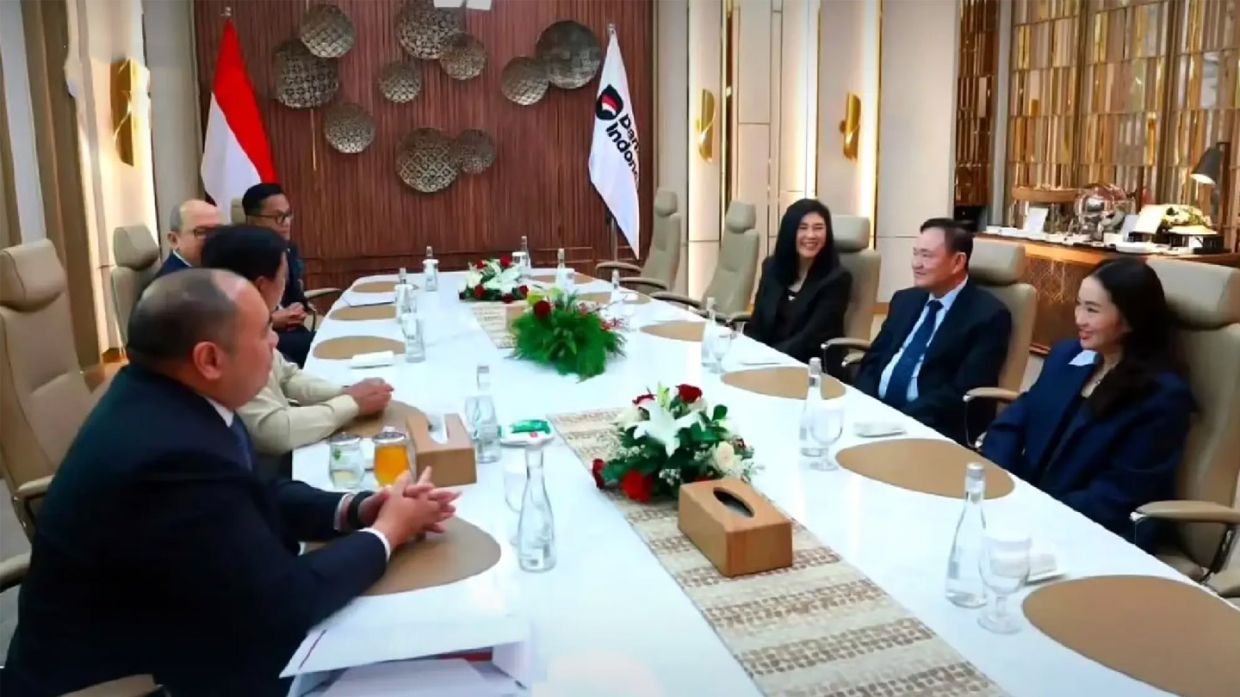
Three prominent Thai politicians from the influential Shinawatra family gathered with Indonesian President Prabowo Subianto in Jakarta on Thursday, July 9, for high-level discussions centred on regional investment opportunities and strategic economic development. The meeting brought together Thaksin Shinawatra, his sister Yingluck Shinawatra, and Paetongtarn Shinawatra, each of whom has served as Thailand's prime minister, alongside Indonesia's newly appointed president and executives from Danantara, the country's state-backed investment management agency. The encounter underscores the deepening engagement between Southeast Asia's two largest economies and the continued influence wielded by the Shinawatra clan across the region's political and business landscape.
According to Indonesian Cabinet Secretary Teddy Indra Wijaya, the gathering took place at the Danantara building and was characterised by an informal and cordial atmosphere. Photographs released by the Cabinet Secretariat's social media channels documented the three Thai visitors alongside Prabowo and senior Danantara personnel, providing public confirmation of what officials described as a warm exchange between longstanding acquaintances. The relaxed tone of the engagement contrasts with the formal diplomatic protocols typically observed at state-level meetings, suggesting a relationship built on personal rapport rather than rigid institutional channels.
Thaksin Shinawatra, who served as Thailand's prime minister from 2001 to 2006, holds a formal position on Danantara's advisory board, a role that has granted him visibility in Indonesia's strategic investment discussions for several years. His seat on the advisory council places him among an international roster of economists and investment specialists whose counsel shapes the direction of Indonesia's state asset management. This institutional connection provided the foundation for the July 9 meeting, with Thaksin positioned to offer recommendations and perspectives on the agency's economic development initiatives during his visit to Jakarta.
Yingluck Shinawatra's participation in the talks carries particular significance given her tenure as Thailand's prime minister from 2011 to 2014 and her complex political trajectory in the years since. Paetongtarn Shinawatra, the youngest of the three attendees, served most recently as Thailand's prime minister, occupying the position from 2024 to 2025. The multi-generational representation of the family at such a high-profile bilateral engagement demonstrates the Shinawatras' enduring relevance to Thailand's domestic politics and their capacity to function as representatives of Thai business and political interests on the international stage.
Danantara Indonesia operates as a state investment management institution tasked with overseeing, optimising, and deploying strategic national assets in service of Indonesia's long-term economic transformation agenda. The agency functions as a key vehicle through which the Indonesian government mobilises capital towards development priorities and manages its portfolio of sovereign assets. The choice of Danantara as the venue for the meeting reflects the investment-focused nature of the discussions, positioning the gathering as part of broader Indonesian efforts to attract capital and expertise from neighbouring countries and international players.
The substantive content of the discussions centred on three interconnected themes: identifying potential investment opportunities that could benefit both parties, establishing frameworks for sophisticated asset management practices, and developing comprehensive economic development strategies aligned with sustainable growth objectives. These conversations occur at a moment of significant flux in Indonesia's economic policy direction under Prabowo's leadership, with the new administration prioritising infrastructure investment and strategic industrial development. The participation of the Shinawatra representatives suggests that Thai capital and expertise are viewed as valuable contributors to these initiatives.
The senior Danantara executives who participated in the meeting reflected the agency's leadership structure and investment orientation. Rosan Roeslani, serving as group chief executive officer, brought authority over the institution's overall strategic direction. Dony Oskaria, the chief operating officer, represented the agency's day-to-day management capacity. Pandu Sjahrir, chief investment officer, ensured that the discussion maintained focus on the specifics of capital deployment and investment selection. The presence of this senior leadership tier underscores the importance Danantara and the Indonesian government assigned to the meeting.
The Indonesian government's characterisation of the gathering as part of its broader international engagement strategy highlights how Jakarta is positioning itself amid shifting global geopolitical conditions. By hosting prominent Thai political and business figures for substantive discussions on investment and economic cooperation, Indonesia signals its commitment to strengthening bilateral relationships across Southeast Asia and leveraging regional partnerships to advance national development goals. This diplomatic approach reflects recognition that Indonesian economic transformation will require sustained engagement with neighbouring economies and influential international actors.
Thaksin's dual positioning as both a member of Danantara's advisory council and a visiting dignitary allowed him to function simultaneously as an institutional insider and an external stakeholder bringing perspectives from beyond Indonesia's borders. His capacity to offer recommendations directly to Prabowo and Danantara's leadership reflects the trust and credibility he has accumulated through his advisory role. For the Shinawatra family, the meeting provided an opportunity to expand their economic footprint in Indonesia and to strengthen relationships with decision-makers in Southeast Asia's largest archipelago economy.
Following the formal business meeting at the Danantara building, Prabowo hosted Thaksin and accompanying family members at his private residence in Jakarta, extending the engagement into a more personal setting. This secondary gathering, described by the Cabinet Secretariat as warm and cordial, suggests that the relationship between Prabowo and the Shinawatra family extends beyond transactional business discussions to encompass personal rapport and broader strategic alignment. The progression from formal institutional meetings to private hospitality represents a typical pattern in Southeast Asian high-level diplomacy, where personal relationships frequently complement and reinforce official channels.
For Malaysian observers and investors, the meeting carries implications for regional investment patterns and economic cooperation frameworks. The willingness of Thailand's most influential business and political figures to engage directly with Indonesia's new leadership on investment matters suggests confidence in opportunities within the Indonesian market. Similarly, the Indonesian government's receptiveness to such engagement indicates openness to partnerships that could accelerate capital flows and facilitate technology and expertise transfer across the region. As both countries navigate evolving trade relationships and seek to position themselves advantageously within Southeast Asia's economic architecture, such bilateral conversations will likely proliferate.
The encounter between the Shinawatra representatives and Prabowo reflects broader trends in Southeast Asian power dynamics, where individuals and families with substantial economic influence operate as quasi-official representatives of their home countries' interests. The Shinawatras' ability to access Indonesia's highest levels of government underscores their enduring political capital and economic relevance despite the complex domestic political circumstances they have navigated in Thailand. This transnational influence highlights how elite networks and business relationships frequently transcend formal governmental structures in shaping regional economic development.

