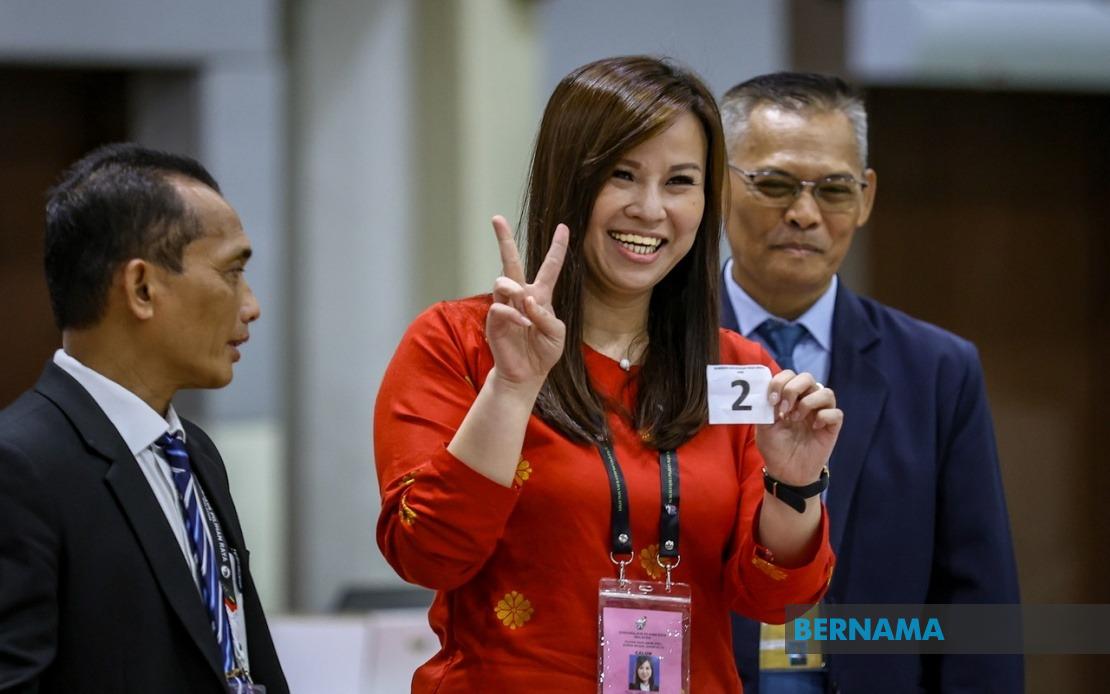
Sharon Teo, Pakatan Harapan's candidate for the Permas state seat, has centred her campaign on two pillars that residents have repeatedly emphasised during grassroots engagement: fixing deteriorating road conditions and strengthening public welfare programmes. The Johor Amanah Women's Youth chief made these priorities clear after the nomination process at Dewan Muafakat, Taman Mawar, positioning herself as a representative focused on tangible improvements to daily life rather than grand political rhetoric.
Road infrastructure has emerged as an urgent concern in Permas, where residents cite safety hazards and the poor condition of local thoroughfares as impediments to community mobility and economic activity. Teo's emphasis on this issue reflects a broader challenge across Johor's suburban constituencies, where rapid urbanisation has often outpaced infrastructure maintenance. By anchoring her campaign to this specific, observable problem, she is attempting to resonate with voters tired of abstract promises and seeking concrete action on matters affecting their immediate environment.
Teo brings relevant experience to the contest, having previously worked as an aide in the Pulai parliamentary constituency under the late Amanah deputy president Salahuddin Ayub. This background suggests familiarity with constituency-level operations and the mechanics of translating voter concerns into parliamentary advocacy. Her upcoming manifesto, to be unveiled soon, will presumably expand on her infrastructure and welfare proposals with specific timelines and funding mechanisms—details that will determine whether her campaign gains traction beyond initial voter interest.
Defending the seat is Baharudin Mohamed Taib, the incumbent Barisan Nasional representative who secured Permas in the 2022 Johor election. Baharudin has acknowledged the competitive nature of this four-way race, noting that each opponent brings distinct strengths to the contest. His cautious assessment reflects the volatility of Malaysian electoral politics post-2018, where incumbent advantages have become less predictable. Rather than launching a personal manifesto, Baharudin intends to campaign on the broader BN platform, a strategy that banks on party machinery and established voter loyalty but may limit his ability to address constituency-specific grievances with the same granularity as challengers.
The Permas contest represents a significant test case for Pakatan Harapan's revival in Johor following setbacks in recent cycles. The coalition's selection of Teo, a woman candidate from Amanah, also carries symbolic weight in a political environment where gender representation remains contested. Her gender may serve as an asset in mobilising female and youth voters, though it could equally invite gendered scrutiny from opponents and voters predisposed toward traditional leadership models.
Completing the quadrilateral race are T. Vela from Perikatan Nasional and Dr Zamil Najwah from Parti Bersama Malaysia, both of whom will fragment the opposition vote in unpredictable ways. Perikatan's presence is particularly significant given the party's strong performance in certain Malay-majority areas of Johor, though Permas's demographic composition and urban character may not favour their typical strongholds. The inclusion of a Bersama candidate adds further complexity, representing a newer political force attempting to carve space in an increasingly crowded electoral landscape.
Permas, situated within the Pasir Gudang parliamentary constituency, encompasses 113,963 eligible voters—a substantial electorate that reflects the area's urbanisation and growth as a residential hub. The constituency's size and composition make it a bellwether for broader trends in Johor's suburban politics. Voter turnout patterns here often foreshadow whether urban middle-class constituencies lean toward stability or change, whether welfare and developmental concerns dominate economic and identity-based anxieties.
The 16th Johor state election, scheduled for July 11, marks the culmination of months of political manoeuvring within the state. Early voting on July 7 will provide initial signals about turnout intensity and coalition support bases. For Permas specifically, the result will indicate whether Pakatan Harapan can recapture ground lost in recent years, whether Baharudin's incumbency and BN machinery prove sufficient to hold the seat, and whether fragmentation by PN and Bersama reshapes the competitive dynamics in favour of any single faction.
The campaign period between nomination and polling day will test whether Teo's focus on roads and welfare resonates deeply enough to offset Baharudin's structural advantages as the sitting member. Her ability to articulate specific, costed solutions to infrastructure problems and welfare gaps will likely determine whether voter dissatisfaction with the status quo translates into actual vote switching. For Malaysian observers, Permas encapsulates broader questions about whether bread-and-butter issues can override party loyalty and demographic voting patterns in contemporary electoral contests.
Baharudin's acknowledgment that he cannot take his opponents lightly suggests internal BN awareness that the 2022 election victory margin may not suffice in a freshly contested election. The competitive intensity he describes reflects not merely the number of challengers but the underlying volatility within Johor's electorate, where regional factors, national political sentiment, and local grievances converge unpredictably. His choice to forgo a personal manifesto may prove strategically limiting if voters seek differentiation between candidates rather than choice between parties.
The Permas race ultimately serves as a microcosm of Johor's evolving political economy. As the state continues rapid urbanisation and demographic shifts, constituencies like Permas increasingly attract candidates offering competing visions of development, welfare delivery, and governance. The outcome will provide crucial data about whether infrastructure and social welfare platforms can mobilise sufficient support in suburban constituencies, or whether traditional party structures and identity-based voting remain dominant forces in Malaysian electoral behaviour.

