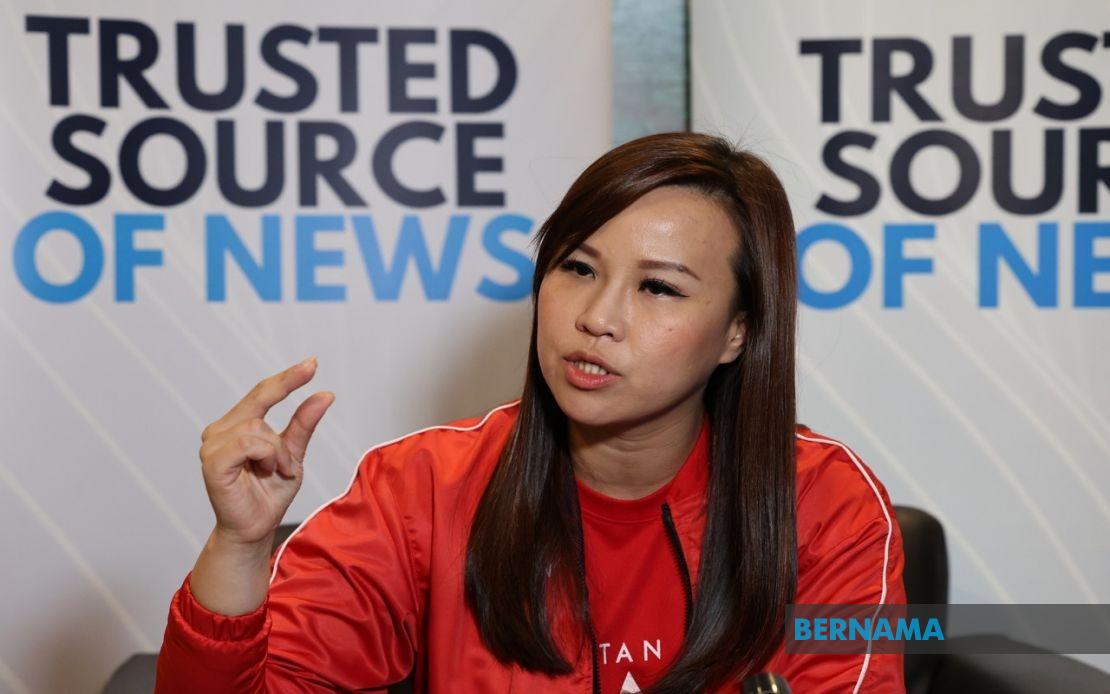
Sharon Teo Siew Hui, the Pakatan Harapan nominee for the Permas state seat in the ongoing Johor State Election, is banking on a political philosophy shaped by her years working alongside the late Datuk Seri Salahuddin Ayub, the former Minister of Domestic Trade and Cost of Living. The 36-year-old has committed to anchoring her campaign and potential governance around public service delivery, with a particular emphasis on accessibility and ensuring that government responsiveness transcends racial and communal boundaries. Her political mentorship under Salahuddin, widely remembered as "Bapa Rahmah Malaysia," has left an indelible mark on how she envisions representing her constituency.
Teo joined Parti Amanah Negara in 2018, following a period of voluntary support for Salahuddin, whose personal conduct and management style impressed her fundamentally. The late minister's approach to governance—characterised by humility and genuine engagement with constituents—became the cornerstone of her own political aspirations. She credits this relationship not merely as career advancement but as a formative experience that clarified her understanding of what elected representation truly demands. The lessons extended beyond rhetoric; she observed Salahuddin's meticulous follow-through on public grievances, often personally monitoring resolution of complaints even into the late evening hours, occasionally dispatching WhatsApp messages near midnight to verify whether residents' problems had been addressed. This hands-on, unrelenting commitment to constituent service is the standard she intends to transplant into her work for Permas residents.
Facing assertions that she represents a "parachute candidate"—a common accusation levelled at those perceived as lacking grassroots entrenchment—Teo has outlined a political trajectory grounded in consistent party involvement. Since joining Amanah in 2018, she has progressed through various roles, including Assistant Secretary of the Johor branch and leadership of Amanah Johor Wanita Muda. Furthermore, her familiarity with Permas itself is substantive; she accompanied Salahuddin on multiple election campaigns and community visits throughout the constituency during previous electoral cycles. This pre-existing network and knowledge distinguish her position from that of a politician parachuted into unfamiliar terrain.
During the initial week of campaigning, residents have raised consistent concerns that illuminate the practical challenges facing the constituency. Infrastructure deficiencies dominate conversations, with voters citing pervasive potholes, deteriorating back lanes particularly behind commercial complexes, traffic congestion, and the urgent need for public facility upgrades. These are not abstract policy domains but tangible problems affecting daily quality of life. Teo's approach to addressing these grievances mirrors the methodology she learned from Salahuddin: systematic identification, comprehensive data collection, and persistent follow-through rather than symbolic gestures or incomplete interventions.
Should she secure the Permas mandate, Teo has outlined a framework for her first hundred days in office that reflects this philosophy of methodical problem-solving. Her intention is to map out the most pressing issues affecting the constituency through direct community engagement, establish a dedicated one-stop centre—PermasKu—specifically designed to manage and monitor public complaints until final resolution, and conduct a thorough infrastructure audit to prioritise urgent interventions. She emphasises that her action plans will derive from actual community needs rather than assumptions or inherited bureaucratic priorities. This granular approach represents a departure from broad-stroke campaign promises, instead emphasising measurable processes and accountability mechanisms.
Young voters constitute another demographic focus for Teo's agenda. She has pledged to deploy social media platforms and e-sports initiatives to meaningfully engage first-time voters and school leavers, recognising that youth political participation requires meeting communities where they organise and communicate. This reflects awareness that traditional grassroots mobilisation strategies, while important, may not resonate with voters whose civic engagement patterns have been shaped by digital platforms. The strategy acknowledges generational differences in political communication without necessarily abandoning conventional constituency work.
The Permas contest presents a four-way battle that complicates the electoral mathematics. Incumbent Baharudin Mohamed Taib, representing Barisan Nasional-UMNO, currently holds the seat with a substantial majority of 7,926 votes from the 2022 election. Teo faces competition not only from the governing coalition but also from Parti Bersama Malaysia's Dr Zamil Najwah and Perikatan Nasional's T. Vela, fragmenting the non-BN vote. Overcoming the incumbent's existing margin while consolidating anti-establishment sentiment across multiple opposition camps represents a significant challenge, yet the constituency's evident receptiveness to grassroots engagement during early campaigning suggests no result is predetermined.
For Malaysian and Southeast Asian observers, Teo's campaign embodies a broader reckoning within opposition politics about what meaningful alternatives to incumbent governance might entail. Rather than positioning herself primarily as a critic of the current administration, she has anchored her candidacy in a constructive framework centred on diligent service delivery, community accountability, and transparent problem-resolution mechanisms. This reflects a maturation in opposition political messaging that moves beyond dissatisfaction toward concrete visions of governance. The emphasis on institutional mechanisms—the PermasKu centre, infrastructure audits, systematic follow-through—suggests recognition that voter scepticism extends beyond partisan allegiances to encompass whether any political representative genuinely prioritises constituent welfare over political expediency.
Teo's explicit acknowledgement of Salahuddin's influence also speaks to the enduring impact of individual political leadership within Malaysian democratic culture. Though Salahuddin passed away in 2021, his legacy continues shaping the approach of emerging politicians who worked within his orbit. This reflects how personal networks and mentorship relationships remain central to political development in Malaysia, sometimes more decisively than formal party structures. Teo's positioning as a custodian of Salahuddin's service-oriented philosophy may resonate with voters nostalgic for what they perceived as more responsive governance, even as it requires her to establish her own independent credibility and track record.
The Permas constituency itself, like much of Johor, sits within a political landscape characterised by competition between established BN machinery and increasingly fragmented opposition coalitions. Johor's strategic importance as a historically important UMNO stronghold means that any shifts in its electoral dynamics carry implications beyond state politics. Should emerging politicians like Teo demonstrate capacity to mobilise youth voters and articulate alternatives rooted in governance competence rather than simply partisan opposition, the electoral terrain across the state could shift. The next phase of campaigning will determine whether Teo's emphasis on service delivery and constituent accessibility can surmount the incumbent's structural advantages and voter familiarity.

