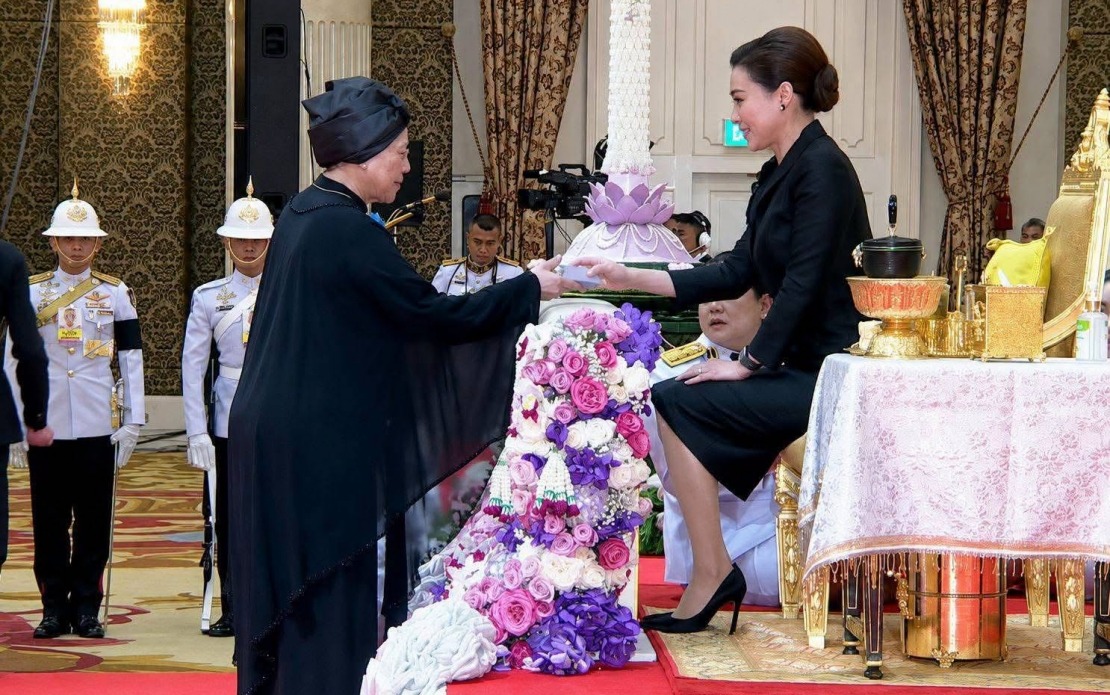
Prime Minister Datuk Seri Anwar Ibrahim, along with his wife Datuk Seri Dr Wan Azizah Wan Ismail, extended their congratulations on August 4 to Prof Emerita Tan Sri Datuk Seri Dr Sharifah Hapsah Syed Hasan Shahabudin following her receipt of the Outstanding Woman Award for Social Development. The accolade, bestowed by Queen Suthida Bajrasudhabimalalakshana of Thailand, marks a significant recognition for the distinguished Malaysian academic and her career spanning contributions to social advancement.
Anwar's response to the award carries particular weight given Malaysia's strategic positioning within Southeast Asia and the broader international community. By publicly acknowledging Sharifah Hapsah's achievement through official channels, the Prime Minister underscores the administration's commitment to elevating the profiles of accomplished women whose work influences regional development. The award itself represents cross-border recognition of excellence, with Thailand's monarchy endorsing contributions that transcend national boundaries and speak to broader themes of social welfare and human development across the region.
In his statement distributed via social media, Anwar positioned the award not merely as a personal achievement but as a reflection of Malaysian society's broader capacity for producing women of international calibre. He emphasized that the honour demonstrates the calibre, capability, and substantial contributions that Malaysian women continue to deliver on the global stage. This framing suggests a deliberate effort to contextualize individual success within a narrative of national capability and competitive positioning within the international community.
The timing of the award and the Prime Minister's public endorsement align with Malaysia's development agenda, particularly the Malaysia MADANI framework that the current administration has prioritized. Anwar explicitly connected Sharifah Hapsah's recognition to this broader national vision, suggesting that her international success exemplifies the type of knowledge-driven, compassionate leadership that the government seeks to nurture domestically. This linkage reveals how individual achievements can be leveraged to reinforce policy narratives and strategic priorities at the governmental level.
Anwar's call for the award to inspire additional women to engage in nation-building through knowledge and leadership indicates awareness of the gap that remains between recognition of women's potential and their actual participation across economic and social sectors. By framing inspiration as the next step following external validation, the Prime Minister acknowledges that individual excellence, while important, requires systemic encouragement and opportunity creation to translate into broader societal change. The emphasis on compassion alongside knowledge and leadership suggests a deliberate countering of narrow definitions of female excellence that may focus exclusively on technical competence.
The government's stated commitment to expanding women's participation across various sectors represents a policy direction that extends beyond ceremonial recognition. Southeast Asian economies, including Malaysia's, face persistent challenges in translating female educational attainment into proportional representation in senior positions across private, public, and academic institutions. The Prime Minister's articulation of continued government support for women's advancement suggests an intention to move beyond recognition toward institutional reform, though the specific mechanisms for achieving this remain implicit in his statement.
Sharifah Hapsah's award within the context of social development carries particular resonance for Malaysia, where demographic changes and shifting family structures create new demands for social policy innovation. Her work in this domain positions her as a bridge between academic understanding of social challenges and practical policy implementation. The Thai award, recognizing excellence in social development specifically rather than a more generic category, suggests that her contributions address substantive issues relevant across the region, from changing demographics to urbanization and family welfare.
The strategic importance of this recognition extends to Malaysia's soft power positioning within ASEAN and beyond. When citizens of one nation receive validation from another through prestigious awards, it enhances the receiving nation's international image and demonstrates the quality of human capital available within its borders. For Malaysia, Sharifah Hapsah's award contributes to a narrative of intellectual and moral leadership that complements the country's economic and political standing in Southeast Asia.
Anwar's emphasis on women's talent and potential as key pillars of national development reflects a recognition that demographic trends and global economic competition have made female workforce participation and leadership essential rather than supplementary to national success. Unlike earlier eras when women's participation might have been framed as social justice or fairness alone, contemporary development narratives increasingly center female participation as economic and strategic necessity. The Prime Minister's positioning aligns with this evolution while maintaining emphasis on the social and moral dimensions of women's contributions.
The Malaysia MADANI agenda, which Anwar explicitly referenced, encompasses dimensions of sustainability, prosperity, and security that are increasingly understood as dependent on inclusive participation across gender lines. Women's engagement in leadership, innovation, and policy-making is viewed not as a separate agenda but as integral to achieving the holistic national vision that MADANI represents. Sharifah Hapsah's award thus becomes a practical illustration of how women's advancement and national development objectives can be mutually reinforcing.
Looking forward, the visibility given to Sharifah Hapsah's achievement may serve to increase aspirational opportunities for other Malaysian women pursuing academic and social development careers. Recognition at the highest levels of government, publicly distributed through the Prime Minister's official communications, signals that such endeavors carry national significance. This symbolic dimension of awards and public acknowledgment should not be underestimated in shaping institutional cultures and individual career choices, particularly in societies where hierarchy and official validation carry considerable weight.
The award also reflects Thailand's own commitment to recognizing regional excellence and fostering cross-border networks among women leaders in Southeast Asia. By selecting a Malaysian recipient, Queen Suthida's award acknowledges that excellence in social development transcends national borders and that collaboration among regional practitioners benefits the broader community. For Malaysia, this recognition from a neighboring monarchy strengthens bilateral relations while advancing shared regional interests in social welfare and sustainable development.

