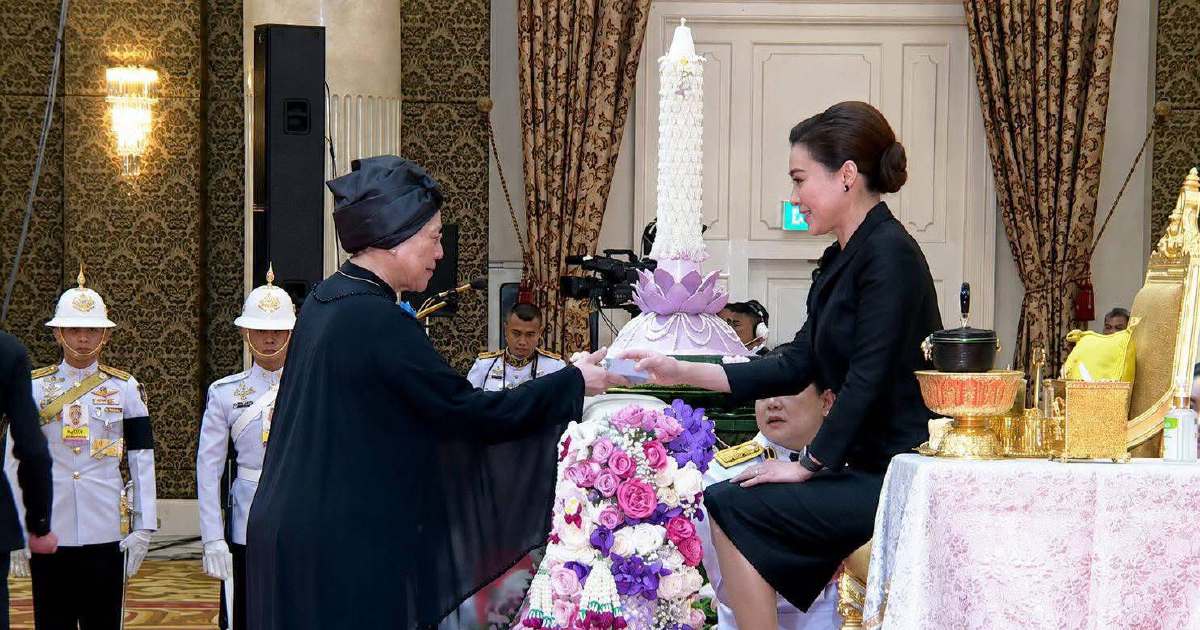
Prime Minister Datuk Seri Anwar Ibrahim and his wife Datuk Seri Dr Wan Azizah Wan Ismail have extended their congratulations to Prof Emerita Tan Sri Datuk Seri Dr Sharifah Hapsah Syed Hasan Shahabudin following her recognition with the Outstanding Woman Award for Social Development. The honour signals a broader acknowledgement within Malaysia's highest political circles of the increasingly visible contributions women are making across sectors that shape the nation's social fabric.
Awards of this nature serve a critical function within Malaysia's institutional landscape. They formally codify and celebrate achievements that might otherwise remain overlooked in mainstream discourse, particularly when those achievements involve structural or cultural advancement rather than headline-grabbing innovations. By positioning Sharifah Hapsah's work within a framework of social development, the award recognition implicitly acknowledges that progress in this domain requires sustained effort, intellectual rigour, and a commitment to systemic change rather than superficial gestures.
The timing of this recognition carries additional weight in the Malaysian context. The country has been navigating complex questions about women's economic participation, representation in leadership, and access to educational and professional opportunities. While Malaysia performs reasonably well on several gender equality metrics compared to regional peers, significant gaps persist in areas such as board-level representation and wage parity. Honours directed toward individuals who have contributed substantially to improving outcomes in these areas help establish role models and validate the importance of focused, dedicated work on social advancement.
Sharifah Hapsah's professorial background and emerita status suggest a career spanning decades of institutional engagement, likely involving direct mentorship of younger professionals and the production of intellectual work that influences policy thinking. Academic women in Malaysian higher education have historically faced particular challenges in advancing to senior positions, making her trajectory noteworthy as an example of sustained professional achievement. The recognition extends beyond individual accomplishment to encompass the systemic barriers she may have overcome and the pathways she may have helped create for others.
The involvement of both the Prime Minister and his wife in offering formal congratulations underscores that women's advancement is positioned as a priority concern at the highest levels of government. Datuk Seri Dr Wan Azizah Wan Ismail, in her various roles, has been associated with initiatives related to women's welfare and development, lending particular resonance to her participation in acknowledging Sharifah Hapsah's contributions. The joint statement format itself communicates that this is not a peripheral matter but rather one worthy of direct presidential-level attention.
Social development as a category encompasses diverse work, from poverty alleviation and community welfare to education, healthcare access, and social cohesion. The fact that Sharifah Hapsah's award specifically references this domain suggests her contributions may have operated across multiple these areas or achieved particular depth in one of them. Understanding which specific aspects of social development her work addressed would provide fuller picture of how Malaysia is addressing its development challenges and which professionals are leading those efforts.
The broader narrative context here involves Malaysia's positioning within the global women's empowerment ecosystem. International indices measuring gender development, women's political participation, and economic inclusion increasingly shape how countries are perceived and how they perceive themselves. Awards like this one, particularly when highlighted through official government channels, contribute to Malaysia's self-presentation as a nation genuinely committed to developing its female talent and ensuring women can contribute their capabilities to national progress.
Within Southeast Asia specifically, Malaysia sits among middle-income countries where women's participation in professional and public life has expanded considerably over recent decades, yet where traditional social structures and institutional inertia continue to shape opportunities and outcomes. Recognising women who have navigated these dynamics successfully and contributed measurably to social improvement provides both inspiration and practical evidence that systemic change, while difficult, remains achievable through sustained professional engagement.
The professionalisation and formalisation of recognition for women's contributions through structured award programmes represents a relatively recent development in Malaysian institutional practice. Historically, women's work in social and community development often occurred within less visible frameworks—volunteer networks, family structures, religious organisations. The emergence of formal recognition mechanisms, particularly those endorsed at the highest political levels, suggests shifting assumptions about what work deserves public acknowledgement and which professionals warrant formal celebration.
For younger Malaysian women, particularly those considering careers in social development, public health, education, or related fields, the prominence given to Sharifah Hapsah's achievement carries practical significance. It signals that such career paths can lead to institutional recognition and that the intellectual and practical work involved merits the same formal celebration as achievements in commerce, science, or other traditionally male-dominated fields. This messaging effect may influence educational and professional choices among women still forming their career aspirations.
Moving forward, the sustainability of progress in gender-inclusive development depends partly on the visibility and celebration of role models who have succeeded within existing systems while also contributing to their evolution. Sharifah Hapsah's award, viewed through this lens, represents not merely a recognition of past accomplishments but also an investment in the normalisation of women's leadership across domains critical to national development. As Malaysia continues refining its approaches to social development—an increasingly complex challenge given urbanisation, demographic shifts, and evolving social needs—the continued engagement of accomplished professionals like those being honoured becomes progressively more valuable.

