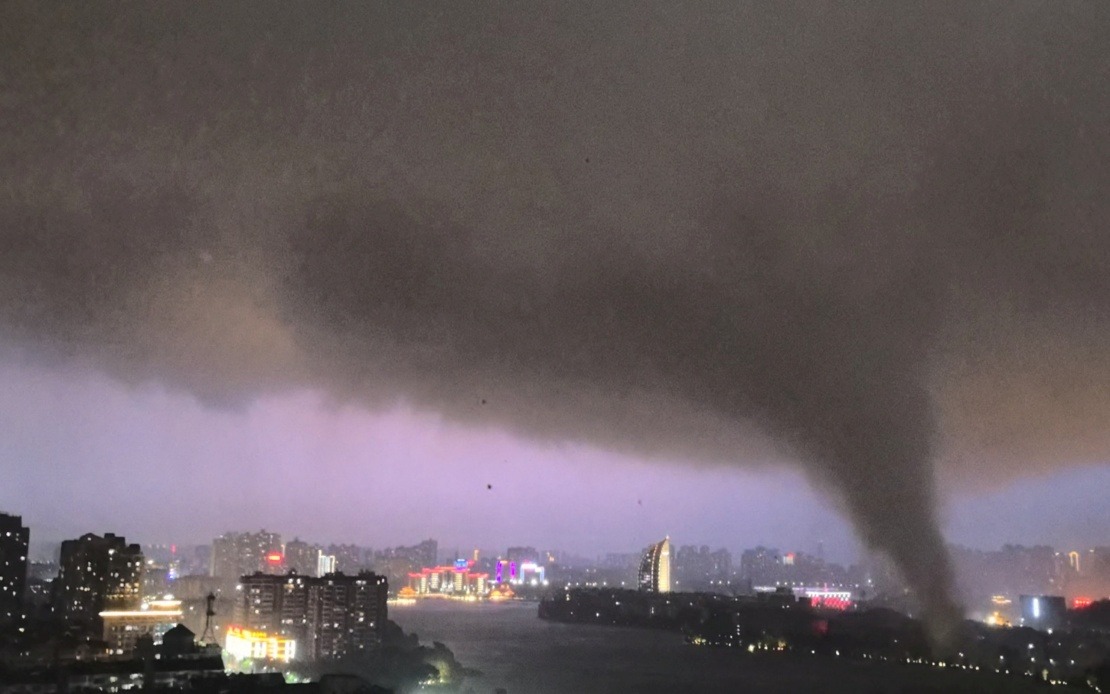
A severe weather event devastated eastern portions of Hubei Province in central China on Monday evening, claiming at least eleven lives and leaving one person unaccounted for. The destructive system brought intense thunderstorms and gales to multiple urban centres between 7 pm and 11 pm, according to provincial authorities and state media reports.
The affected areas stretched across four major cities: Huangshi, Huanggang, Ezhou, and Xianning. The meteorological conditions were particularly extreme in two townships, where wind speeds reached level 13 on the gale classification scale—an intensity that causes severe structural damage. Local weather officials confirmed that tornadoes formed in some locations during the storm's passage, compounding the destruction and complicating rescue efforts.
The physical toll across the region proved substantial. The violent weather completely destroyed 22 buildings outright, while causing structural damage to a further 4,855 structures. Beyond the loss of life, the storm left 331 residents injured across the four cities, straining local medical facilities and emergency services. The scale of injuries suggests that many people were caught unprepared by the rapid intensification of weather conditions.
For Malaysian and Southeast Asian readers, this incident underscores the growing severity of extreme weather phenomena across Asia. The region shares similar geographic and climatic characteristics to parts of Southeast Asia, particularly during monsoon seasons when convective weather systems intensify dramatically. The formation of tornadoes—relatively rare but increasingly documented in China—demonstrates how climate variability can produce unexpected hazards beyond typical heavy rainfall and flooding patterns familiar to the region.
The Hubei disaster also reflects broader challenges facing densely populated regions across Asia when sudden severe weather strikes. Urban areas with concentrated populations and aging infrastructure prove particularly vulnerable. The relatively high number of injuries compared to fatalities suggests that early warning systems and public awareness may have helped some residents seek shelter, though the speed of the system's development limited evacuation options.
China's administrative response mobilized substantial resources immediately after the weather system cleared. Provincial authorities launched comprehensive rescue operations and distributed relief supplies to affected communities. The stated priority of preventing secondary disasters—such as disease outbreaks, structural collapses, or contaminated water supplies—reflects lessons learned from previous major weather events across China and highlights the multi-phase nature of disaster management in the modern era.
The incident carries implications for Southeast Asian countries, particularly those along major river systems or coastal plains where convective weather systems develop rapidly. Indonesia, Philippines, Thailand, and Vietnam have all experienced similar tornado-producing storms in recent years, often with significant casualties. The Hubei event provides a case study in emergency response coordination and recovery prioritization that regional disaster management agencies monitor closely.
Climate scientists have documented increasing volatility in severe weather patterns across East and Southeast Asia over the past two decades. The formation of tornadoes in Hubei, a phenomenon historically less common than in North America, may reflect shifting atmospheric conditions that create the precise thermodynamic conditions needed for tornado genesis. This trend carries significant planning implications for urban development and infrastructure design across the entire region.
The economic costs of such disasters extend far beyond immediate repair estimates. Destroyed homes displace families, damaged agricultural land reduces seasonal yields, and business interruptions cascade through local economies. For Hubei Province, known for industrial and manufacturing activity, disruption to supply chains and worker productivity can ripple across national markets. This economic vulnerability emphasizes why Southeast Asian governments increasingly invest in early warning systems and structural resilience improvements.
Recovery from such events typically spans months or years, with psychological impacts affecting survivors long after physical reconstruction concludes. Chinese provincial authorities would need to coordinate between municipal governments, state enterprises, and relief organizations to ensure equitable aid distribution. The scale of building damage—nearly 4,900 structures—requires sustained attention to prevent lingering humanitarian crises in affected communities.
For the broader region, this Hubei incident reinforces the urgency of cross-border cooperation on weather monitoring and disaster preparedness. Severe convective systems often develop across international boundaries, and improved real-time data sharing between neighboring countries could enhance early warning capabilities. Southeast Asian nations continue developing regional weather intelligence networks to address this challenge collaboratively.

