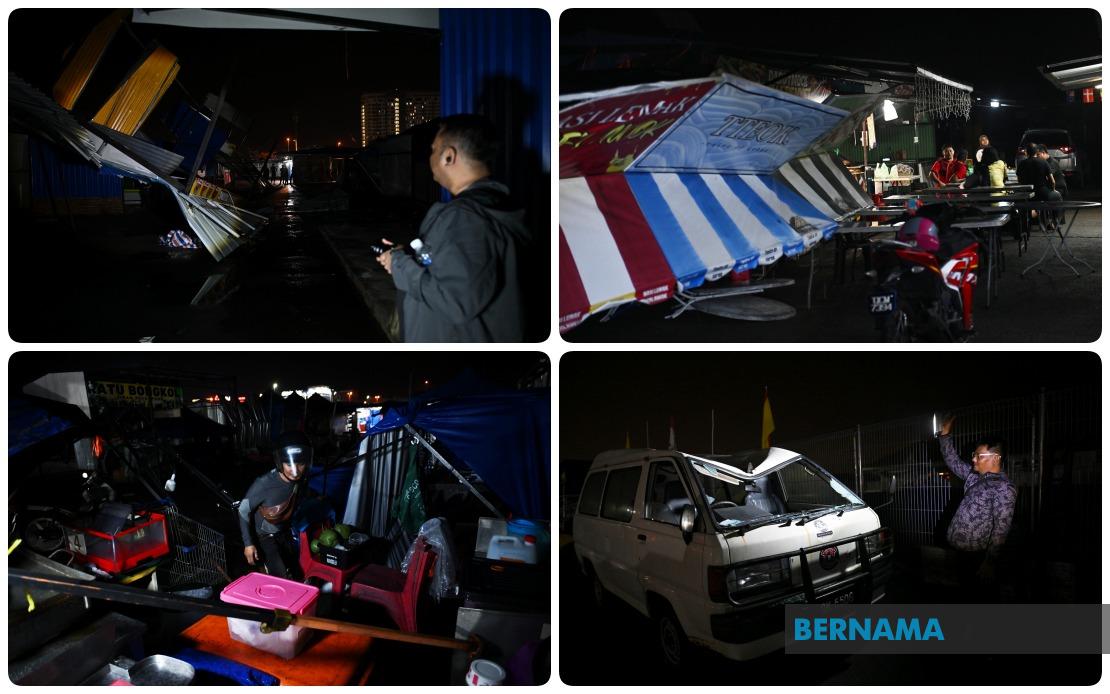
A sudden and severe weather event has triggered the temporary shutdown of the N6 Metrocity 2 Youth Night Market in Kuching after intense winds tore through the venue, destroying vendor canopies and essential infrastructure during the peak trading weekend. The incident marks the most destructive natural disaster to strike the long-established trading site in recent memory, compelling authorities and management to assess damage and plan recovery efforts for the affected hawkers who form the backbone of the locality's informal economy.
Witnesses described harrowing scenes as the storm struck during the busiest trading hours, with canopies becoming projectiles that forced traders and customers to flee for safety. Vendor Mohamad Faisal, who has operated at the market for over a decade, recounted the terrifying minutes when structural panels became airborne hazards. The sudden onset and intensity of the weather system left little time for preparation, catching both seasoned traders and casual visitors off guard as the market descended into chaos within minutes.
The scale of the destruction extends far beyond individual vendor stalls. Market deputy chairman Hamzah Hassan revealed that approximately 40 of the venue's roughly 300 operational trader lots sustained severe damage, with the total impact encompassing both private commercial equipment and shared public infrastructure. The main performance stage, management office, and electrical distribution network all suffered substantial damage, undermining the operational capacity of the entire facility and necessitating comprehensive repairs before normal business can resume.
Financial losses for individual traders range considerably depending on the size and construction quality of their canopy structures. Hamzah indicated that replacing damaged canopies alone could cost between RM2,000 and RM5,000 per trader, figures that exclude additional expenses for cooking equipment, water supplies, and merchandise destroyed or rendered unusable by the weather. For vendors operating on tight profit margins in the informal economy, such losses represent several months of accumulated earnings, creating genuine hardship for workers and their families.
The cumulative financial impact on the trading community appears staggering when aggregated across affected vendors. With 40 stalls damaged and individual losses ranging into thousands of ringgit, the total economic impact approaches or exceeds RM100,000 for the immediate trading community alone. When factored against the broader Kuching economy and the disruption to local consumer access to affordable street food and goods, the ripple effects extend throughout the district's commercial ecosystem.
Vendors who have invested years building their presence at the market now confront the prospect of substantial capital investment to resume operations. The emotional and psychological impact should not be underestimated, particularly for traders who experienced previous storms but found this event unprecedented in its destructiveness. The market has maintained continuous operations for approximately a decade, building customer loyalty and vendor relationships that now hang in balance pending recovery and reopening.
The Malaysian Meteorological Department issued thunderstorm warnings covering multiple Sarawak districts including Kuching, Serian, Siburan, Samarahan, Simunjan, Kapit, and Song during the affected evening period from 5 pm to 9 pm. This warning system, while valuable for general public awareness, did not provide the granular timing or intensity forecasting that might have allowed market management to implement protective measures or suspend operations preemptively. The incident highlights ongoing challenges in translating weather alerts into practical protective action for vulnerable outdoor commercial venues.
Market management has formally appealed for assistance from relevant government ministries, elected representatives, and cooperative organizations to help alleviate the financial burden borne by affected traders. Such appeals typically target disaster relief mechanisms, small business support programs, and community development initiatives that can accelerate recovery. The response from official channels will signal government commitment to supporting informal sector workers affected by natural disasters, a category that includes hundreds of thousands of Malaysians nationwide.
The closure represents a significant disruption to the local community that depends on this night market for affordable meals, shopping, and entertainment during evening hours. Kuching residents accustomed to weekend market visits will face temporary alternatives, likely driving some foot traffic to competing venues while pushing others to simply defer their outings. This displacement of consumer activity underscores the market's importance within the district's commercial and social fabric.
The incident also prompts broader reflection on infrastructure resilience in outdoor commercial spaces across Sarawak and Malaysia more widely. As climate patterns produce increasingly intense weather events, questions arise regarding minimum standards for canopy construction, drainage systems, electrical safety protocols, and emergency response procedures at informal trading sites. Market operators and local authorities must balance safety requirements against the financial capacity of vendors, many of whom operate with minimal capital reserves and cannot absorb substantial infrastructure investments.
Recovery from this disaster will likely unfold across several phases, beginning with damage assessment and clearing, followed by structural repairs to shared infrastructure and individual canopy replacement. The timeline for full reopening remains uncertain but will depend on funding availability, construction resources, and coordination among multiple stakeholders. During this interim period, affected traders face income loss while still managing fixed costs and family obligations, amplifying the urgency of external financial assistance.
The psychological impact on vendor confidence warrants consideration as operations eventually resume. Many traders may implement additional protective measures or adjustments to their setup, potentially increasing operational costs or reducing the attractiveness of their stalls. Conversely, some vendors facing insurmountable replacement costs may exit the market permanently, representing a loss of entrepreneurial capacity and market diversity that will take years to rebuild through new entrant recruitment and training.
Looking forward, this event should catalyze constructive dialogue between market management, vendor associations, local government, and meteorological services to enhance preparedness for future extreme weather. Investment in better warning systems, improved infrastructure standards, and formalized disaster assistance mechanisms could prevent recurrence of similarly devastating outcomes. For now, the Kuching trading community focuses on immediate recovery while hoping that government agencies and civic organizations will mobilize support to help restore this vital informal economic asset.

