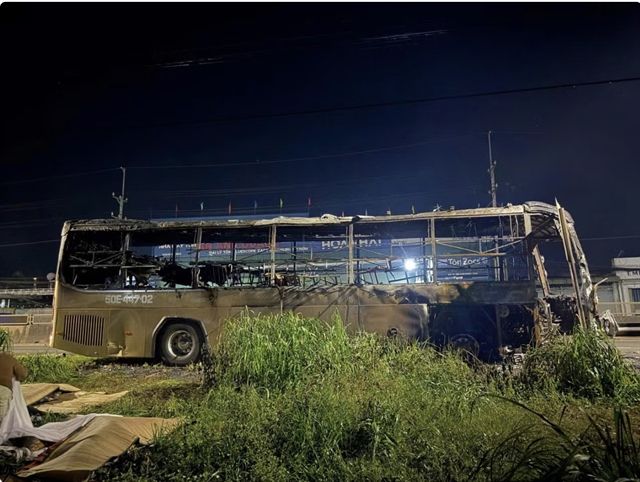
Seven people perished in a tragic fire that consumed a sleeper bus along National Highway 1 in southern Vietnam's Hung Thinh Commune during the early morning hours. The incident unfolded shortly after 2.30am when the vehicle, operated by 41-year-old Tran Thanh Hai from Khanh Hoa Province, struck a roadside embankment while traveling from Dong Nai to Ho Chi Minh City. After the initial impact, the bus struck another embankment before the driver successfully brought the stricken vehicle to a halt, a moment that proved critical but ultimately insufficient to prevent the catastrophe that would follow.
The fire originated at the front of the bus and moved with frightening speed through the passenger compartment, trapping numerous occupants aboard. Among the 33 people onboard, including the driver, some managed to flee the burning wreckage while others became trapped as flames engulfed the entire vehicle. The rapid spread of the fire left little time for organized evacuation, forcing many passengers to navigate through thick smoke and intense heat in desperate bids for survival. The experience would have been particularly harrowing for those unable to move quickly or locate emergency exits amid the chaos.
Local residents near the accident site demonstrated remarkable courage and initiative in responding to the emergency. Nearby community members rushed to the scene and attempted to suppress the flames using fire extinguishers and other equipment they could hastily assemble. Despite their heroic efforts and determination to save lives, the intensity and speed of the blaze overwhelmed their resources. The fire's rapid advancement meant that even immediate intervention by civilians proved unable to contain the disaster, highlighting the dangers posed by uncontrolled fires in enclosed spaces such as buses.
Authorities responded by dispatching firefighters, specialist rescue personnel, and specialized equipment to the scene following emergency notifications. Coordinated emergency response operations included active fire suppression, extraction of survivors from the wreckage, and traffic diversions to maintain safety and allow emergency vehicles unrestricted access. By the time responders had extinguished the flames and secured the area, the bus had been reduced to little more than a charred shell, testament to the ferocity of the conflagration. The destruction was so extensive that determining the precise cause would require thorough investigation and forensic examination.
According to preliminary confirmation from the Hung Thinh Commune People's Committee, seven individuals lost their lives in the disaster. Survivors and the injured were transported to Thong Nhat General Hospital, where medical staff treated their injuries. The hospital later discharged one patient who had sustained only minor injuries, though the extent of injuries sustained by other survivors remained to be assessed. Authorities established a cordoned perimeter around the devastated bus for forensic examination, evidence collection, and detailed investigation into how the fire originated and spread so catastrophically.
The investigation into this tragedy has become multi-faceted and urgent. Authorities are simultaneously working to determine the precise cause of the fire, identify the deceased victims, reconstruct the exact sequence of events, and verify details surrounding the collision and the circumstances that led to the blaze. Questions regarding vehicle maintenance, safety systems, passenger manifest accuracy, and the driver's condition at the time of the accident remain under examination. The investigation will likely reveal whether mechanical failure, electrical malfunction, fuel system rupture, or another factor sparked the initial fire.
This disaster represents the second major sleeper bus tragedy to strike Vietnam within a seven-day period, underscoring growing safety concerns within the country's long-distance bus transportation sector. Just a week prior, on July 17, another sleeper bus operating between Thien Cam beach in Ha Tinh Province and the northern province of Thai Nguyen veered off an expressway in Ha Noi and overturned with catastrophic consequences. That earlier accident claimed five lives and injured dozens of passengers, suggesting a potential pattern of serious incidents within this particular transportation category.
The concentration of two major accidents within such a brief timeframe has raised legitimate concerns among safety advocates and transportation officials regarding the operational practices, vehicle maintenance standards, and driver training protocols governing Vietnam's sleeper bus industry. These vehicles, which combine overnight accommodation with long-distance travel, operate under unique pressures and conditions that may contribute to accidents. Extended driver fatigue, mechanical wear exacerbated by continuous operation schedules, and passenger loads that sometimes exceed safe limits could represent contributing factors worthy of regulatory scrutiny.
For Southeast Asian readers, these incidents carry particular significance given the popularity of sleeper bus services throughout the region as affordable long-distance transportation options. Malaysia, Thailand, and other neighboring countries operate similar services that face comparable operational challenges and safety considerations. The tragedies in Vietnam provide cautionary lessons regarding the necessity for stringent vehicle inspection protocols, mandatory driver rest periods, passenger capacity enforcement, and emergency equipment standards across the region. Insurance frameworks and liability provisions for accident victims also merit examination, particularly where compensation mechanisms prove inadequate for families facing catastrophic loss.

