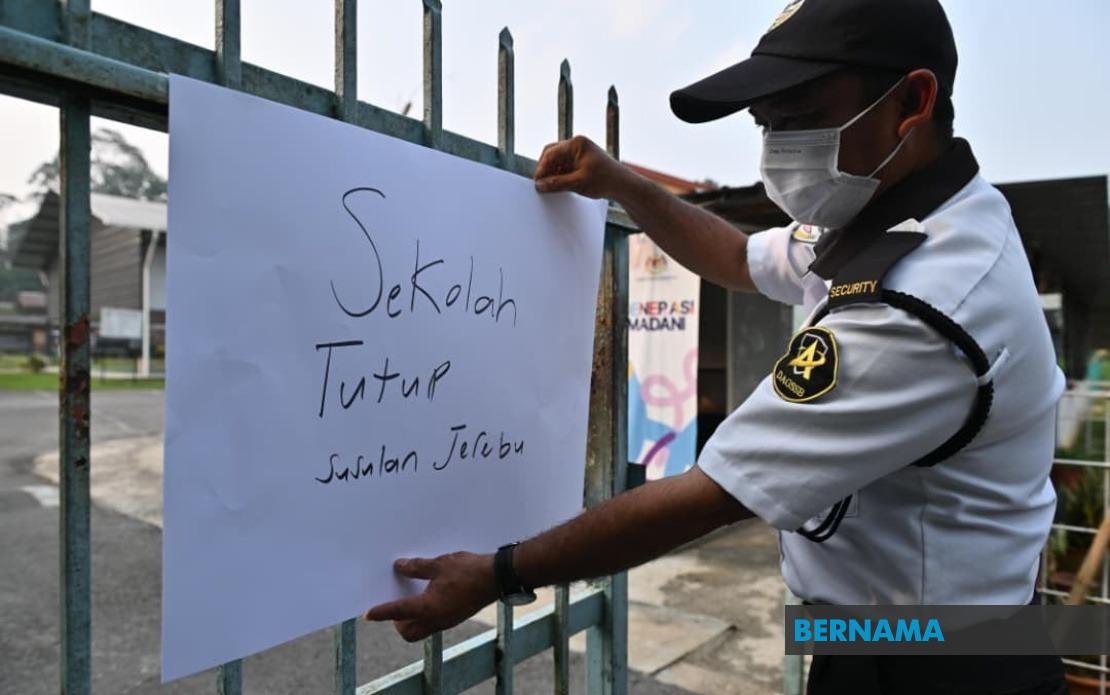
Educational institutions across the Serian district in Sarawak will remain shuttered through Friday as authorities grapple with deteriorating air quality triggered by transnational haze pollution. The Sarawak State Education Department announced the extension of school closures following consultations with principals and headmasters from both secondary and primary institutions under the Serian District Education Office's purview, underscoring the severity of atmospheric conditions in the region.
The decision reflects deepening concerns about the health and welfare of students and staff operating within affected zones. Officials emphasized that prolonging the shutdown would shield students, educators, parents, and particularly those housed in boarding facilities from unnecessary exposure to hazardous air. The extension signals recognition that current pollution levels pose genuine risks that cannot be adequately mitigated through standard school operations and safety protocols.
The Serian District Education Office coordinated extensively with school leadership before issuing the closure directive, demonstrating a consultative approach to crisis management. This collaborative framework ensures that administrative burdens on principals and teachers—who would otherwise struggle to implement makeshift learning arrangements amid public health emergencies—are minimized during periods of environmental stress. The department committed to providing timely updates as conditions evolve, establishing clear channels for stakeholders to receive revised guidance.
According to the Air Pollution Index Management System, Serian recorded an API reading of 178 as of 4 pm on the announcement day, firmly positioning the district within the unhealthy category. This measurement reflects the transnational nature of Southeast Asia's recurring air quality crises, wherein pollution originating from sources beyond Malaysia's borders—particularly agricultural burning in neighbouring regions—engulfs communities across multiple states. The cross-border dimension of the haze presents persistent governance challenges that single-nation interventions cannot fully resolve.
Institutions across Sarawak have been instructed to remain vigilant regarding atmospheric developments by actively monitoring the Air Pollution Index through the APIMS platform. This advisory emphasizes the importance of real-time data access in guiding operational decisions at the district and individual school level. Educational administrators must develop institutional capacity to interpret API readings and translate technical measurements into practical policy responses, ensuring that closure and resumption decisions rest on objective environmental benchmarks rather than subjective assessments.
The haze phenomenon represents a recurring challenge for Malaysia's education sector, particularly in states like Sarawak that experience pronounced exposure to transnational air pollution events. School closures, while necessary protective measures, create cascading disruptions to academic calendars, examination schedules, and learning continuity. Students in examination years face particular jeopardy as repeated closures compress already condensed preparation periods and may necessitate curriculum adjustments or assessment rescheduling.
Beyond immediate health considerations, the Serian closure illustrates how environmental crises intersect with educational access and equity. Boarding school residents, who constitute a significant proportion of Sarawak's student population given the state's dispersed settlement patterns, experience heightened vulnerability during prolonged atmospheric emergencies. These students cannot simply retreat to home environments when pollution forces institutional closures, creating welfare management complications that administrators must navigate.
Parents and guardians confronted with unexpected school closures face practical complications in arranging childcare and adjusting work schedules, particularly in communities where formal childcare infrastructure remains limited. The extension through Friday compounds these logistical pressures, as families must absorb additional days of disrupted routines. For economically vulnerable households, such disruptions carry tangible costs that extend beyond educational inconvenience into household budget management and employment stability.
The transparency commitment articulated by the Sarawak State Education Department—whereby updated information would be communicated proactively—reflects evolving best practices in crisis communication. Rather than allowing speculation or uncertainty to propagate among stakeholders, timely official guidance fosters confidence in institutional decision-making and enables parents and educators to plan accordingly. This approach contrasts with historical instances where educational authorities maintained ambiguous communication, leaving communities uncertain about operational status.
Looking forward, Serian's situation underscores the necessity for long-term regional cooperation addressing transnational haze generation. While immediate school closures represent appropriate reactive measures, sustainable solutions require collaborative frameworks encompassing monitoring, enforcement, and diplomatic pressure to curtail agricultural burning practices that generate haze. Malaysia's education system will continue experiencing periodic disruptions unless root causes of cross-border air pollution receive systematic international attention and coordinated intervention.

