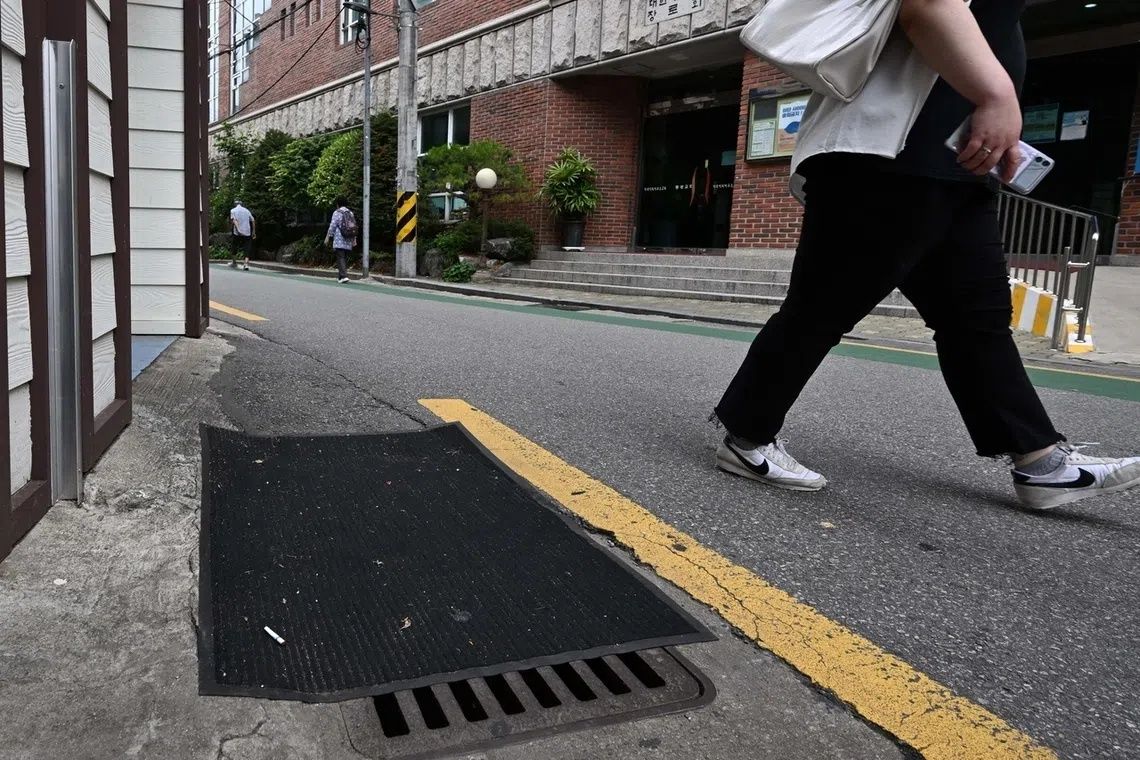
Pedestrians navigating Seoul's bustling streets and waiting at crowded bus stops periodically encounter an unmistakable and unpleasant aroma—a sharp, sulphurous stench that vanishes as quickly as it arrives. This recurring nuisance has become sufficiently notable that residents and international visitors regularly document and discuss the phenomenon across Korean and global online forums. While each episode typically lasts only seconds, the cumulative effect reflects a persistent urban management problem that has vexed South Korea's capital for years. According to the Seoul Institute's 2025 assessment, sewer-related odours constitute roughly half of all civil complaints the city receives regarding air quality issues, positioning this seemingly minor quality-of-life problem as a significant governance concern.
The chemical culprit behind Seoul's odour crisis is hydrogen sulfide, a gas that replicates the pungent aroma of decaying eggs. This compound emerges when organic material within sewage undergoes decomposition under anaerobic conditions—environments starved of oxygen. The formation process itself reveals deeper structural vulnerabilities in the city's aging infrastructure. Seoul's explosive urban expansion over recent decades has outpaced corresponding development of its wastewater treatment systems. Faced with capacity constraints, many buildings within the metropolis have installed interim septic tanks before their effluent enters the underground sewer network. Although these tanks remove solid particulates, they prove inadequate at eliminating dissolved organic compounds that continue flowing into subterranean sewers. Once within these pipes, the remaining organic matter decomposes under oxygen-depleted conditions, generating the hydrogen sulfide gas responsible for Seoul's infamous smell.
Weather patterns significantly influence the intensity and frequency of odour episodes, demonstrating the system's extreme sensitivity to climatic variations. During periods of substantial rainfall, heightened water movement through the sewer network naturally flushes accumulated sewage and prevents dangerous gas concentrations from building up. Conversely, during hot and arid stretches with minimal precipitation, hydrogen sulfide readily accumulates within the pipes. The gas then escapes through various structural openings—storm drains, maintenance access holes, and other ventilation points—creating the street-level odour complaints that plague pedestrians and commuters. This weather-dependent pattern means Seoul residents cannot reliably predict when they will encounter these unpleasant episodes, compounding frustration with the city's apparent inability to provide consistent environmental quality.
Seoul's fundamental infrastructure challenge stems from its combined sewer system, a design where both residential and commercial wastewater flows through identical underground pipes alongside stormwater runoff from streets and parking areas. Municipal officials acknowledge that this integrated approach contributes significantly to odour accumulation problems. Recognising this limitation, the city has pursued a gradual conversion toward separated systems since the early 1990s, whereby wastewater and stormwater would travel through distinct pipe networks. However, progress remains glacial. As of 2025, merely 20.4 percent of Seoul's total sewer infrastructure had undergone conversion to separate systems. The delays stem from the extraordinary technical complexity and prohibitive expenses involved in excavating, replacing, and rerouting established underground networks beneath one of the world's densest metropolitan areas. Construction disruptions, property access negotiations, and the sheer capital requirements have rendered this comprehensive solution economically and logistically daunting.
Seoul's efforts to mitigate the odour problem demonstrate both administrative commitment and the limitations of reactive approaches. Beginning in 2015, the city implemented targeted reduction measures that initially proved moderately successful. Odour complaints declined substantially from 3,095 in 2015 to 1,660 in 2020, partly attributable to the installation of specialised odour reduction devices at major septic tanks throughout the city. Yet this apparent victory proved temporary and incomplete. By 2024, complaints had rebounded to 2,302, erasing much of the earlier progress and suggesting that the measures, while helpful, address symptoms rather than root causes. This trajectory illustrates a broader problem with Seoul's approach: the city remains locked within a complaint-driven paradigm where solutions emerge reactively following public dissatisfaction rather than through proactive, comprehensive urban planning.
Researchers at the Seoul Institute argue that this reactive framework fundamentally handicaps the city's ability to develop sustainable, long-term solutions. Ki Dong-won, a Seoul Institute researcher, identifies a critical knowledge gap: South Korea lacks sophisticated predictive models capable of mapping how sewer odours disperse above ground or tracing their diffusion patterns through urban space. Without such analytical tools, city planners cannot reliably identify which neighbourhoods face greatest vulnerability to odour episodes or whether newly implemented mitigation technologies actually reduce ambient odour concentrations across affected areas. Efforts to create sewer odour maps are underway, but these nascent initiatives remain disconnected from measurable performance standards or systematic evaluation protocols for odour reduction facilities. This analytical deficiency means Seoul essentially operates without objective data regarding whether its infrastructure investments yield proportionate improvements in resident quality of life.
The legal and regulatory environment further constrains Seoul's problem-solving capacity. Current South Korean law emphasises managing odours only after they exceed officially established acceptable limits, rather than imposing proactive prevention obligations on municipal authorities. This threshold-based approach permits substantial odour problems to persist without triggering regulatory intervention, provided the most egregious episodes remain below defined standards. Experts contend that a major global metropolitan region like Seoul should embrace far more ambitious preventive frameworks, establishing strict baseline standards and investing in systemic improvements rather than merely reacting when problems become severe enough to generate citizen complaints. The distinction proves crucial: a prevention-focused regime would necessitate comprehensive infrastructure renovation and continuous monitoring, whereas Seoul's current legal structure tolerates gradual deterioration provided acute episodes remain technically within tolerances.
Park Seok-soon, an environmental engineering professor emeritus at Ewha Womans University, proposes an alternative technological solution that acknowledges the practical difficulties of replacing combined sewer systems. Rather than pursuing the expensive, decades-long conversion to separate systems, Park advocates artificially circulating water through existing sewer pipes to prevent stagnation and decomposition. This approach would involve periodically introducing water from fire hydrants or similar municipal sources into the sewer network, maintaining water movement that discourages organic matter from settling and undergoing anaerobic decomposition. The proposal reflects international practice—major Japanese and other developed-country municipalities with comparable combined sewer systems manage them effectively through rigorous operational protocols and active maintenance rather than through capital-intensive replacement projects. Park's framework suggests that Seoul's problem may derive less from the inherent design of combined systems and more from inadequate operational discipline and insufficient resource commitment to maintaining necessary water circulation.
The broader Southeast Asian context adds urgency to Seoul's infrastructure struggles. Many major cities across the region—Bangkok, Jakarta, Manila, and others—operate similarly aging combined sewer systems inherited from colonial-era urban planning or rapid postwar expansion. These cities face comparable hydrogen sulfide problems, waterlogging during monsoon seasons, and epidemiological risks from inadequate sewage management. Seoul's protracted difficulty in resolving these challenges despite its relatively wealthy, technologically advanced nation and sophisticated municipal administration offers sobering lessons for regional peers. The South Korean experience demonstrates that affluence and technological capability alone prove insufficient; successful infrastructure remediation demands sustained political will, substantial financial commitment over decades, comprehensive regulatory frameworks, and sophisticated analytical capacity.
Looking ahead, Seoul faces critical choices regarding resource allocation and political priority. The city can continue its current trajectory of incremental improvements and complaint-driven interventions, accepting that persistent odour problems represent an acceptable cost of dense urban living. Alternatively, Seoul could embrace more ambitious transformation—accelerating the sewer system separation project despite enormous expenses, implementing Park's water circulation protocols, establishing rigorous legal prevention standards, and investing substantially in predictive modelling and monitoring infrastructure. The technical knowledge exists; the question concerns whether Seoul's political and fiscal systems will mobilise sufficient resources. For Malaysian and Southeast Asian municipal planners observing Seoul's struggles, the lesson appears clear: early, comprehensive infrastructure investment proves far cheaper than attempting to remediate entrenched problems within densely built metropolitan landscapes decades later.

