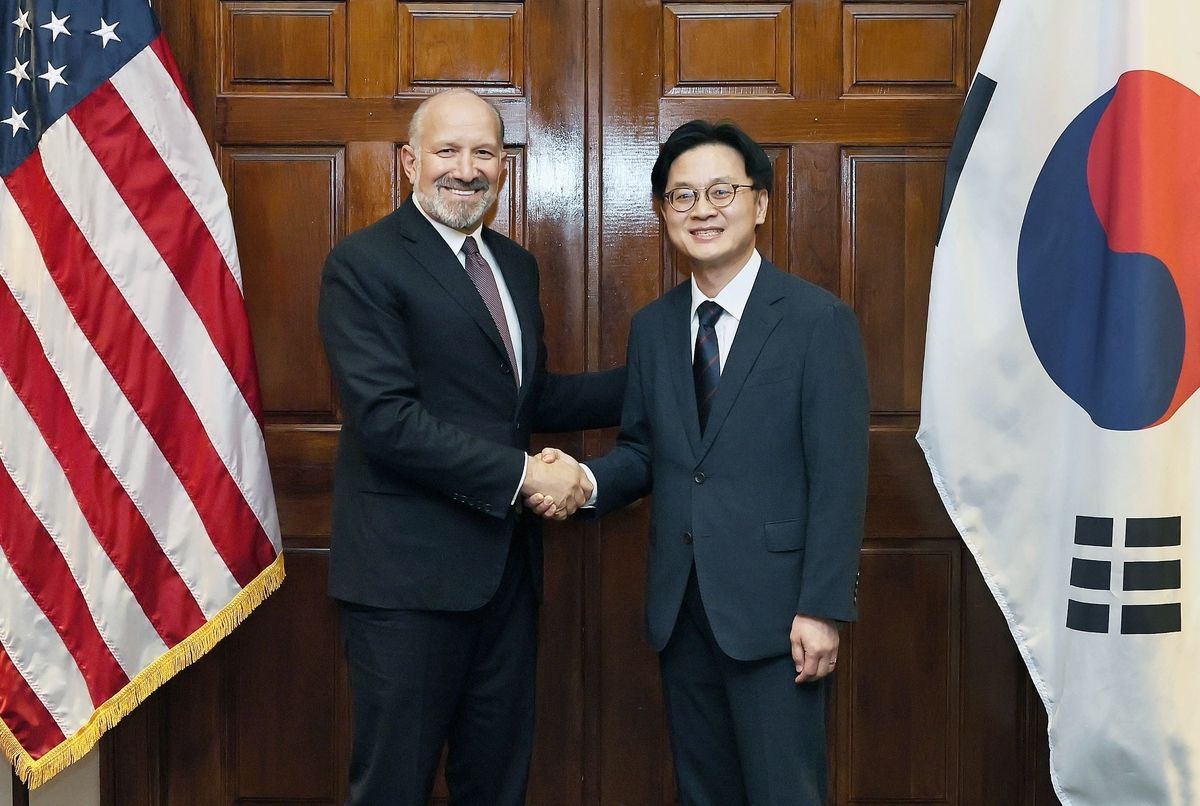
South Korea's Industry Minister Kim Jung-kwan is heading to Washington this week in a carefully timed diplomatic manoeuvre designed to maintain constructive channels with the United States even as Seoul braces for potentially significant tariff actions against its exports. The four-day visit, running from July 22 to 25, reflects the delicate balancing act that Seoul must perform in its relationship with its closest military and economic ally as protectionist pressures intensify in Washington.
The timing of Kim's mission is not coincidental. The visit comes as South Korean officials anticipate that the United States administration will soon announce additional tariffs stemming from an investigation into trade practices linked to forced labour concerns. These tariffs would be imposed under Section 301 of the Trade Act, a tool that has become increasingly favoured by the Trump administration for addressing what it perceives as unfair trading practices. Local media reports suggest that this investigation could substantially escalate tariff pressure on South Korean manufacturers, making the current diplomatic initiative all the more critical for Seoul's economic interests.
During his Washington visit, Kim will hold substantive discussions with Commerce Secretary Howard Lutnick, focusing on expanding South Korean strategic investment in the United States and strengthening bilateral economic ties. These conversations are designed to emphasise Seoul's commitment to contributing to American economic growth and job creation, a message that typically resonates well with US policymakers concerned about domestic manufacturing. The emphasis on investment cooperation reflects a broader South Korean strategy of demonstrating its value as an economic partner beyond traditional trade relationships.
The minister's schedule extends beyond Commerce Department talks. He is slated to meet with Energy Secretary Chris Wright to explore cooperation on resources and energy matters, a sector where both nations see significant mutual interest and potential for collaborative advantage. Additionally, Kim plans to engage directly with members of Congress on trade and investment questions, a crucial element of any South Korean diplomatic effort in Washington. These congressional meetings are particularly important given the influence that legislative bodies exercise over trade policy implementation and tariff decisions.
A centrepiece of Kim's official programme is attendance at Thursday's inauguration ceremony for the South Korea-U.S. Shipbuilding Partnership Center in Washington. This facility represents a concrete institutional outcome of a bilateral shipbuilding partnership agreement reached between South Korea's Ministry of Trade, Industry and Resources and the U.S. Commerce Department in May of this year. The centre will function as a formal platform enabling regular coordination and knowledge-sharing between shipbuilders from both nations, addressing areas of shared technological interest and commercial opportunity in an industry of strategic importance to both countries.
Shipbuilding holds particular significance in South Korea's economic portfolio. The nation has emerged as a global leader in naval and commercial vessel construction, and the sector represents both a source of substantial export revenues and high-value employment. A dedicated partnership centre with the United States signals Seoul's intention to deepen institutional cooperation in this domain while demonstrating its willingness to build frameworks that benefit American industry and workers. This framing allows South Korean negotiators to present their shipbuilding sector not merely as a competitive threat but as a potential collaborator in an industry where American capacity and expertise remain relevant.
Beyond the shipbuilding initiative, Kim will work to advance implementation of a South Korean domestic law that came into effect in June specifically designed to facilitate and incentivise strategic South Korean investment across the United States. This legislation, which has not yet generated substantial American awareness or discussion, essentially creates a legal and financial framework within Seoul that removes barriers to South Korean companies considering major capital deployment in America. By advancing the specifics of investment projects under this programme, Kim is attempting to transform the investment cooperation rhetoric into concrete economic commitments that can be presented to American counterparts as evidence of Seoul's reciprocal commitment to strengthening bilateral economic relationships.
In remarks delivered before his departure, Kim framed his mission with careful diplomatic language, emphasising Seoul's intention to implement existing tariff agreements with Washington and maintain stability in bilateral trade relations. This messaging is deliberate: Seoul is signalling that it views itself as a responsible, rule-following economic partner that respects existing commitments and seeks to resolve differences through dialogue rather than escalatory measures. The emphasis on stability is designed to contrast with the uncertainty and friction that characterises other trade relationships, particularly those involving China and Mexico, which have also faced Section 301 investigations.
The broader context shaping Kim's visit extends beyond immediate bilateral relations. South Korea, like other export-dependent economies across Asia, faces a fundamentally challenging global trading environment. Rising protectionism in advanced economies, the reshoring movement, and geopolitical competition between major powers have all conspired to create an environment where traditional export-driven strategies face mounting headwinds. For a nation whose prosperity has historically depended on access to global markets, these trends pose an existential challenge requiring constant diplomatic engagement and strategic repositioning.
From a regional Southeast Asian perspective, South Korea's experience navigating American protectionism offers important lessons. Like Vietnam, Thailand, and Indonesia, South Korea faces potential tariff actions and investigative scrutiny from Washington. The diplomatic approach that Seoul is deploying—emphasising investment cooperation, institutional partnerships, and adherence to rules—represents a playbook that other Asian economies are simultaneously employing. The relative success or failure of these efforts will establish precedents and signals that will ripple across the region's trade relationships with the United States.
The delicate equilibrium that Kim seeks to maintain reflects a fundamental asymmetry in modern trade relations: South Korea and other export-dependent economies possess limited leverage beyond the threat of retaliation, which carries significant risks for smaller trading partners. Instead, Seoul must rely on diplomatic persuasion, the cultivation of powerful American constituencies that benefit from cooperation, and the constant demonstration that mutually beneficial economic relationships serve American interests. Whether this strategy will prove sufficient to shield South Korea from substantial tariff increases remains uncertain, but the effort itself underscores the constraints that smaller economies face in an increasingly protectionist global order.

