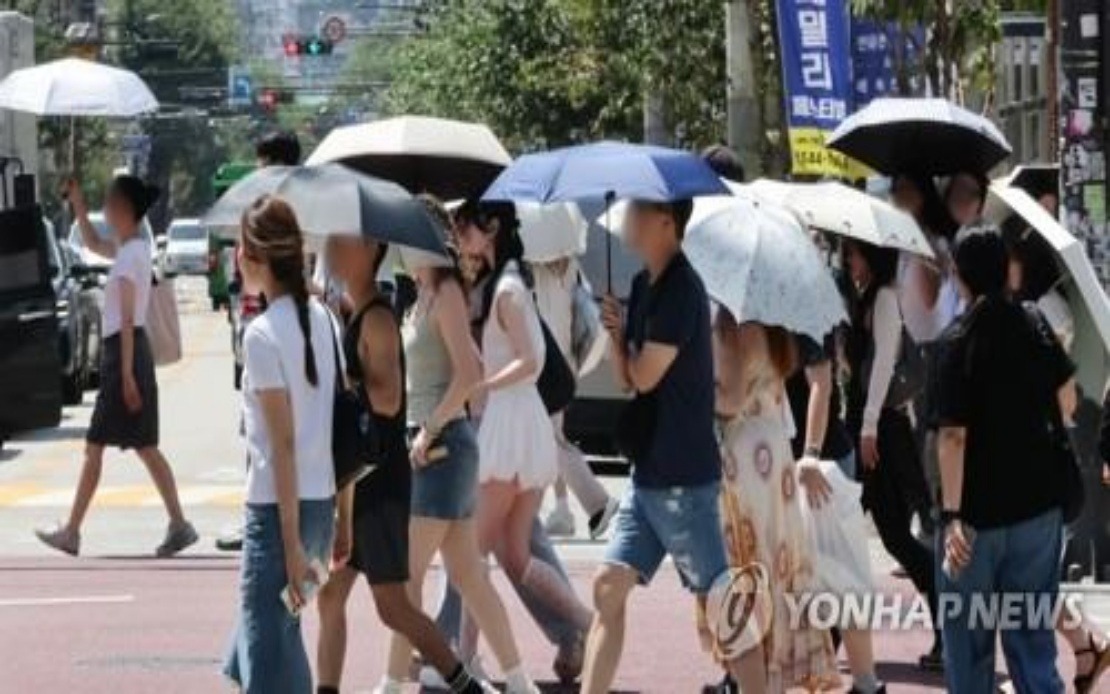
South Korea is enduring an exceptionally severe heat wave, with temperatures surpassing the 40-degree Celsius threshold in Seoul and at least two other major cities on Friday. The Korea Meteorological Administration confirmed that the mercury climbed to 40.2°C at an automatic weather station in Nowon, Seoul's northern district, at 3.28 pm local time. This marks a significant milestone—the first occasion since August 1, 2018, when the capital experienced a peak temperature of 41.8°C, that Seoul has crossed the 40°C barrier. The intensifying heat pattern underscores the severity of climate stress being felt across the Korean peninsula and broader East Asia, a region increasingly vulnerable to extreme temperature events.
Beyond Seoul, the heat wave extended its reach across a substantial geographic area. Hanam's Deokpung district, positioned just southeast of the capital, registered an even higher reading of 40.7°C at 2.32 pm, making it one of the hottest spots recorded on the day. Further south, Gwangyang—situated approximately 300 kilometres from Seoul—also breached the 40°C threshold, hitting 40.2°C at 2.37 pm according to official meteorological data. These multiple occurrences of extreme temperatures across disparate regions reflect the spatial breadth and intensity of the current weather system, which is affecting not only urban centres but also surrounding provinces and counties. Gangwon Province's Yeongweol county and Gyeonggi Province's Yeoju both experienced near-equivalent conditions, each recording 39.8°C.
The cumulative effect of prolonged heat exposure has generated alarming statistical trends that illustrate the exceptional nature of this year's climate conditions. From June 1 through Thursday of the reporting week, South Korea averaged 14.8 heat-wave days nationally—defined as days when daytime temperatures reach or exceed 33°C—placing this year among the fourth-highest on record for this six-week period since the nationwide weather observation network was established in 1973. More strikingly, the nation has experienced 13 recorded tropical nights, defined as evenings when minimum temperatures do not fall below 25°C. This figure represents an unprecedented record, surpassing all previous measurements in the fifty-year dataset. These metrics collectively demonstrate that South Korea is not merely experiencing a brief spike in temperatures, but rather an extended period of heat stress that disrupts normal diurnal cooling cycles essential for human health and ecosystem functioning.
The implications of this heat wave extend beyond mere meteorological interest. Prolonged exposure to extreme temperatures carries documented public health risks, including heat exhaustion, heat stroke, and exacerbation of pre-existing cardiovascular and respiratory conditions. The inability for nighttime temperatures to cool sufficiently—as reflected in the record tropical night count—prevents human bodies and buildings from recovering during evening hours, compounding the physiological strain experienced during daytime heat exposure. Industrial sectors reliant on temperature-sensitive processes, agricultural productivity, and electricity grid stability all face potential disruptions when heat waves of this magnitude persist. For Malaysian readers and Southeast Asian observers, this pattern represents a cautionary illustration of the regional vulnerability to climate variability, particularly as the tropics and subtropics experience shifting precipitation and temperature regimes.
Responding to the escalating danger, South Korea's meteorological authorities implemented stringent warning protocols. The Korea Meteorological Administration had maintained serious heat wave warnings—the highest alert tier—for Seoul and eastern and southwestern regions since Tuesday. These warnings are issued when apparent temperatures are projected to reach 38°C or higher, or when daily maximums climb to 39°C or above in areas already experiencing an apparent maximum of 35°C or higher for at least two consecutive days. Such multi-day thresholds prevent false alarms while ensuring that genuinely dangerous conditions trigger appropriate public alerts and emergency preparedness measures.
However, forecasters indicated that the most intense phase of the heat wave would begin moderating over the weekend. The Korea Meteorological Administration accordingly downgraded the serious heat warnings for Seoul and the eastern and southwestern regions to ordinary warnings effective 6 pm Friday. Saturday's outlook called for morning lows ranging from 21°C to 26°C nationwide, with daytime highs expected to settle between 26°C and 35°C. While this represents a moderation from the extreme temperatures recorded during the week, daytime highs in the low-to-mid thirties still constitute dangerous heat stress conditions in many regions.
The trajectory of this heat wave exemplifies broader climatic patterns affecting Northeast Asia and the Western Pacific region. Climate scientists have documented that warming ocean temperatures and shifting atmospheric circulation patterns are increasing both the frequency and intensity of summer heat waves across East Asia. South Korea's geographic position on a peninsula surrounded by ocean makes it particularly susceptible to heat waves driven by persistent high-pressure systems that block cooler maritime air from moderating inland temperatures. The convergence of urbanisation, with its associated heat-island effects, further exacerbates temperature extremes in densely populated areas like Seoul.
For Malaysian policymakers and environmental managers, the South Korean experience offers relevant precedent and cautionary guidance. Southeast Asia, including Malaysia, operates within tropical and subtropical climate zones where baseline temperatures are already elevated. Heat waves, monsoon disruptions, and extreme precipitation events are becoming more frequent and severe. The infrastructure, public health systems, and labour regulations developed in temperate regions may require substantial adaptation to manage the heightened heat stress anticipated in coming decades. South Korea's investment in real-time meteorological monitoring networks, early warning systems, and heat-response protocols represents one model that smaller nations might examine and contextualise for their own circumstances.
The extreme conditions recorded in Seoul and surrounding areas also highlight the human dimension of climate change. Workers in outdoor industries, elderly populations with reduced heat tolerance, and economically disadvantaged communities lacking reliable air conditioning face disproportionate health risks during prolonged heat waves. Public health authorities in South Korea and throughout the region must balance economic productivity with worker safety, provide targeted support to vulnerable populations, and communicate clear guidance about heat avoidance strategies. The record 13 tropical nights are particularly concerning because they eliminate a crucial recovery window that populations in hot climates depend upon for physiological and psychological restoration.
As the current South Korean heat wave gradually subsides toward week's end, the underlying question about long-term climate trends remains unresolved. Whether this particular event represents a statistical anomaly or another data point in a persistently warming trajectory will only become clear as multiple years of data accumulate. What is certain is that the frequency, duration, and intensity of heat waves across East Asia have demonstrably increased over recent decades, and further intensification is projected under most climate scenarios. South Korea's response—from meteorological monitoring to public communication to heat-mitigation planning—offers instructive lessons for Malaysia and other Southeast Asian nations as they prepare for an increasingly volatile and thermally extreme climate future.

